Choosing among the top 10 circuit board manufacturing companies worldwide requires more than comparing factory size or quoted prices. A polished website cannot show how a supplier handles a warped panel, a tight trace, or a late engineering change. Real capability appears in the details: process control, inspection records, material traceability, and clear communication when a design needs adjustment.
This introduction draws on the perspective of Happy Holden, a longtime PCB technologist and author. To avoid presenting invented wording as his verbatim speech, the following is an editorial paraphrase of his manufacturing perspective: “Reliable boards begin with sound design, disciplined processes, and careful control at every step.” That principle matters whether a company produces prototypes or high-volume assemblies. It also reminds buyers that a familiar brand name is not, by itself, proof of a good fit.
The companies in this overview are considered through practical criteria, including technical range, quality systems, production capacity, and geographic reach. Some manufacturers excel at quick-turn prototypes; others focus on complex multilayer boards or large-scale programs. Not every factory serves every need. A supplier’s published capabilities may also leave unanswered questions about lead times, engineering support, or consistency between production runs. Those gaps deserve attention, not assumptions. The comparison ahead aims to give readers a grounded starting point for evaluating global providers—and a reason to verify claims directly before making a sourcing decision.
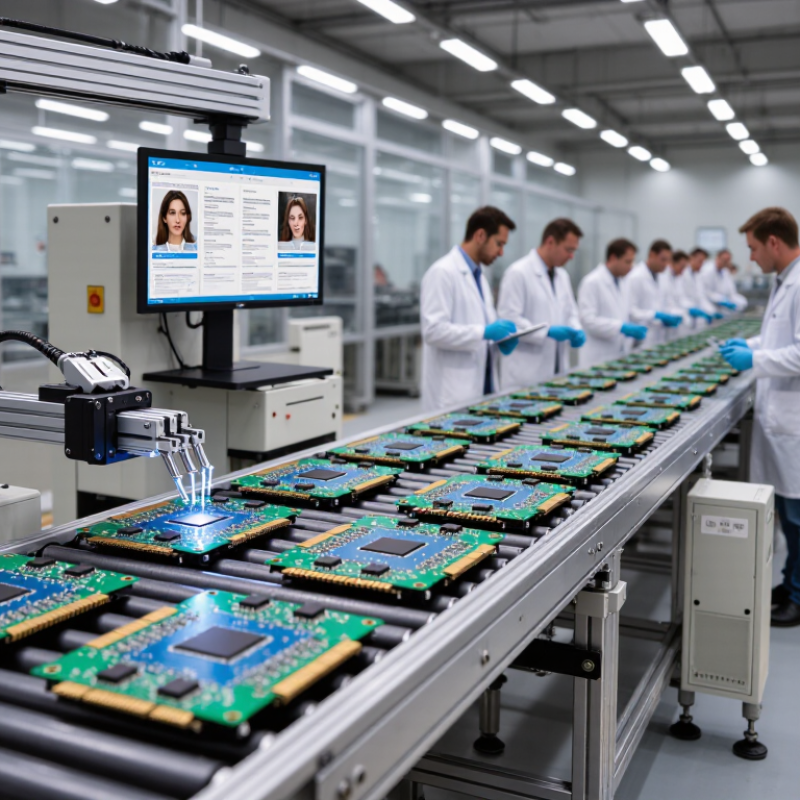
Circuit boards turn electronic designs into working hardware. They connect processors, sensors, memory, and power components through carefully patterned copper paths. In a phone, board space may be measured in millimeters. In industrial equipment, durability and heat control can matter more than compact size. Small details count.
Manufacturing usually begins with insulating laminate and copper foil. Imaging and etching form conductive traces; drilling and plating create connections between layers. Protective coatings help prevent corrosion, while soldering attaches components. Inspection can include optical checks and electrical testing. These steps catch many defects, but not every design choice works equally well at production scale. A narrow trace may fit on screen yet prove difficult to manufacture consistently.
Circuit board makers support modern electronics by translating engineering requirements into repeatable physical products. Their work affects reliability, repairability, energy use, and how quickly devices can be produced. Material selection and layer arrangement also influence signal quality and heat dissipation. There are trade-offs. More layers can enable dense designs, but may raise cost and complicate inspection. A clean prototype is not proof of a dependable product. Engineers and manufacturers need to review test results, tolerances, and real operating conditions together. Process limits deserve attention, even when the layout looks finished.
Worldwide PCB manufacturing is a layered network, not a single market. Some facilities focus on bare-board fabrication, turning copper-clad panels into printed circuits through imaging, etching, drilling, and plating. Others specialize in assembly, placing components onto finished boards. Some manufacturers offer both services, while smaller suppliers may concentrate on prototypes or specialized production. That matters. A company’s place in the industry depends on its capabilities, scale, and customer needs—not just its location.
Tips: When comparing manufacturers, check whether they build bare boards, assemble components, or provide both. Ask about layer count, materials, typical lead times, and inspection methods. A low quoted price may not include the same testing or production scope.
The industry spans regional manufacturing hubs, supported by suppliers of laminates, copper foil, chemicals, and electronic components. Large-volume facilities can serve steady demand, while specialist plants may handle complex designs or smaller runs. These categories overlap, though; the industry is messier than a simple tier chart suggests. A manufacturer’s capacity on paper may not reflect available production time, so verify current capabilities directly. For buyers, comparing process fit and quality controls offers a clearer view than relying on company size alone.
A credible circuit board manufacturer should be judged by more than quoted price or advertised capacity. Review its process controls, engineering support, delivery record, and ability to trace materials from incoming laminate to finished panel. Ask how it handles impedance control, plated-hole reliability, solder-mask registration, and inspection defects. Request recent, comparable yield and on-time delivery data, not isolated best-case figures. Ask for evidence.
Prismark’s 2024 mid-year industry update estimated global PCB production value at about $73.9 billion in 2023, roughly 15% below 2022. That downturn makes financial resilience and realistic capacity planning relevant selection criteria, alongside technical skill. IPC’s qualification and performance standards offer useful reference points: buyers can compare a supplier’s documented processes with the requirements for the intended board class and application. Still, a certificate alone cannot prove consistent production. Review sample inspection records, corrective-action reports, and test coverage; where possible, audit the factory floor. A clean presentation is not enough. Specifications also differ by board complexity, so comparing quoted yields without matching layer count, material, and volume can mislead. No single score captures the whole picture. Combine documented quality, transparent communication, and repeatable delivery when assessing manufacturers.
| No. | Evaluation Criterion | What to Verify | Relevant Standard or Reference |
|---|---|---|---|
| 1 | Quality management | Check the scope and validity of the manufacturer’s quality-management certification, audit history, corrective-action process, and documented inspection controls. | ISO 9001 |
| 2 | Automotive-sector readiness | For automotive programs, verify applicable quality-system certification, production-part approval processes, and customer-specific requirements. | IATF 16949; customer-specific requirements |
| 3 | Board performance and qualification | Confirm that manufacturing and qualification requirements are defined for the board type, material, construction, and intended end use. | IPC-6012 for rigid printed boards; applicable product-class requirements |
| 4 | Inspection and workmanship criteria | Review agreed acceptance criteria for visual inspection and the process for documenting, reviewing, and resolving nonconformities. | IPC-A-600, used as an acceptability reference for printed boards |
| 5 | High-density interconnect capability | For HDI designs, assess whether the supplier can manufacture the specified microvias, fine features, and layer structures, and can provide process-capability evidence for the design. | IPC-2226, design standard for high-density interconnect structures |
| 6 | Product safety qualification | Where required by the application or market, verify applicable safety recognition for the printed-wiring-board construction and materials. | UL 796, standard for printed-wiring boards |
| 7 | Environmental management | Review environmental-management controls, including documented objectives, operational controls, and compliance evaluation. | ISO 14001 |
| 8 | Restricted-substance compliance | Request material declarations and supporting evidence for the applicable product and market. RoHS requirements apply to products within the directive’s scope; they are not a general factory certification. | EU RoHS Directive 2011/65/EU, as amended, including Directive (EU) 2015/863 |
| 9 | Lot traceability and change control | Check whether production lots can be linked to relevant materials, process records, inspection results, and approved engineering changes. | Documented quality-system procedures and customer requirements |
| 10 | Capacity and delivery performance | Compare documented on-time delivery, lead-time consistency, available production capacity, and contingency planning against the buyer’s forecast and order history. | Purchasing records, delivery reports, and capacity reviews |
Note: Standards and regulatory requirements may apply differently depending on board type, industry, customer specification, and destination market. Verify current editions and certification scope when evaluating a supplier.
Worldwide circuit board manufacturers differ more in process strengths than in factory size. One high-volume producer focuses on multilayer boards for consumer devices. Another specializes in high-density interconnect designs, where tiny vias conserve space. A flexible-board maker serves products that bend or fold. A rigid-flex specialist combines firm and flexible sections in one assembly. An automotive-focused manufacturer emphasizes traceability and consistent testing. These capabilities matter.
Other profiles include an industrial supplier building boards for heat and vibration; a telecommunications producer handling high-frequency materials; and a medical-device manufacturer supporting detailed quality records. A quick-turn specialist helps engineers test prototypes, while an advanced-packaging producer works with fine-pitch substrates. Their strengths are not interchangeable. Capacity, lead time, materials, and inspection methods can vary by site, even within one company. That detail is easy to overlook.
Tips: Ask for cross-section data, process tolerances, and inspection records—not just a capability sheet. Compare sample boards against your actual design and operating conditions. A polished presentation is useful, but it cannot replace a production trial. And sometimes the first comparison misses a constraint.
Comparing the ten leading circuit-board manufacturers means looking beyond factory size. Prismark’s 2024 industry analysis estimated global PCB production at about US$73.9 billion in 2023, down 15% from 2022. It projected the market could reach US$90.4 billion by 2028. That matters. A downturn can expose how differently manufacturers balance high-volume orders against specialized work.
Some excel at multilayer boards for automotive and industrial equipment, where traceability and consistent quality matter. Others focus on high-density interconnect, flexible circuits, or advanced substrates for compact devices. WSTS’s Spring 2024 forecast projected semiconductor sales of US$611.2 billion in 2024, a 16% increase. More complex chips can raise demands on board design, materials, and process control.
Not all lines. A useful comparison checks layer count, minimum trace width, factory locations, and qualification experience—not just advertised capacity. One caveat: public specifications do not always reveal yield or delivery consistency. That gap deserves scrutiny.
The strongest fit depends on the buyer’s design, order volume, and tolerance for risk. A fast prototype line, for example, may not indicate reliable mass-production performance.
MSIRobot