Icon about-block-ico-1 Icon about-block-ico-2 Icon about-block-ico-3 Icon about-block-ico-4 Icon announcement-close Icon arrow-left Icon arrow-right Icon arrow-sm Icon asterisk Icon banner-transparent-vector Icon btn-callback-ico Icon careers-item-location Icon careers-item-time Icon careers-item-type Icon careers-mail-ico Icon careers-phone-ico Icon careers-search-ico Icon careers-single-hero-vector Icon careers-single-more-vector Icon careers-vector Icon check Icon close Icon dfm-image-left-vector Icon dfm-image-right-vector Icon document Icon download-popup-vector Icon dropdown Icon envelope Icon facebook Icon faq-banner-bg Icon faq-title-ico-active Icon faq-title-ico Icon featured-links-block-bg Icon figure-1 Icon figure-10 Icon figure-11 Icon figure-12 Icon figure-13 Icon figure-14 Icon figure-15 Icon figure-2 Icon figure-3 Icon figure-4 Icon figure-5 Icon figure-6 Icon figure-7 Icon figure-8 Icon figure-9 Icon file-upload Icon form-sidebar-back Icon form-step-done Icon gmap-marker-group-icon Icon gmap-marker-icon Icon header-profile-ico Icon instagram Icon link Icon linkedin Icon loader Icon mail Icon phone Icon play-yt Icon play Icon post-nav-arr-left Icon quote-banner-vector Icon quote-block-aside-vector Icon quote-contact-phone-ico Icon quote-contact-position-ico Icon sidebar-location Icon sidebar-phone Icon technology-banner-nav-left-vector Icon technology-banner-nav-right-vector Icon twitter Icon webinar-item-date-vector Icon whitepaper-img-ico-left Icon whitepaper-img-ico-right Icon whitepapers-listing-banner-ico Icon whitepapers-single-aside-vector Icon youtube Icon yt-play-button

Top Chemical Equipment Manufacturers in the World

Chemical plants depend on equipment that often stays out of sight until performance slips. Cefic’s Facts & Figures 2024 reports global chemical sales of approximately €5.1 trillion in 2023. That scale supports demand for reactors, pumps, heat exchangers, compressors, and reliable process-control systems. But failures matter. A leaking seal, corroded vessel, or poorly matched pump can disrupt production and raise maintenance costs.

The International Energy Agency’s The Future of Petrochemicals report identifies chemicals as a major driver of energy demand. The sector accounts for about 14% of global oil demand and 8% of gas demand, including feedstocks. These figures make energy efficiency and equipment durability serious purchasing considerations. They do not, however, prove that one manufacturer suits every plant. Process-safety pioneer Trevor Kletz captured one design principle in a memorable line: “What you don’t have, can’t leak.” His words still prompt useful questions about simpler, safer systems.

This guide examines leading Chemical Equipment manufacturers worldwide and the capabilities behind their reputations. It considers product range, engineering expertise, manufacturing quality, service support, and suitability for different process industries. Buyers should also check materials, operating limits, maintenance needs, and local technical assistance. A polished specification sheet cannot replace evidence from operating conditions. No ranking is perfect. Regional service, project scale, and application requirements can change which supplier is the strongest choice. The comparisons that follow offer a starting point, not a substitute for careful technical review.
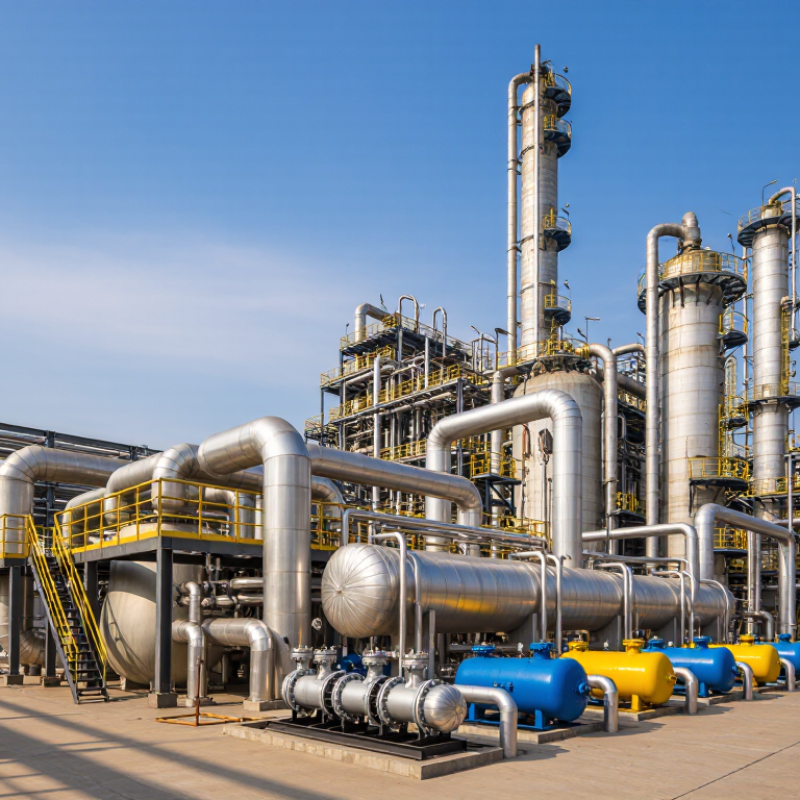
Top Chemical Equipment Manufacturers in the World

What Chemical Equipment Manufacturers Produce and Why They Matter

Chemical equipment manufacturers build the hardware that turns feedstocks into products: reactors, heat exchangers, pumps, separators, storage vessels, and process controls. Their work affects more than output. A poorly sized exchanger can waste energy; an unreliable pump can interrupt a whole production line. Equipment must handle heat, pressure, corrosion, and continuous operation. Small design choices matter.

The International Energy Agency’s 2018 report, The Future of Petrochemicals, estimates that chemicals account for about 14% of global oil demand and 8% of natural gas demand. That scale makes efficient, dependable equipment important to both operating costs and energy use. Manufacturers support this by improving heat recovery, monitoring equipment condition, and designing systems for safer, steadier operation. Still, a specification sheet cannot predict every maintenance problem. Real performance depends on installation, process conditions, and the people running the plant.

Tips: Compare equipment using operating conditions, not headline capacity alone. Check materials compatibility, spare-parts access, service requirements, and energy use. Ask for performance data from applications similar to yours. A tidy brochure is not proof of a good fit. Look closely.

Top Chemical Equipment Manufacturers in the World - What Chemical Equipment Manufacturers Produce and Why They Matter
Equipment Category Typical Products What the Equipment Does Common Applications Why It Matters
Process Reactors Stirred-tank reactors, tubular reactors, and batch reactors Provide controlled conditions for chemical reactions, including temperature, pressure, mixing, and residence time. Polymer production, pharmaceuticals, specialty chemicals, and fertilizer processing Reactor design affects reaction control, product consistency, throughput, and safe handling of heat and pressure.
Heat Exchangers Shell-and-tube, plate, and air-cooled heat exchangers Transfer heat between process streams while keeping the fluids separated in most designs. Heating, cooling, condensation, and heat recovery in chemical plants and refineries Efficient heat transfer supports process temperature control and can reduce energy use.
Separation Equipment Distillation columns, absorbers, strippers, and evaporators Separate or concentrate components using differences in volatility, solubility, or other physical properties. Petrochemicals, solvents, gas treatment, and production of purified chemical products Separation equipment helps achieve required product purity and recover valuable materials from process streams.
Pumps and Compressors Centrifugal and positive-displacement pumps; centrifugal and reciprocating compressors Move liquids or increase the pressure of gases through a process system. Liquid transfer, pipeline service, gas processing, and plant utility systems Reliable flow and pressure control are essential for continuous operation and stable process conditions.
Pressure Vessels Reactors, separators, accumulators, and storage vessels designed for pressure service Contain gases or liquids at pressures different from the surrounding atmosphere. Chemical processing, gas handling, and high-pressure reaction systems Appropriate design, materials, fabrication, and inspection help manage pressure-related hazards.
Filtration and Solid-Liquid Separation Filter presses, cartridge filters, bag filters, and centrifuges Remove suspended solids from liquids or separate solids from liquids or slurries. Fine chemicals, water treatment, catalyst recovery, and product finishing These systems help meet product-quality requirements and support recovery or safe disposal of process solids.
Storage and Handling Equipment Storage tanks, silos, hoppers, and loading systems Store and transfer liquids, powders, and bulk materials between process stages. Raw-material storage, intermediate products, finished chemicals, and plant logistics Properly selected storage and handling equipment helps protect materials and reduce spills, contamination, and exposure risks.
Mixing and Agitation Equipment Agitators, industrial mixers, and blending systems Combine materials and promote uniform temperature, concentration, or particle distribution. Formulation, dissolution, blending, and reaction processes Effective mixing can improve product uniformity and help maintain predictable process performance.

How Leading Manufacturers Are Evaluated

Evaluating a chemical equipment manufacturer takes more than comparing product catalogs. Useful evidence often appears in drawings, inspection records, and conversations about operating conditions. Ask how the team selects materials for temperature, pressure, and the chemicals being handled. A polished brochure cannot answer that. Request examples of weld inspections, dimensional checks, and pressure tests for comparable equipment. These records show whether quality controls reach the workshop floor.

Engineering capability should be judged against the actual process, not broad claims. Review design calculations, instrument interfaces, cleaning access, and maintenance provisions. Small details count: a drain placed too high can leave residue, while a poorly positioned access point can slow inspection. Ask who reviews design changes and how deviations are documented. Delivery performance matters, too. Compare quoted lead times with project records, spare-parts availability, and clear installation instructions. One missed fitting can delay a commissioning crew.

Reliable suppliers explain limits as clearly as strengths. Check whether technical support remains available after shipment, and whether manuals identify inspection intervals and wear items. Independent certifications may help, but their scope should match the equipment and process. A certificate alone does not prove consistent performance. I would also ask operators what caused rework on earlier installations; answers can be awkward, but useful. No scorecard is perfect. Weight the evidence according to operating risk, and record unanswered questions before selecting a supplier.

Profiles of Major Chemical Equipment Manufacturers Worldwide

Profiles of major chemical equipment manufacturers reveal different strengths across regions. European firms often emphasize process integration, emissions control, and custom engineering. Asian suppliers commonly serve large projects with broad equipment ranges and competitive fabrication capacity. North American manufacturers are often associated with specialized process systems and aftermarket support. These are general patterns, not guarantees; each company’s actual capabilities depend on its facilities and project record.

Equipment portfolios typically include reactors, heat exchangers, distillation columns, pumps, and filtration systems. The International Energy Agency’s 2018 report, The Future of Petrochemicals, estimates that chemicals production uses about 10% of global final energy and accounts for around 7% of greenhouse gas emissions. That pressure makes energy efficiency, corrosion resistance, and reliable process control important comparison points. A polished brochure is not enough. I would also check references for comparable operating conditions, inspection access, and spare-parts availability.

Tips: Compare documented performance, not just rated capacity. Ask how suppliers handle fouling, temperature swings, and maintenance access. Small design details matter. One caution: public profiles rarely show the full cost of downtime, so treat headline efficiency claims as a starting point.

Top Chemical Equipment Manufacturers in the World

Normal boiling points of common process chemicals help illustrate the thermal conditions chemical equipment may need to handle.

Boiling points are approximate values at 1 atmosphere. Source: NIST Chemistry WebBook.

Key Equipment Categories and Technologies

Chemical process plants rely on equipment designed for specific duties, operating conditions, and materials. Pressure vessels and reactors contain processes, while heat exchangers transfer energy between streams. Distillation columns separate mixtures through controlled contact between vapor and liquid. Pumps move fluids; filters and centrifuges remove unwanted solids. These categories overlap in real plants. A reactor may need its own heating and mixing systems.

Technology shapes how reliably equipment performs. Modern instruments track temperature, pressure, flow, and vibration. Control systems can adjust valves or trigger alarms when readings move outside set limits. Materials selection matters, too: engineers consider corrosion, temperature, pressure, and cleaning requirements before choosing metals or linings. A polished surface may help with cleaning, but it cannot compensate for poor design. Details matter.

In practice, buyers compare capacity, maintenance access, spare-part availability, and energy use alongside purchase cost. Inspection records and test documentation help verify that equipment meets its stated specifications. Site conditions can change the decision; a compact heat exchanger might fit a crowded plant but prove difficult to service. There is no universal winner. Even experienced teams sometimes overlook routine access until maintenance begins. That lesson is worth remembering.

Industry Trends Shaping the Global Market

Chemical equipment manufacturers are responding to tighter energy targets, changing feedstocks, and demand for more flexible production. Heat exchangers, pumps, and pressure vessels are increasingly designed to reduce energy loss and simplify maintenance. In practical terms, that can mean easier access to tube bundles or seals during a planned shutdown. Small design changes matter.

Digital monitoring is also becoming more common. Sensors can track vibration, temperature, and pressure, helping operators spot developing problems before equipment fails. Yet more data does not automatically mean better decisions. Poorly calibrated sensors and inconsistent records can create false alarms, so dependable maintenance still relies on skilled staff and clear operating procedures.

Supply-chain resilience is shaping equipment choices, too. Buyers increasingly weigh delivery times, spare-part availability, and the ability to adapt equipment for local conditions. Modular systems may shorten installation and support capacity changes, but they are not ideal for every process. Corrosion resistance remains a practical concern when plants handle variable materials or operate in harsh environments. Lower-carbon manufacturing is gaining attention, though measuring its full impact across suppliers remains difficult. Progress is real, but uneven.

MSIRobot