Why Choose Unionwell automotive plunger switches? The answer begins with dependable sensing in demanding vehicle environments. A Unionwell automotive plunger switch can detect door closure, hood position, pedal movement, or seat adjustment. Its compact body fits limited spaces. Its plunger responds to controlled mechanical pressure.
Small component. Serious responsibility.
Automotive designers need more than a switch that works on a clean workbench. They need stable operation near vibration, dust, temperature changes, and repeated mechanical contact. Unionwell’s experience in micro switches and customized control components supports practical product selection. Engineers can review contact ratings, actuator movement, mounting dimensions, and terminal options before approval. These details help prevent mismatched parts during assembly.
Real testing still matters. A switch may perform well in a sample vehicle, yet behave differently after long cycling or poor alignment. That is why careful validation should include endurance testing, electrical load checks, environmental exposure, and installation review. Unionwell automotive plunger switch solutions can be considered for these evaluations, but performance depends on the selected model and application. This point deserves attention.
Reliable sourcing also involves communication. Clear drawings, responsive technical support, and consistent production records can reduce uncertainty for purchasing and engineering teams. Unionwell’s manufacturing background offers a foundation for customized automotive switch requirements. However, no supplier should replace application-specific verification. The strongest choice combines proven construction, accurate specifications, and honest testing results. That balance helps automotive manufacturers build safer, more consistent systems without adding unnecessary complexity.
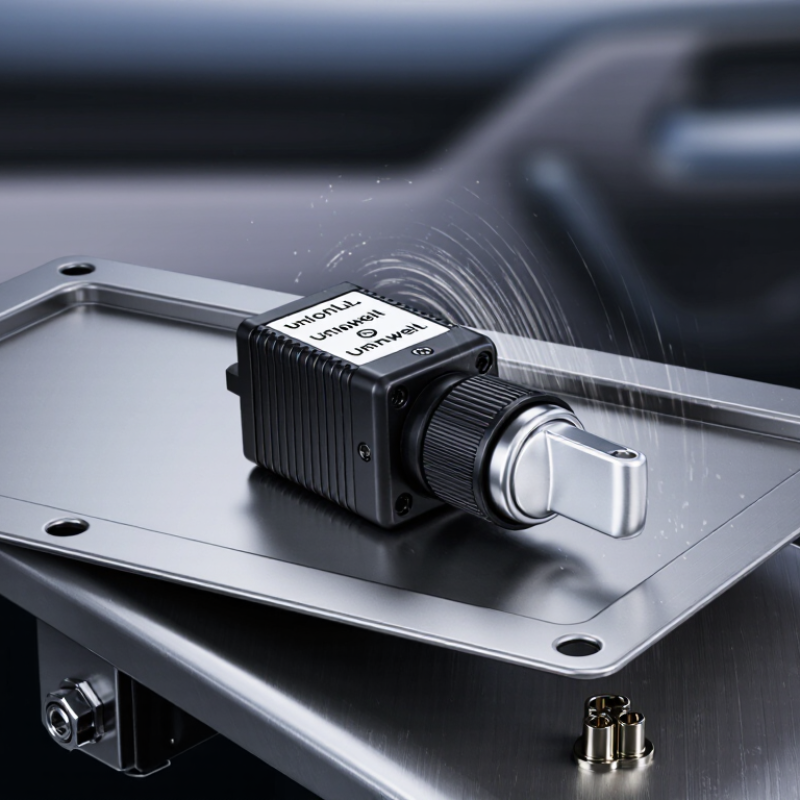
Automotive plunger switches are compact electromechanical sensors with a spring-loaded button. A door, hood, trunk, or pedal presses the plunger during movement. The switch then opens or closes an electrical circuit. This simple action can control interior lights, warning signals, alarm inputs, or start-permission systems.
Their value becomes clearer at production scale. The International Organization of Motor Vehicle Manufacturers reported more than 93 million vehicles produced worldwide in 2023. Each vehicle may use several position-detection switches. Therefore, consistent contact pressure and stable terminals matter. ISO 16750 also identifies temperature, vibration, humidity, and electrical loads as important vehicle testing conditions. A plunger switch must survive more than ordinary garage use.
Tips: Check the actuator length before installation. Confirm the normal-open or normal-closed circuit. Keep the mounting area free from dust and water. A loose bracket can create intermittent signals. Small errors matter.
In practical inspections, a switch may work perfectly on a clean workbench. It can still fail after months of vibration or repeated pressing. That is the part engineers should question. Look for sealed housings, corrosion-resistant terminals, and a defined operating force. Do not judge quality only by appearance. Measure continuity while moving the plunger slowly. A brief signal drop often reveals a weak contact or poor alignment. Reliability depends on the switch and its surrounding installation.
Automotive plunger switches use a simple mechanical action to control electrical signals. A spring-loaded plunger moves when a door, hood, brake pedal, or trunk reaches a specific position. When pressed, the plunger changes the contact state inside the switch. The circuit may open or close, depending on the switch design.
In a vehicle, this small movement can activate a dome light, warn about an open hood, or signal brake application. The switch usually connects to a low-voltage circuit through terminals and wiring. When the plunger is released, the internal spring returns it to its original position. This response must remain consistent despite vibration, dust, temperature changes, and repeated operation. A reliable switch should also provide clear actuation without excessive force.
Tips: Check the mounting position carefully. A plunger that sits too far away may not move fully. One installed too tightly can remain pressed and cause false signals. Use a multimeter to test continuity while pressing and releasing the actuator. Inspect loose terminals, damaged insulation, and moisture near the connector. In practice, alignment is often overlooked. That mistake can imitate an electrical failure, even when the switch itself still works. Always follow the vehicle service information and verify the circuit before replacing parts.
Why Choose Unionwell Automotive Plunger Switches?
Automotive plunger switches improve performance through precise, repeatable actuation. They respond when a door, hood, pedal, or seat reaches a defined position. This clear switching point helps reduce false signals and unnecessary electrical cycling. Short travel can also support compact installations where space is limited. Every millimeter matters.
Sealing is another important feature. A protected housing helps resist dust, moisture, road spray, and temperature changes. Reliable contact materials can reduce electrical resistance and limit premature wear. Strong terminals support stable connections under vibration. During practical vehicle testing, technicians should check actuation force, return movement, and contact continuity. A switch may work well on a bench but behave differently near an engine bay.
Temperature tolerance and mechanical durability also influence service life. Repeated impacts, uneven mounting, or excessive force can shorten performance, even with a well-designed component. That detail is easy to miss. Correct alignment prevents side loading on the plunger. Secure fasteners help maintain the intended switching position. Engineers should also review current ratings, wiring protection, and relevant automotive testing requirements before installation. No switch is perfect. Performance depends on both component design and the conditions surrounding it.
Automotive plunger switches are used wherever a moving panel must trigger a dependable electrical signal. Common locations include doors, hoods, trunks, glove compartments, and center consoles. When a door closes, its panel presses the plunger and changes the circuit state. That simple action can control interior lights, warning indicators, alarms, or vehicle access functions.
In workshop applications, technicians often select these switches for compact fit and clear mechanical feedback. The switch can also support seat mechanisms, pedal assemblies, storage latches, and selected control panels. Its position matters. A plunger that sits too deep may fail to activate, while one mounted too high may receive unnecessary impact. Small details matter here.
Moisture, dust, vibration, and repeated pressing can affect service life. For this reason, engineers check the switch rating, travel distance, contact arrangement, and sealing level before installation. Field experience shows that clean alignment prevents many avoidable failures. Still, a plunger switch is not a universal solution. Some modern systems need sensors with more precise position data. That limitation deserves attention during design reviews. Testing should include cold starts, door slams, washing conditions, and long cycling periods. A switch may work perfectly on a bench, yet behave differently inside a vibrating vehicle.
Selecting the right automotive plunger switch starts with the movement it must detect. Measure the available mounting space, plunger travel, and actuation force. A door switch may require a longer stroke than a hood or brake-pedal application. Check the electrical rating, terminal style, and operating temperature before comparing prices. Do not choose by size alone. That mistake is common.
In a workshop, I inspect the switch location before installation. Look for water, road salt, dust, and repeated vibration. Choose sealed construction when moisture is unavoidable. Confirm that the plunger meets the target surface squarely, not at an angle. Poor alignment can cause early wear or incomplete switching. Leave enough clearance to prevent constant compression. It seems minor, but it matters.
Maintenance should include visual checks and continuity testing with a multimeter. Disconnect the vehicle power source before testing. Press the plunger slowly and watch for a clean, consistent signal. If readings flicker, inspect the connector and wiring before replacing the switch. I once blamed a faulty switch when a loose terminal caused the problem. That experience still influences my checks. Keep simple service records, including installation date, symptoms, and test results. They make recurring faults easier to understand.
MSIRobot