Why Are Pinball Machines So Popular Worldwide?
Why Are Pinball Machines So Popular Worldwide? The answer begins with a simple physical pleasure: players launch a metal ball and immediately feel its energy. Lights flash. Bumpers crack. The cabinet vibrates beneath the player’s hands. Unlike many digital games, Pinball Machines create a direct connection between action and response.
Their appeal also crosses generations. Older players remember arcades, family restaurants, and brightly colored machines. Younger players discover new themes, intricate rules, and competitive scoring. Each game lasts only a few minutes, yet every moment feels different. A lucky rebound can rescue a weak start. A careless tap can end an excellent run.
Roger Sharpe, a respected pinball historian, designer, and advocate, has described the central appeal clearly: “Pinball is a game of skill, not chance.” That statement explains much of its lasting popularity. Players learn timing, angles, ball control, and table geometry through repeated experience. They can improve without needing expensive equipment or advanced technical knowledge.
Pinball Machines also offer social value. Friends compare scores beside the cabinet. Families take turns without complicated instructions. Collectors study artwork, sound design, mechanical details, and historical themes. However, the industry should not romanticize every machine. Some models are costly, difficult to repair, or intimidating for beginners. Accessibility remains an area worth improving.
The strongest machines balance challenge with invitation. They reward practice, surprise, and curiosity. That balance may explain their worldwide reach. Pinball is not perfect. Its charm is partly found in the imperfections: a strange bounce, a missed shot, or one more attempt after failure.
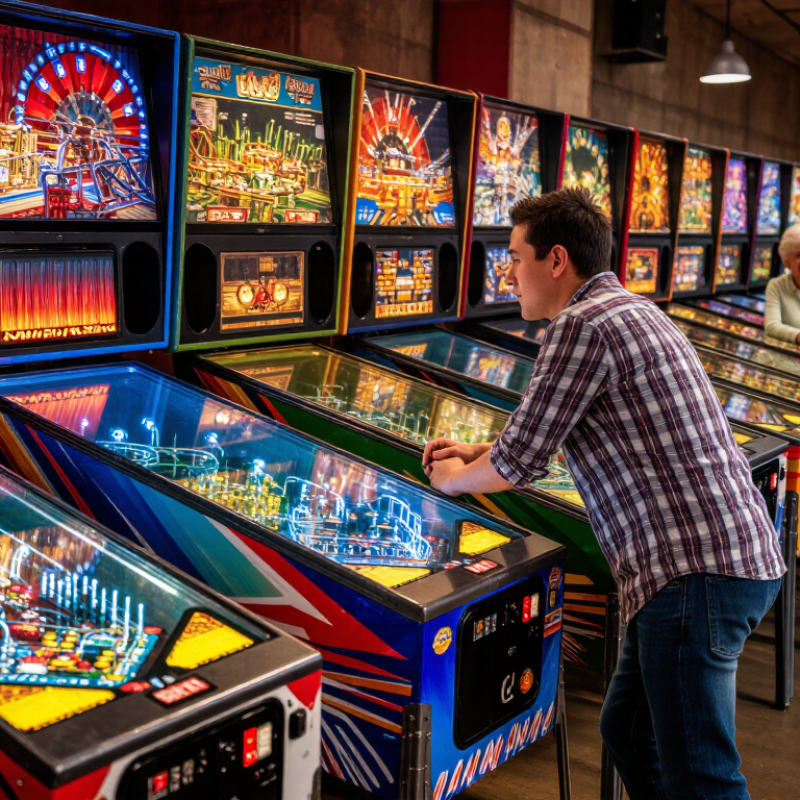
Origins and Global Expansion: From 1930s Tables to Modern Arcades
Pinball’s global story began with coin-operated tables in the 1930s. Early machines used springs, metal balls, and simple scoring fields. They were compact enough for cafés, cinemas, and neighborhood shops. In 1947, player-controlled flippers changed the experience. Skill became more visible. The game felt less like gambling and more like timed physical play.
Then came the arcades.
After the Second World War, arcade halls spread through North America, Europe, and parts of Asia. Pinball travelled with them because it needed no screen, network, or complex instruction. A player could understand the table within seconds.
The Global Amusement Parks Market report by Grand View Research estimated this wider market at USD 55.7 billion in 2022. That figure is not pinball-specific, but it shows the commercial scale supporting location-based entertainment. It also warns us not to confuse arcade growth with pinball growth.
Modern machines now use brighter displays, sensors, digital scoring, and connected tournament systems. Yet the essential loop remains physical: launch the ball, hear the rails, and react before it drains.
The International Flipper Pinball Association reports more than 100,000 ranked players worldwide, indicating an organized international community.
Participation data is useful, but it is not a complete sales measure. Public figures remain uneven across countries.
That gap deserves more attention. The popular origin story is tidy, perhaps too tidy. Local clubs, collectors, and small arcades also kept the culture alive.
Game Mechanics: How Physics, Skill, and Feedback Drive Repeat Play
Why Are Pinball Machines So Popular Worldwide?
Game Mechanics: How Physics, Skill, and Feedback Drive Repeat Play
A pinball machine turns simple movement into a physical conversation. A steel ball drops, rebounds, and changes direction within seconds. Players use flippers to control timing, not the entire path. That limited control creates tension. Every shot feels partly earned and partly unpredictable.
Physics makes each attempt different. Angle, speed, and contact point can change the ball’s route dramatically. Skilled players learn to read rebounds and protect the ball from dangerous drains. They also adjust their posture and timing after each mistake. The machine responds with lights, sounds, score changes, and sudden motion. This immediate feedback explains much of its lasting appeal.
The experience is also social. People watch a difficult shot, react to a near miss, and share small victories. Yet skill does not guarantee success. A careful player can still lose quickly. That unfair moment can feel frustrating, but it encourages another attempt. Perhaps the weakness is part of the design. Perfect control might make the game less exciting. Different players also find different goals, from chasing a high score to completing a complex sequence. The rules stay visible through feedback, even when the player has not mastered them.
Why Are Pinball Machines So Popular Worldwide?
Game Mechanics: How Physics, Skill, and Feedback Drive Repeat Play
Pinball combines fast visual tracking with immediate sound and physical feedback. Average human reaction times are typically fastest for tactile cues, followed by auditory cues, while visual cues usually take longer. This difference helps explain why pinball rewards practice: players learn to anticipate motion and respond before the ball reaches a critical point.
Competitive Growth: IFPA Reports 100,000+ Ranked Players Worldwide
Pinball’s global popularity is increasingly visible through competition. The International Flipper Pinball Association reports more than 100,000 ranked players worldwide. That figure shows how a casual arcade game has developed into an organized international activity. Players can track results, improve ratings, and meet opponents beyond their local communities. A tournament may begin with a quiet practice ball and end with tense decisions under bright lights.
Rankings also create a clear reason to return. Players study angles, control rebounds, and practice shots that seemed impossible during their first games. Local events help newcomers gain experience, while larger competitions provide stronger tests. The system is not perfect. Rankings may not capture creativity, sportsmanship, or the excitement of an unforgettable comeback. Still, published participation data offers useful evidence of competitive growth, especially when compared across regions and time.
Tips: Start with a reliable machine and learn its rulesheet carefully. Practice controlling the ball before chasing difficult shots. Record your scores honestly. Watch experienced players, but do not copy every movement blindly. A short practice session can reveal more than random play. Keep expectations realistic. Progress can feel slow, and even skilled players make careless mistakes. That is part of the learning process.
Venue Economics: Pinball Map Lists 10,000+ Locations Globally
Why Are Pinball Machines So Popular Worldwide?
A global pinball-location directory now lists more than 10,000 venues. That number changes the business conversation. Pinball is not only a home collectible. It is a repeat-visit attraction in bars, cafés, family entertainment centers, hotels, and specialist arcades. Operators can place one machine beside a counter, where a brief game encourages longer stays and extra purchases. The International Association of Amusement Parks and Attractions reported that global visitor attractions generated hundreds of billions of dollars in economic activity before the pandemic. Pinball benefits from this wider experience economy because it needs limited floor space and offers immediate participation.
10,000+
venues listed in a global pinball-location directory
The economics are measurable. A 2024 market analysis by Grand View Research identified growing demand for coin-operated entertainment equipment, supported by social recreation and venue-based play. A location directory with 10,000-plus entries also provides practical evidence of distribution, not just consumer interest. Operators can track plays, maintenance needs, and peak hours through payment systems and regular audits. Small details matter: a clean glass, working flippers, and a machine near visible seating can influence repeat play.
The data is useful, but imperfect. A listed venue may have one machine or twenty. Some locations may close before directories update. Revenue also depends on local pricing, rent, repairs, and audience habits. Still, the worldwide footprint suggests strong resilience. Pinball turns a few square meters into an interactive social moment. That remains commercially attractive.
Cultural Reach: Licensed Themes and Collecting Sustain Global Demand
Why Are Pinball Machines So Popular Worldwide?
Licensed themes give pinball a shared visual language. A familiar story, character, or sporting world can attract players before the first shot. The cabinet becomes a small stage, filled with bright artwork, sound effects, and physical movement. In arcades, I have noticed visitors approach machines because the theme feels recognizable. Then the game itself must earn their attention.
Cultural reach depends on careful adaptation. A theme that works in one country may feel distant elsewhere. Designers often balance local preferences with broadly understood ideas, such as adventure, competition, humor, and fantasy. Translation matters too. A confusing rule or unfamiliar reference can weaken the experience. Licensed content creates interest, but it cannot repair poor controls or unclear gameplay.
Collecting also sustains demand. Owners look for clean playfields, working mechanisms, original artwork, and documented maintenance. Scarcity can increase interest, yet rarity alone does not guarantee lasting value. Some collectors prefer machines with personal memories, even when the cabinet has visible wear. That choice is easy to understand. A scratched side panel may recall a childhood arcade more vividly than a perfect restoration. Still, collecting has practical limits. Machines need space, repairs, and regular care. Their popularity continues through this mix of cultural recognition, tactile play, and imperfect personal attachment.
