
What Is the Longest Range Walkie Talkie?
What Is the Longest Range Walkie Talkie? The answer depends less on a bold number printed on a box and more on where you use the radio. Open ground, clear line of sight, a well-positioned antenna, and suitable power can all improve communication. Hills, buildings, trees, and even a radio kept inside a bag can reduce the useful range. Small details matter.
Some models advertise communication over dozens of miles, but that figure usually reflects ideal test conditions. Real use can feel very different. On a wooded trail, two users may lose contact much sooner than expected; across open water or flat land, the same radios may perform better. There is no single model that guarantees the greatest range in every setting. That is the honest, slightly inconvenient part.
This guide explains what “longest range” really means and how to compare walkie-talkies more carefully. It looks at radio type, antenna design, battery performance, terrain, and stated range claims. It also distinguishes advertised distance from dependable, everyday coverage. Choose equipment approved for your location, and check applicable radio-use requirements before transmitting. A powerful radio is not automatically the right one. The best choice is the model that maintains clear contact in your actual environment, with enough battery life and simple controls for the people using it. Expect trade-offs, and test the radios before relying on them.
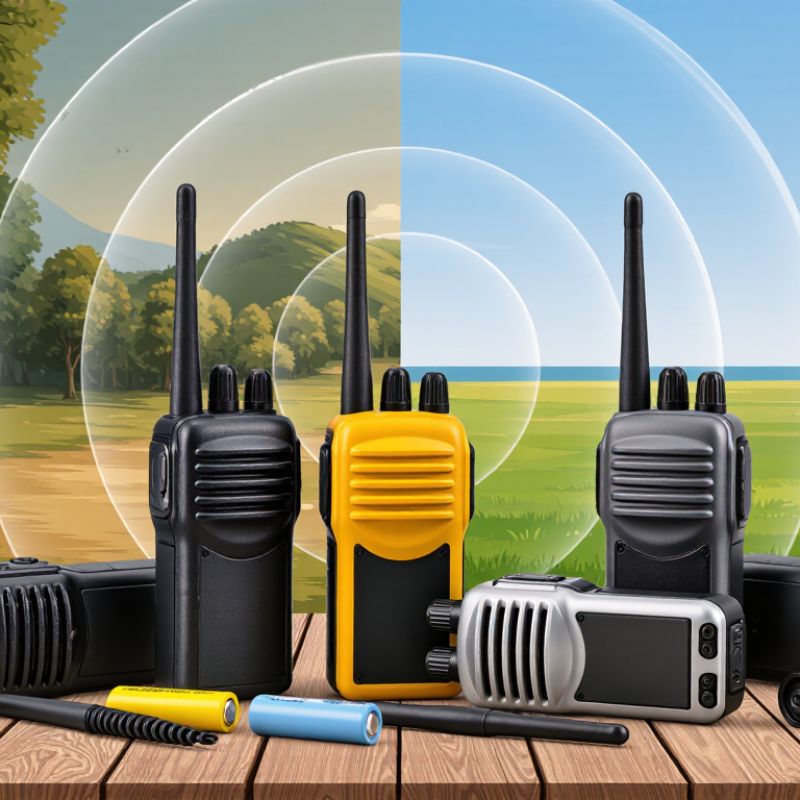
What “Longest Range” Means for Walkie-Talkies
“Longest range” is not a fixed distance printed on a radio. It is a best-case estimate, often measured across open ground with clear line of sight. A hill, concrete wall, or row of buildings can shorten the link dramatically. ITU-R Recommendation P.1812 models terrestrial radio paths from 30 MHz to 6 GHz and accounts for terrain and land cover. That technical detail matters: two radios with identical power can perform very differently when one path crosses a ridge. Not a promise.
Power figures need context, too. In the United States, FCC rules allow up to 2 watts effective radiated power on certain Family Radio Service channels; other channels have lower limits (47 CFR §95.567). That figure describes permitted output, not a guaranteed operating radius. Antenna position, battery condition, interference, and even where a person holds the radio affect reception. A test across a quiet field can make a model look impressive. A busy street is less forgiving. It is tempting to compare only advertised miles, but those numbers rarely describe your route. Check the terrain, intended use, and applicable local rules before treating a range claim as practical.