Top Trends in Circuit Board Assembly for 2026 What to Expect
The circuit board assembly industry is on the brink of significant transformation by 2026. With the rise of new technologies, manufacturers face evolving challenges. According to a report by MarketsandMarkets, the global printed circuit board market is projected to reach $85.6 billion by 2026, highlighting robust growth potential.
Experts in the field are already sharing insights on future trends. John Smith, a prominent analyst at Tech Insights, stated, “Incorporating automation and AI into circuit board assembly will redefine production efficiency.” Embracing such technologies raises questions about workforce adaptation and sustainability.
The journey toward advanced circuit board assembly is not without its obstacles. Organizations must balance innovation with quality control. As the industry evolves, the need for skilled technicians remains critical. Future advancements should focus on reducing waste and improving processes while addressing potential ethical concerns in automation. As we move toward 2026, a proactive approach will be vital for success in this dynamic sector.

Emerging Technologies Influencing Circuit Board Assembly in 2026
As we look toward 2026, emerging technologies will significantly shape circuit board assembly processes.
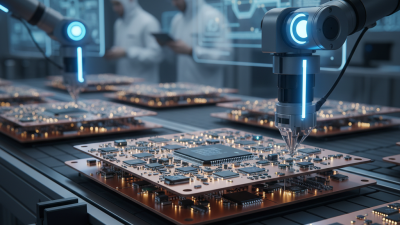
Automation continues to revolutionize productivity. Robotic arms and automated placement systems are expected to handle tasks with greater precision.
However, integrating these technologies may pose challenges. Companies must adapt their workforce to work alongside machines.
Another technology changing the landscape is the use of advanced materials. Flexible and printed circuit boards will see increased use due to their lightweight and compact nature.
This shift allows for innovative designs but can also create issues in thermal management. Engineers will need to rethink cooling solutions for more complex devices.
Lastly, sustainability will become a primary focus. The industry must grapple with waste reduction and eco-friendly materials. Transitioning to greener practices can be daunting.
However, it is necessary to meet the demands of conscious consumers. Adopting these technologies offers a chance for progress, albeit with challenges that require serious reflection and adaptation.
Sustainability Practices in Circuit Board Manufacturing: Future Outlook
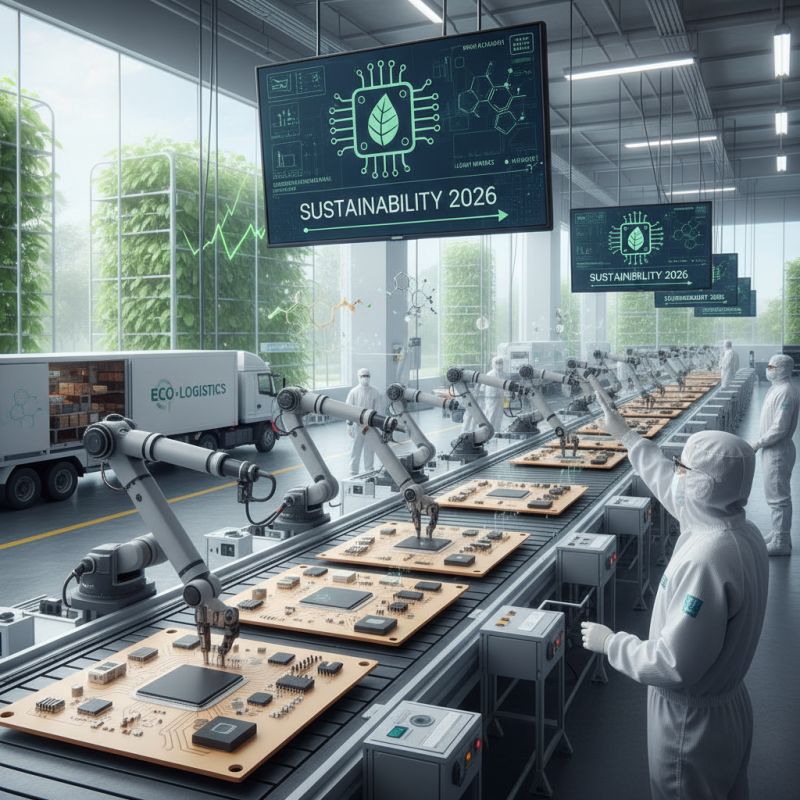
In 2026, sustainability will dominate circuit board manufacturing. More companies will prioritize eco-friendly materials. This shift aims to reduce environmental impact. Biodegradable substrates could become common. These materials are less harmful than traditional alternatives. Yet, sourcing them poses challenges. The industry must adapt supply chains to meet new standards.
Energy-efficient processes will gain traction, too. Manufacturers are likely to invest in renewable energy. Solar and wind power can reduce carbon footprints. However, many factories still rely on fossil fuels. Transitioning will take time and resources. Aligning with green practices may require significant upfront costs.
Recycling will also play a crucial role. Companies are beginning to explore closed-loop systems. Reusing materials reduces waste and conserves resources. It's a step forward, but the execution is lacking. Many still discard old circuit boards. Education on recycling will be vital for improvement. Embracing these practices is essential for a sustainable future.
Automation and AI Integration in Circuit Board Assembly Processes
The integration of automation and AI in circuit board assembly is transforming the industry. These technologies streamline production processes, enhancing efficiency and reducing operational errors. Automation can handle repetitive tasks swiftly, minimizing human intervention. This shift not only cuts costs but also increases precision in assembly tasks.
AI plays a crucial role in optimizing assembly lines. It analyzes data in real-time, identifying issues before they escalate. This predictive capability is game-changing. However, challenges remain. Implementation can be complex and requires skilled personnel. Many companies face difficulties in integrating these advanced systems smoothly.
The push for automation raises concerns about job displacement. While it enhances productivity, it could lead to a workforce shift. Training and adaptation are necessary for employees who may find their roles evolving. Balancing technology with human expertise is essential for success. The road ahead is promising but not without hurdles.
Expanding Role of Miniaturization in Design and Production Techniques
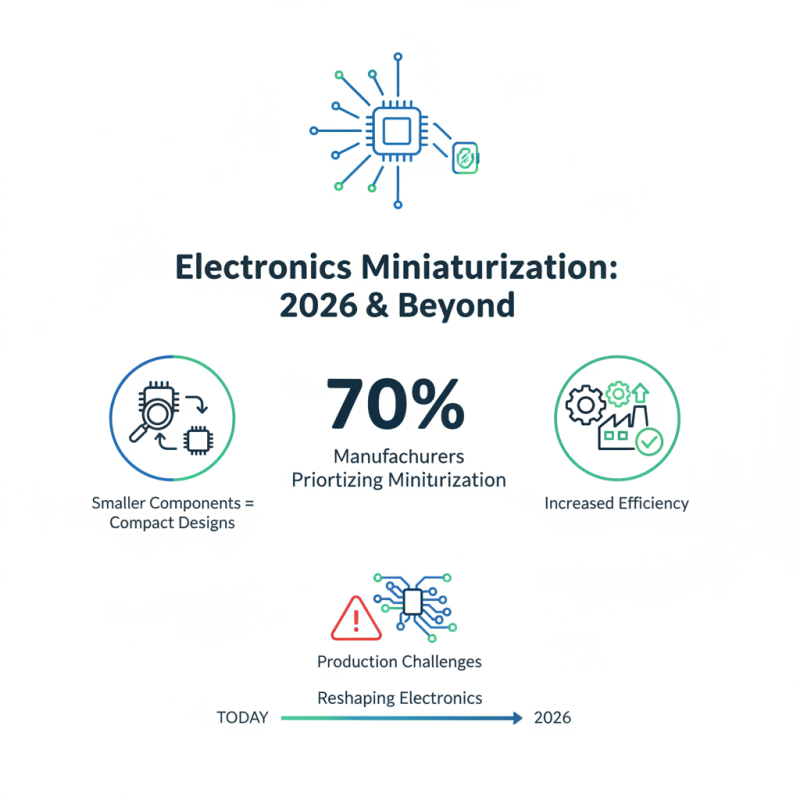
The trend of miniaturization in circuit board assembly is set to reshape the electronics landscape by 2026. Smaller components lead to more compact designs, which can reduce the overall size of devices. According to a recent industry report, over 70% of manufacturers are prioritizing miniaturization techniques. This shift increases efficiency but also presents challenges in production.
As components shrink, the risk of defects may rise. Tighter tolerances can lead to issues like misalignment or soldering failures. Data indicates that the error rate in miniaturized assemblies could increase by 15% without proper quality control measures. Manufacturers need to adapt their processes to manage these risks effectively. Additionally, many are investing in new technologies like AI and automation to enhance precision.
Designers also face obstacles with thermal management in smaller spaces. Overheating can compromise functionality and longevity. Studies show thermal issues account for about 30% of device failures in miniaturized designs. As circuit boards become more complex, engineers must rethink cooling strategies. This evolving landscape presents both opportunities for innovation and challenges that require careful planning.
Market Trends and Demand Forecast for Circuit Board Assemblies in 2026
As we approach 2026, the demand for circuit board assemblies is expected to surge. Industries like automotive, telecommunications, and consumer electronics will drive this growth. The shift toward electric vehicles (EVs) and smart devices calls for more advanced and efficient assemblies. This trend reflects a broader push for sustainable practices in manufacturing.
However, challenges remain. The supply chain is under pressure from global factors. Material shortages could hinder production capabilities. Manufacturers may need to adapt their operations continuously. Innovation in recyclable materials could help address these issues. Yet, ensuring quality while reducing costs presents a constant dilemma.
Consumers are more aware of their choices. Sustainability is not just a buzzword; it affects purchasing decisions. Companies that embrace eco-friendly practices may gain a competitive edge. But there is a fine line between marketing and genuine sustainability efforts. Transparency in sourcing and production processes will be crucial for building trust with customers.