Zinc Die Casting has become a practical choice for manufacturers seeking intricate shapes, repeatable dimensions, and efficient production at scale. Grand View Research estimates that the global zinc die casting market was worth about US$4.8 billion in 2023 and forecasts a 5.3% compound annual growth rate from 2024 to 2030. Market estimates vary by methodology, but the direction is clear: demand is growing across automotive, electronics, and consumer products. Details matter. A small connector housing, a latch, or a thin-walled fitting can place very different demands on a foundry’s tooling, process control, and inspection.
China’s manufacturers compete on more than price. Buyers also need evidence of stable alloy control, reliable lead times, documented quality checks, and the ability to manage tooling changes. Zinc specialist Dr. Frank Goodwin’s technical work points to a key material advantage; paraphrased rather than quoted verbatim: zinc’s casting properties help produce detailed components with thin walls. That advantage only holds when part design, mold engineering, and process settings work together.
This Top 10 guide compares Chinese suppliers through practical sourcing criteria, including manufacturing capabilities, export experience, quality systems, and communication. A company’s ranking cannot replace a factory audit or sample approval. Treat it as a shortlist, not a guarantee. Ask for drawings, inspection records, and clear quotations before choosing a partner.
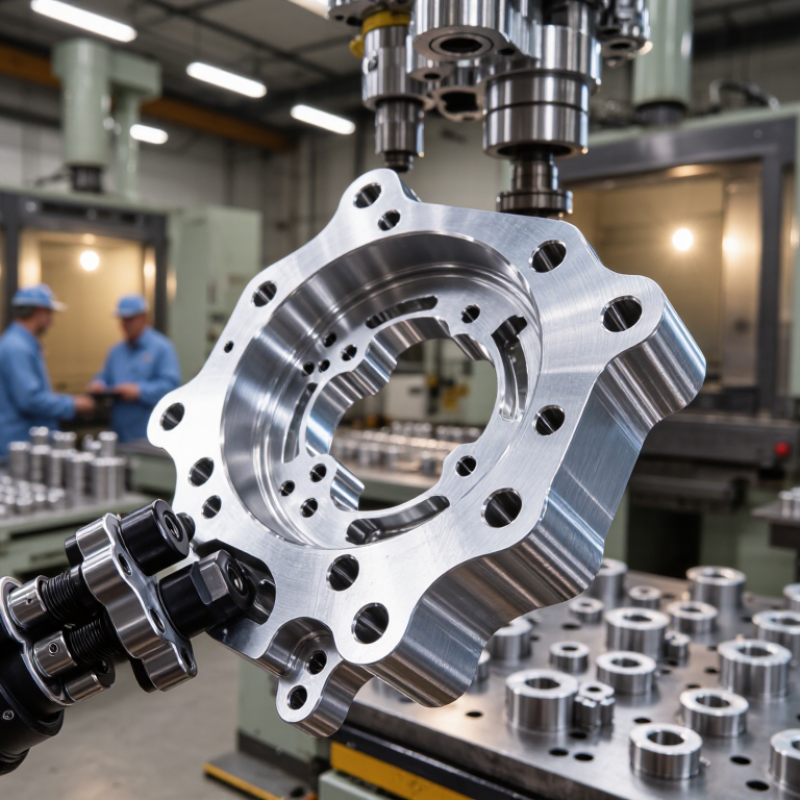
Zinc die casting in China relies on alloys, not pure zinc alone. Common zinc-aluminum alloys offer good fluidity and can reproduce fine details, such as thin ribs, threaded bosses, and textured handles. NIST’s Chemistry WebBook lists pure zinc’s melting point at 692.68 K, or 419.53°C. This is a reference value, not a recommended machine setting: alloy composition changes melting behavior, so production temperatures must follow the alloy specification and process trials.
The USGS Mineral Commodity Summaries 2025 estimates global zinc mine production at about 12 million metric tons in 2024, giving useful context for the scale of the material supply chain. Die-cast zinc parts appear in automotive hardware, electrical connectors, appliance controls, and compact enclosures. For buyers comparing Chinese manufacturers, ask for alloy certificates, dimensional inspection records, and evidence of stable process control. A polished sample is not enough. Porosity, flash, or inconsistent plating can emerge only across a production run.
Tips: Confirm whether quoted temperatures refer to the melting range, furnace setting, or molten-metal holding temperature. They are not interchangeable. Also, do not assume thicker walls always improve strength; geometry and alloy choice matter, and the right balance may require testing.
Zinc die casting turns molten alloy into precise components through controlled pressure and reusable steel moulds. Alloy selection depends on strength, corrosion resistance, wall thickness, and the part’s intended use. Some zinc alloys fill thin sections well, while others may better suit demanding mechanical loads. The right choice deserves discussion with the casting engineer, not guesswork.
Before production, the mould is checked for venting, cooling, and gate placement. Molten zinc is injected under pressure, filling the cavity quickly. Once the metal solidifies, the mould opens and releases the casting. Small details matter: uneven cooling can cause distortion, and tiny pores may appear even when the surface looks smooth. It is easy to focus on the mould and overlook how finishing affects fit. Trimming removes runners and flash; tumbling, plating, or coating can improve appearance and surface protection. Inspection should cover dimensions and visible defects.
Tips: Share drawings, tolerances, and expected production volumes before choosing an alloy or mould design. Ask how samples will be inspected. Keep a record of changes; small revisions can affect fit. That detail is easy to miss.
China’s zinc die-casting manufacturers are concentrated in several coastal manufacturing regions. Guangdong, including Dongguan, Shenzhen, and Foshan, offers access to electronics, hardware, and export supply chains. Zhejiang, particularly Ningbo and Taizhou, has established metalworking and mold-making capacity. Jiangsu and nearby Shanghai provide another option for buyers seeking integrated engineering and logistics.
Capabilities vary by factory. Many suppliers offer hot-chamber casting, custom mold design, trimming, CNC machining, and surface treatments such as plating or powder coating. Some also support prototypes and small production runs; others focus on higher-volume orders. Ask whether mold maintenance, dimensional inspection, and finish checks happen on-site. Details matter. A polished sample alone does not confirm stable production.
When comparing ten suppliers, match location to the work required. Nearby mold shops can simplify tool changes, while a factory with machining and finishing in-house may reduce handoffs. Request material specifications, inspection records, and sample measurements before approving production. A supplier may describe its process clearly yet have limited capacity for sudden design changes. That gap deserves attention. Travel time, shipping access, and communication quality can also affect delivery, even when the casting itself meets requirements.
Representative tensile strength of common zinc die-casting alloy grades—a material-level benchmark for comparing the capabilities manufacturers may support.
Values are representative tensile strengths in megapascals (MPa); actual results vary with casting conditions, component design, and test method. This chart compares alloy grades, not individual manufacturers.
When comparing China’s zinc die casting manufacturers, request evidence that quality systems operate on the production floor. Check calibration records, alloy traceability, inspection plans, and corrective-action logs—not certificates alone. USGS Mineral Commodity Summaries 2024 estimated China’s 2023 zinc mine output at 4.0 million metric tons, about one-third of global output. That indicates a substantial upstream base, but it does not guarantee a supplier’s alloy consistency or access to suitable material. Ask for recent composition reports and verify them against your part specification. Not enough.
Tooling capability deserves a close look. Ask who owns the die, how many shots it has completed, and what maintenance records are available. Compare cavity design, expected tool life, sampling stages, and the supplier’s process for correcting porosity or flash. A low tooling quote can hide later repair costs. Request sample parts from the intended production machine, not only polished showroom pieces.
Production capacity should be supported by machine tonnage, shifts, utilization, and backup equipment. For export readiness, review packaging trials, shipment records, and communication response times. The World Bank’s Logistics Performance Index 2023 gave China an overall score of 3.7 out of 5; this national measure cannot predict an individual factory’s delivery reliability. Check the factory’s own on-time shipment data and agree on how delays are reported. Details matter. A good audit still has limits. Ask uncomfortable questions.
Supplier-specific certifications, tooling capabilities, production capacity, and export records require direct verification. The anonymized rows below are comparison placeholders, not a verified ranking or claims about actual manufacturers.
| Supplier | Quality systems | Tooling capability | Production capacity | Export evidence | Verification to request |
|---|---|---|---|---|---|
| Supplier 1 | Not independently verified | Not independently verified | Not independently verified | Not independently verified | Current certificates, machine list, capacity data, and export references |
| Supplier 2 | Not independently verified | Not independently verified | Not independently verified | Not independently verified | Current certificates, machine list, capacity data, and export references |
| Supplier 3 | Not independently verified | Not independently verified | Not independently verified | Not independently verified | Current certificates, machine list, capacity data, and export references |
| Supplier 4 | Not independently verified | Not independently verified | Not independently verified | Not independently verified | Current certificates, machine list, capacity data, and export references |
| Supplier 5 | Not independently verified | Not independently verified | Not independently verified | Not independently verified | Current certificates, machine list, capacity data, and export references |
| Supplier 6 | Not independently verified | Not independently verified | Not independently verified | Not independently verified | Current certificates, machine list, capacity data, and export references |
| Supplier 7 | Not independently verified | Not independently verified | Not independently verified | Not independently verified | Current certificates, machine list, capacity data, and export references |
| Supplier 8 | Not independently verified | Not independently verified | Not independently verified | Not independently verified | Current certificates, machine list, capacity data, and export references |
| Supplier 9 | Not independently verified | Not independently verified | Not independently verified | Not independently verified | Current certificates, machine list, capacity data, and export references |
| Supplier 10 | Not independently verified | Not independently verified | Not independently verified | Not independently verified | Current certificates, machine list, capacity data, and export references |
Choosing a zinc die casting manufacturer starts with the alloy, not the quote. Different zinc alloys offer different balances of strength, fluidity, corrosion resistance, and surface finish. Tell suppliers whether the part needs plating, frequent handling, or exposure to moisture. Ask them to explain the alloy recommendation and provide test data relevant to your part. A polished sample helps, but it cannot confirm long-term performance by itself. Small details matter.
Part design affects both casting quality and tooling cost. Share a 3D model and flag thin walls, deep pockets, ribs, and tight tolerances. These features can affect metal flow, ejection, and cycle time. Ask for a design-for-manufacturing review before approving the mold. It should identify practical changes, such as adding draft or adjusting wall thickness. Not always obvious. A common oversight is treating every dimension as equally critical; mark the surfaces and fits that truly affect assembly.
Annual volume should match the manufacturer’s machine capacity, tooling plan, and inspection process. A short run may not justify complex automation, while repeat orders need stable cycle times and consistent measurements. Request a sample inspection report and clarify how defects are tracked between batches. Compare quotes using tooling, finishing, and quality checks, not unit price alone. Estimates can still miss the mark when designs change, so confirm how revisions affect cost and delivery.
MSIRobot