Choosing the right Vfd Pcb Board supplier can shape a drive system’s safety, service life, and production stability. Global buyers often compare price first. That is understandable, but incomplete.
A reliable supplier should demonstrate practical experience with high-voltage layouts, thermal control, insulation spacing, and electromagnetic interference. These details become visible in real conditions: a dusty cabinet, a hot factory floor, or a motor starting repeatedly under heavy load. Bimal K. Bose, a respected power-electronics scholar, wrote, “Power electronics is the technology of the future.” His observation remains relevant because modern VFD performance depends on disciplined circuit design, not only advanced components.
This guide examines ten Vfd Pcb Board suppliers through engineering capability, quality controls, customization, documentation, and international support. It considers whether suppliers provide traceable testing, stable component sourcing, and clear technical responses. It also looks beyond polished websites. Samples, inspection reports, repair feedback, and production consistency matter more.
No supplier is perfect.
A low-cost board may perform well in a controlled application but fail under heat, vibration, or voltage fluctuation. Conversely, a premium supplier may offer excellent engineering while missing delivery expectations. Buyers should confirm operating voltage, current capacity, board dimensions, connector design, firmware compatibility, and environmental requirements before placing an order. Certification claims also deserve careful verification.
The rankings are intended as a practical starting point, not a final verdict. Regional service, application complexity, and internal testing resources can change the best choice. Careful comparison remains essential.
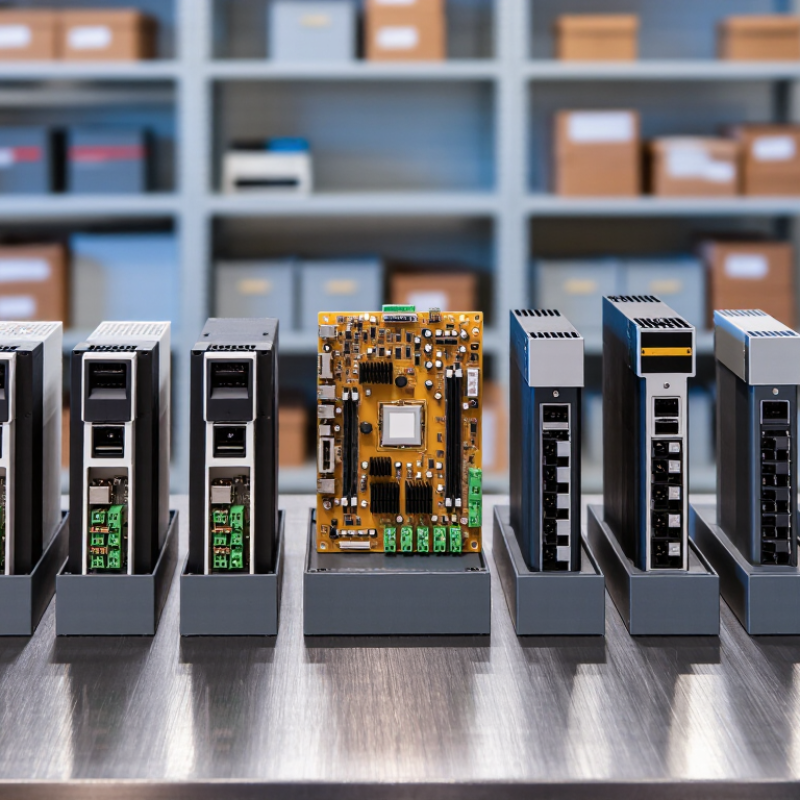
A VFD PCB board is the control center inside a variable frequency drive. It receives speed commands from a keypad, PLC, or external sensor. The board then coordinates rectification, DC-bus monitoring, and inverter switching. Small signals control powerful semiconductor devices that feed the motor.
The key process is pulse-width modulation, or PWM. The PCB sends timed gate signals to switching devices, changing output frequency and voltage. Lower frequency usually reduces motor speed. Voltage must also follow a suitable ratio, or the motor may lose torque and overheat. During commissioning, technicians should check acceleration time, current feedback, and fault records.
Feedback makes control more reliable. Current sensors detect overloads, while temperature sensors protect the power section. Some systems also measure motor position for precise low-speed operation. A reliable PCB needs clean signal paths, stable connectors, and suitable insulation spacing. It should also tolerate vibration, dust, and temperature changes.
Small details matter. Technicians often inspect solder joints and connector pressure before installation. They also compare firmware compatibility with the complete drive system. A board can be electrically correct yet unsuitable for a harsh cabinet. That is an easy mistake. Suppliers should provide test records, component traceability, and clear environmental specifications. In practice, no control loop is perfect, so conservative protection settings may prevent damage, even when they reduce performance slightly.
Choosing a VFD PCB board supplier requires more than comparing prices. Check their experience with variable-frequency drive circuits, power components, insulation design, and thermal control. Ask for sample inspection records, production photos, and test data from similar projects. A reliable supplier should explain how they manage solder quality, component sourcing, and electrical safety. Clear answers matter.
Tips: Request a pilot batch before placing a large order. Inspect the solder mask, connector alignment, and board thickness. Confirm testing for voltage endurance, temperature rise, signal accuracy, and vibration. Also review packaging details. Moisture-resistant bags and firm separators can prevent damage during long-distance shipping.
Supplier reliability also depends on traceability. Each batch should have material records, inspection dates, and identifiable production codes. Confirm whether the supplier can support design reviews and controlled engineering changes. Their response time during a fault is important. A delayed answer can stop an entire assembly line. However, no checklist is perfect. Even a well-documented supplier may experience component shortages or unexpected rework. Discuss these risks openly, and ask how they report defects without hiding uncomfortable details. Compare payment terms, minimum order quantities, replacement policies, and realistic lead times. Visit the facility when possible, or request a live remote audit. Experienced buyers often learn more from small process details than polished presentations.
10 Leading VFD PCB Board Suppliers for Global Buyers
Selecting a VFD PCB supplier takes more than comparing unit prices. The International Energy Agency’s 2011 analysis estimated that electric motor systems used about 53% of global electricity. That figure highlights why dependable drive electronics matter: a poorly matched board can affect motor control, heat management, and equipment uptime. The estimate is dated, so buyers should treat it as context, not a current market measurement. Strong suppliers can explain their design controls, component traceability, inspection methods, and support for changes between production batches. Ask for test records covering insulation, functional performance, and operation under expected temperature and vibration conditions. Details matter.
Tips: Request a sample board and a clear test report before placing a large order. Check whether the supplier can maintain consistent components and provide advance notice of substitutions.
Global buyers should also assess communication and delivery risks. Compare quoted lead times with actual production schedules, and ask how the supplier handles shortages or engineering revisions. IPC’s industry reporting tracks electronics manufacturing and PCB production trends; it is useful for understanding supply-chain conditions, but it does not certify an individual supplier. A factory tour or independent audit can add evidence, though neither guarantees defect-free products. Some evaluation steps feel slow. They may still prevent costly surprises.
Choosing a VFD PCB supplier starts with the exact drive model, board revision, and connector layout. A matching product description is not enough. Compare terminal labels, mounting-hole positions, voltage ratings, and firmware requirements against the failed board. Ask for component-level inspection records and functional test results, not just a “tested” label. Small details matter.
Compatibility should be verified before price. A mismatched gate-driver circuit or current-sensing range can trigger faults or damage connected equipment. The U.S. Department of Energy’s 2014 report, Improving Motor and Drive System Performance, notes that motor-driven systems use about 69% of U.S. industrial electricity. That scale makes reliable repair and commissioning checks worthwhile. Request traceability, a clear warranty, and guidance for safe installation. Keep the old board’s fault codes and photographs; they can help diagnose whether the PCB caused the failure.
Compare total cost, including shipping, lead time, return terms, and technical support across time zones. A low quote may exclude testing or provide limited documentation. Ask whether support can interpret alarm histories and confirm parameter settings for your application. Get answers in writing. Check how the supplier handles obsolete revisions and replacement components. Documentation can still be thin, even with a competent supplier, so leave time for bench verification before production resumes.
A practical comparison framework for sourcing VFD (variable frequency drive) PCB boards. The profiles below describe supplier types, not named companies or verified rankings.
| Supplier Type | Typical Strength | Quality Evidence to Request | Compatibility Checks | Indicative Unit Price (USD) | Typical Lead Time | MOQ | Support to Compare | Best Fit |
|---|---|---|---|---|---|---|---|---|
| Authorized drive-service distributor | Traceable parts and access to manufacturer documentation | Traceability records, inspection documents, warranty terms | Exact drive model, hardware revision, firmware, and board part number | $100–$800+ | 1–8 weeks, depending on stock | Usually 1 board | Technical verification, returns process, and regional service availability | Critical equipment and buyers prioritizing documented provenance |
| Independent industrial spare-parts supplier | Broad inventory of discontinued and replacement boards | Board photos, condition report, functional-test record, warranty | Part number, connector layout, voltage rating, and revision match | $50–$600+ | 2 days–6 weeks | Usually 1 board | Return window, cross-reference support, and shipping options | Urgent maintenance and legacy-drive sourcing |
| Industrial electronics repair specialist | Repair or refurbishment of existing boards | Repair report, replaced-component list, load-test results | Confirmation that the original board is repairable and configuration data is preserved | $80–$500+ per repair | 1–4 weeks | Usually 1 board | Diagnosis process, repair warranty, and expedited service | Repairable boards or hard-to-source models |
| PCB assembly manufacturer | Build-to-print production for documented designs | Incoming-material controls, inspection plan, test records, and change control | Gerber files, bill of materials, stack-up, firmware, and drive-specific testing | $30–$300+ per board; setup and tooling may be extra | 2–8 weeks | Often 5–100+ boards | Engineering review, prototype support, and production-change notification | OEMs and buyers with complete design files |
| Low-volume PCB prototyping service | Rapid prototypes and small engineering batches | Fabrication specifications, assembly inspection, and prototype test results | Design-rule review, component availability, and functional validation in the target drive | $50–$400+ per board in small quantities | 1–4 weeks | 1–10 boards | Design-for-manufacture feedback and prototype iteration support | Development, repair trials, and low-volume testing |
| Regional automation parts distributor | Local logistics and familiarity with regional standards | Supplier traceability, product condition, and written warranty | Drive series, regional voltage configuration, connectors, and revision | $100–$900+ | 1 day–4 weeks | Usually 1 board | Local-language assistance, tax documentation, and delivery tracking | Buyers needing local purchasing and faster delivery coordination |
| Surplus and refurbished-equipment dealer | Access to obsolete, used, or refurbished inventory | Clear grading standard, test method, serial or lot details, and return terms | Visual comparison is not sufficient; verify part number and revision before purchase | $25–$400+ | 2 days–5 weeks | Usually 1 board | Condition disclosure, DOA policy, and availability of a replacement unit | Budget-sensitive repairs and discontinued equipment |
| Custom electronics engineering firm | Reverse engineering, redesign, and obsolescence support | Design review, verification plan, prototype results, and controlled documentation | Electrical interfaces, safety requirements, firmware behavior, and full-drive testing | $150–$1,000+ per board, plus engineering fees | 4–16+ weeks | 1–20 boards, depending on scope | Engineering ownership, documentation handover, and long-term revision support | Obsolete designs or projects requiring a tailored replacement |
| Industrial control-system integrator | System-level application knowledge and commissioning assistance | Integration test records, site acceptance criteria, and project documentation | Drive model, motor and control configuration, communication interfaces, and application settings | $150–$1,000+, often quoted with services | 2–10 weeks | Project-dependent | Installation, commissioning, and troubleshooting scope | Buyers seeking a board plus application-level assistance |
| Online industrial parts marketplace seller | Convenient quote comparison across multiple listings | Seller history, original listing photos, test evidence, and marketplace return terms | Confirm exact part number and revision directly with the seller before ordering | $30–$700+ | 3 days–8 weeks | Usually 1 board | Response time, dispute process, shipping terms, and proof of stock | Initial market checks and non-critical purchases |
Note: Price and lead-time figures are broad, indicative procurement ranges, not supplier quotations. Actual costs depend on board complexity, condition, availability, quantity, testing requirements, shipping, duties, and warranty. Before ordering, confirm the exact drive model, board part number and revision, firmware or configuration requirements, operating voltage, connector layout, test evidence, and return terms.
Selecting a VFD PCB supplier starts with the operating environment, not the quotation. Record the drive’s voltage, current, switching frequency, ambient temperature, and expected service life. Ask whether the board has been tested under thermal cycling, vibration, and electrical stress. Request traceable material records, inspection results, and a sample build. Small details matter: a connector that loosens under vibration can stop an entire cabinet. Check how the supplier handles design changes and component substitutions. A polished presentation is not proof of process control.
Supply continuity deserves equal attention. The Semiconductor Industry Association, citing World Semiconductor Trade Statistics, reported global semiconductor sales of $526.8 billion in 2023, down 8.2% from 2022. That market movement does not predict PCB lead times, but it shows why buyers should verify component availability rather than accept a fixed promise. Ask for a bill of materials, approved alternates, and written notice periods for substitutions. Compare quoted lead times with recent delivery records. Review IPC workmanship requirements relevant to the board’s construction, and confirm what inspection evidence accompanies each shipment. Then assess engineering support, response times, warranty terms, and corrective-action procedures. I would still check references; paperwork can miss the messy parts. A short pilot order can reveal whether packaging, labeling, and documentation match the production sample.
Recommended evaluation weights for selecting and purchasing the right VFD PCB board supplier. The percentages represent procurement priorities, not supplier performance or brand data.
Prioritize electrical compatibility and product reliability first, then compare documentation, delivery capability, commercial flexibility, technical support, and regulatory readiness.
MSIRobot