Icon about-block-ico-1 Icon about-block-ico-2 Icon about-block-ico-3 Icon about-block-ico-4 Icon announcement-close Icon arrow-left Icon arrow-right Icon arrow-sm Icon asterisk Icon banner-transparent-vector Icon btn-callback-ico Icon careers-item-location Icon careers-item-time Icon careers-item-type Icon careers-mail-ico Icon careers-phone-ico Icon careers-search-ico Icon careers-single-hero-vector Icon careers-single-more-vector Icon careers-vector Icon check Icon close Icon dfm-image-left-vector Icon dfm-image-right-vector Icon document Icon download-popup-vector Icon dropdown Icon envelope Icon facebook Icon faq-banner-bg Icon faq-title-ico-active Icon faq-title-ico Icon featured-links-block-bg Icon figure-1 Icon figure-10 Icon figure-11 Icon figure-12 Icon figure-13 Icon figure-14 Icon figure-15 Icon figure-2 Icon figure-3 Icon figure-4 Icon figure-5 Icon figure-6 Icon figure-7 Icon figure-8 Icon figure-9 Icon file-upload Icon form-sidebar-back Icon form-step-done Icon gmap-marker-group-icon Icon gmap-marker-icon Icon header-profile-ico Icon instagram Icon link Icon linkedin Icon loader Icon mail Icon phone Icon play-yt Icon play Icon post-nav-arr-left Icon quote-banner-vector Icon quote-block-aside-vector Icon quote-contact-phone-ico Icon quote-contact-position-ico Icon sidebar-location Icon sidebar-phone Icon technology-banner-nav-left-vector Icon technology-banner-nav-right-vector Icon twitter Icon webinar-item-date-vector Icon whitepaper-img-ico-left Icon whitepaper-img-ico-right Icon whitepapers-listing-banner-ico Icon whitepapers-single-aside-vector Icon youtube Icon yt-play-button

China Top 10 Vertical Boring Machine Manufacturers

Choosing a Vertical Boring Machine is rarely a simple price comparison. Buyers must match machine capacity to actual workpieces, production volume, and shop-floor conditions. A large table may suit heavy components, while a compact model can be more practical for limited space. Details matter.

This guide to China’s top 10 manufacturers offers a starting point for comparing suppliers, not a substitute for technical due diligence. It considers factors such as table diameter, maximum turning height, spindle power, control systems, stated accuracy, and available service support. Specifications should be checked against the parts you plan to machine, including their dimensions, materials, and required tolerances. Ask for clear documentation, installation guidance, spare-parts information, and relevant customer references. Where possible, review a sample cut or arrange a factory visit. A polished catalog is useful, but it cannot show every production detail. Rankings can also shift with product range, export experience, and buyer priorities. Not every shop needs the same machine. Some information may be difficult to compare when suppliers describe similar features differently. That deserves a second look. The manufacturers discussed here can help narrow the field, while careful verification remains the buyer’s responsibility. A good choice is not simply the biggest machine or the lowest quotation; it is a dependable fit for real work.
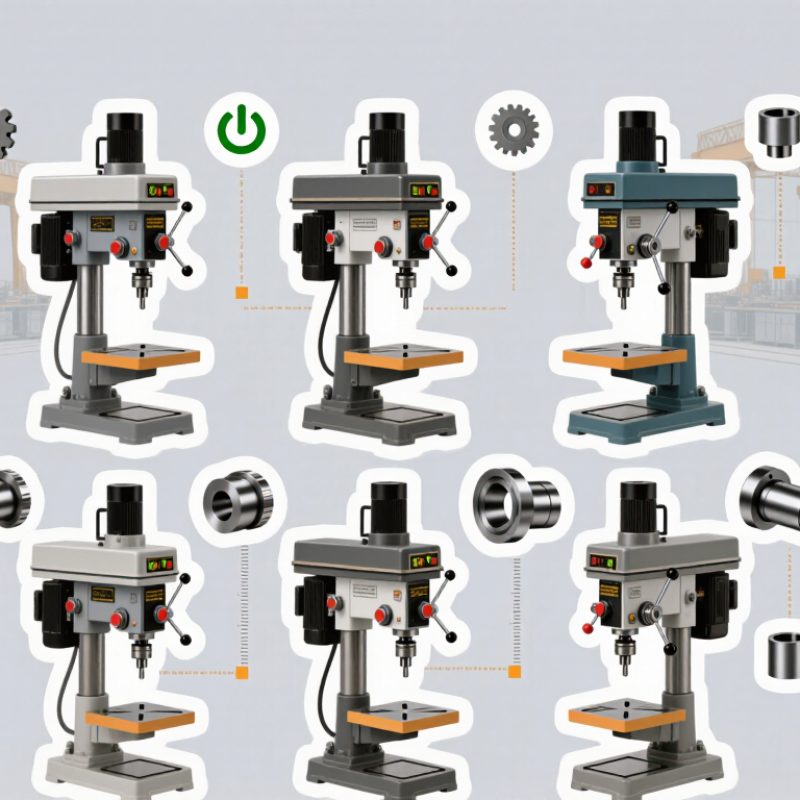
China Top 10 Vertical Boring Machine Manufacturers

Vertical Boring Machines: Types, Functions, and Applications

Vertical boring machines hold a workpiece on a horizontal rotary table while a vertical tool cuts its surfaces. This layout suits large, heavy parts that are awkward to support on a conventional lathe. Common designs include single-column machines for moderate work envelopes and double-column machines for wider, heavier components. Manual models handle straightforward jobs; CNC versions coordinate tool paths and repeat dimensions more consistently.

Their main functions include external turning, facing, internal boring, grooving, and sometimes drilling. A machinist can square a flange, enlarge a bore, and finish a sealing face in one setup. That can reduce repositioning errors.

Small details matter: table runout, clamping balance, tool overhang, and chip removal all affect finish and accuracy. Not glamorous. Still decisive.

These machines process large rings, wheels, pump housings, turbine components, and heavy castings. Typical applications include energy equipment, mining machinery, rail production, and general heavy fabrication. Selection depends on part diameter, height, mass, material, tolerance, and batch size—not just advertised capacity. A large machine may still be a poor fit if its workholding or controls do not suit the job. The term “vertical boring” can vary between workshops, so confirm the machine’s actual operations and configuration.

Key Factors for Evaluating Chinese Manufacturers

When evaluating Chinese vertical boring machine manufacturers, start with the work the machine must perform. Compare table diameter, maximum workpiece height, spindle speed, torque, and boring capacity against your actual parts. A large capacity figure means little if the machine lacks rigidity for heavy cuts. Ask for dimensional inspection records and a test-cut report, not just catalogue specifications. Check how accuracy is measured and whether results cover the machine’s full working range. A polished brochure is reassuring, but it is not proof.

Review the manufacturing process as carefully as the machine design. Ask how critical castings are stress-relieved, guideways are finished, and assemblies are calibrated. If possible, inspect the factory or request a live acceptance test using a comparable material. Look for clear service procedures, spare-parts availability, installation support, and operator training. Response times matter. Specifications can vary between configurations, so confirm every detail in writing. Even a strong supplier may have limits; ask what the machine cannot do well.

Tips: Request a test cut after the machine reaches operating temperature. Measure the finished part independently, and check repeatability across several cuts. Ask for references from buyers with similar work, while remembering that one successful installation does not guarantee the same result for your shop.

China Top 10 Vertical Boring Machine Manufacturers - Key Factors for Evaluating Chinese Manufacturers

Use this comparison framework to assess shortlisted manufacturers. The weightings are suggested evaluation weights, not verified rankings or performance claims about specific companies. Confirm all machine specifications and commercial terms directly with each supplier.

No. Evaluation Factor Suggested Weight What to Verify Evidence to Request
1 Workpiece capacity 15% Maximum turning diameter, workpiece height, table load, and the dimensions of the parts your shop will machine. Machine specification sheet, layout drawing, and a written confirmation that the intended workpiece fits within the stated limits.
2 Accuracy and repeatability 15% Positioning accuracy, repeatability, spindle or table runout, and the measurement conditions used for the quoted figures. Acceptance-test report and measurement method. For applicable machine-tool accuracy testing, ask whether testing follows relevant parts of ISO 230.
3 Machine configuration 10% Single- or double-column design, ram and cross-rail travel, tool capacity, axis configuration, and available CNC options. Machine configuration drawing, axis list, tooling details, and a clear statement of standard versus optional equipment.
4 Spindle and table performance 10% Speed range, torque or power data, table speed range, and suitability for the material and cutting operations in your application. Spindle and table performance charts, drive specifications, and a cutting demonstration using comparable material and tooling.
5 Structural design and thermal stability 10% Machine-bed and column construction, guideway design, thermal-control provisions, and measures used to maintain accuracy during operation. Technical description, foundation and installation requirements, and test results showing performance after the machine reaches operating temperature.
6 CNC, electrical, and safety systems 10% Control-system functions, supported programs and interfaces, electrical supply requirements, guarding, interlocks, and emergency-stop provisions. Control-system specification, electrical documentation, safety-device list, and applicable conformity documents for the destination market.
7 Quality control and acceptance testing 10% Inspection stages, traceability of critical components, calibration practices, and the tests completed before shipment. Inspection plan, sample quality records, signed acceptance-test protocol, and agreement on buyer inspection or factory acceptance testing.
8 Service, spare parts, and training 8% Remote and on-site support availability, response arrangements, spare-parts lead times, operator training, and service language. Written service plan, spare-parts list, training schedule, support contacts, and stated service response terms.
9 Delivery, installation, and documentation 6% Manufacturing lead time, packing and shipping scope, installation responsibilities, commissioning requirements, and documentation language. Project schedule, delivery terms, installation scope, foundation plan, operating and maintenance manuals, and packing details.
10 Total cost and warranty terms 6% Machine price, options, tooling, freight, installation, training, taxes or duties where applicable, warranty coverage, and exclusions. Itemized quotation, warranty document, payment schedule, and a total-cost comparison using the same delivery and configuration scope.

China’s Top 10 Vertical Boring Machine Manufacturers

China’s Top 10 Vertical Boring Machine Manufacturers are best compared by engineering fit, not by a headline ranking alone. Buyers should check maximum turning diameter, table load, spindle speed, and ram travel against real workpieces. A large machine may look impressive, yet still be poorly matched to a shop’s floor space or production mix.

For heavy castings, valves, and large-diameter components, rigidity and repeatable positioning matter. Ask for machining accuracy data, inspection records, and details about thermal control. A practical test is to review a sample part similar to your own, including its surface finish and setup time. Small details count. Ask how the machine handles tool changes, chip removal, and routine maintenance. These questions reveal more than a brochure can.

When comparing manufacturers, assess engineering support, operator training, spare-part availability, and commissioning plans alongside price. Request written specifications and clarify what is included in installation. If possible, speak with users operating comparable machines under similar workloads. A “top ten” list can be a useful starting point, but its ranking criteria may not match your needs. Even a careful shortlist has gaps; factory visits and trial cuts take time, but they can expose assumptions before purchase.

Comparing Product Range, Technology, and Service

China Top 10 Vertical Boring Machine Manufacturers

Comparing Product Range, Technology, and Service

Choosing among China’s leading vertical boring machine manufacturers takes more than comparing maximum swing or spindle power. Check whether each supplier offers models suited to your workpiece size, cutting conditions, and production volume. A machine that handles a two-metre casting may not suit a shop routinely machining larger rings. Ask for test-cut data, positioning accuracy, and thermal stability under realistic operating conditions. ISO 230-1 provides a standard method for testing machine-tool geometric accuracy. Specs matter, but measured results matter more.

Technology and after-sales support deserve equal attention. The International Federation of Robotics’ World Robotics 2024 report recorded 541,302 industrial robot installations worldwide in 2023. This broad automation trend makes control-system compatibility and future integration worth checking, even for a stand-alone boring machine. Compare control options, tool-changing capacity, remote diagnostics, and access to replacement parts. Request clear commissioning, operator training, and response-time commitments. A polished brochure cannot tell you how quickly a technician will arrive. Some comparisons still overvalue impressive specifications; I would question that habit.

Tips: Send shortlisted suppliers the same sample drawing and ask for a written machining plan. Compare cycle time, surface finish, tooling assumptions, and service coverage. Confirm details in writing. A small omission can become an expensive delay.

How to Select a Manufacturer for Your Requirements

When comparing vertical boring machine manufacturers, start with the part, not the catalogue. Record its maximum diameter, height, weight, material, and required tolerance. Check table capacity and diameter clearance against the heaviest real job, including fixtures. Ask for spindle torque at low speed; a large motor rating alone says little about roughing performance. Fit matters more.

Request a test cut using similar material and cutting conditions. Review measured roundness, flatness, and repeatability, then ask how the results change after warm-up. Deloitte’s 2024 Smart Manufacturing Survey of 600 manufacturing executives found that 86% view smart manufacturing as a competitiveness driver within five years. That makes control diagnostics and useful production data worth assessing, not merely connectivity claims. Ask to see fault-history records and confirm operators can export them. Also compare installation, training, spare-part lead times, and local service response. A low purchase price can look less attractive when a spindle repair stops production. I would still challenge one assumption: published accuracy figures may not match your shop’s temperature, foundation, or cutting load. Include acceptance criteria and service responsibilities in the quotation, and speak with users running comparable work.

China Top 10 Vertical Boring Machine Manufacturers — How to Select a Manufacturer for Your Requirements

Use these illustrative priority scores to compare your requirements when evaluating manufacturers. Scores are a planning example, not market statistics or ratings of specific companies.

MSIRobot