Choosing a Manual Cutting Machine is rarely as simple as comparing prices or blade sizes. Global buyers must examine material type, cutting thickness, table stability, operator comfort, and replacement-part access. A machine that performs beautifully on cardboard may struggle with leather, rubber, textiles, or thin metal. Real performance depends on the workbench, the user, and daily production habits.
This guide introduces ten Manual Cutting Machine options for workshops, schools, packaging businesses, craft studios, and small factories. Each selection should be judged through practical details: clean cutting edges, smooth handle movement, adjustable pressure, clear measurement marks, and dependable construction. A heavy steel frame can reduce vibration. A comfortable grip can prevent fatigue after repeated cuts. These small details matter.
W. Edwards Deming, a respected manufacturing quality expert, said, “Quality comes not from inspection, but from the improvement of the production process.” His principle applies here. Buyers should consider workflow, maintenance, training, and long-term consistency rather than chasing the lowest quotation. Supplier documentation also deserves careful attention. Check warranty terms, shipping protection, spare blades, and service response before ordering.
No ranking can suit every workshop. A compact lever model may be ideal for a small studio, while a larger rotary or guillotine design may better serve continuous production. Some machines look impressive but feel awkward after ten minutes. That is easy to miss in product photos. The following list compares strengths, limitations, and suitable applications, helping international buyers make a more informed, realistic decision.
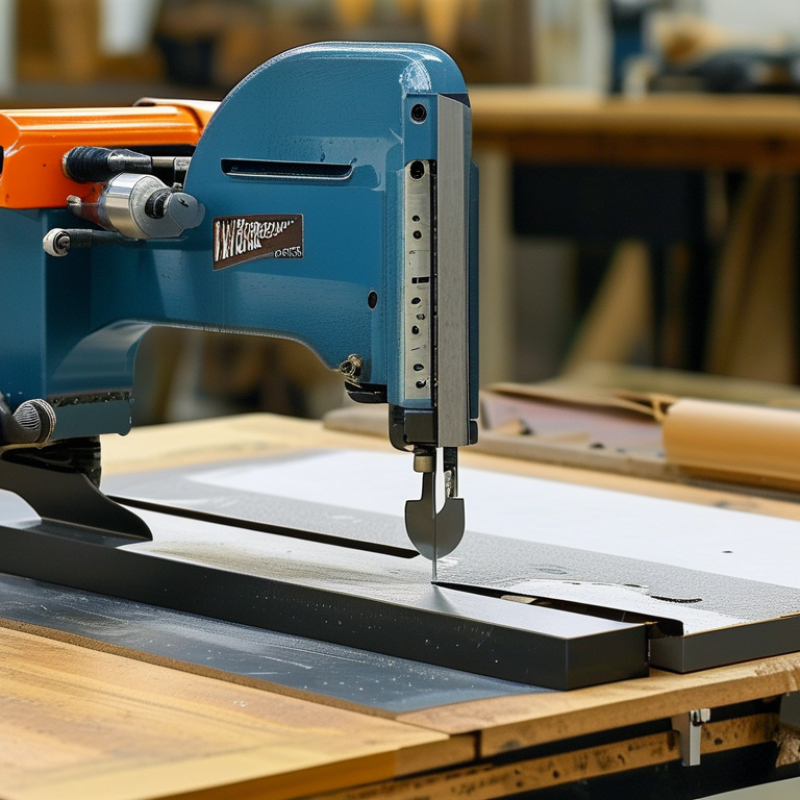
Manual cutting machines use human force to move a blade, wheel, punch, or shear through a workpiece. Common types include guillotine shears, rotary cutters, hand lever cutters, pipe cutters, and plate shears. The operator positions the material, applies pressure, and controls the cutting path. No motor is required.
Simple does not mean risk-free.
A lever cutter multiplies hand force through its pivot and blade angle. A rotary cutter uses a hardened circular blade that rolls across paper, film, fabric, or thin sheet material. Pipe cutters tighten gradually, creating a controlled groove until the tube separates. Cutting quality depends on blade sharpness, material thickness, clamping strength, and operator technique. A worn blade may leave burrs, crushed edges, or uneven cuts.
The International Labour Organization reported about 2.93 million work-related deaths and 395 million nonfatal injuries each year in its 2023 safety report. That figure reinforces a practical point: guarding, stable workholding, and training matter, even without electricity. ISO 12100 also emphasizes hazard identification and risk reduction during machine design and use. Buyers should check rated capacity, replacement blade availability, scale accuracy, and ergonomic handle position. A cheaper frame can flex under load. I have seen that mistake overlooked. Manual machines also reward patience; forcing a cut often damages both the tool and the material.
A reliable comparison starts with the material being cut. Paper, fabric, leather, plastic sheet, and thin metal require different blade designs. Check the maximum cutting width and thickness before reviewing price. A machine that handles 1,000 sheets may struggle with dense board. That detail is easy to miss.
Accuracy matters in daily production. Look for a rigid base, clear measurement scales, and a blade that returns evenly. During practical testing, I check whether the first and fiftieth cuts match. Small shifts become expensive waste. Cutting force also deserves attention. A long handle can improve leverage, but poor balance may tire the operator. It should feel controlled.
Safety features must be visible and usable. A blade guard, stable clamp, and non-slip feet reduce common workplace risks. For global buyers, confirm replacement blade availability, packaging strength, and operating instructions in a suitable language. Maintenance should not require unusual tools. Inspect hinges, fasteners, and exposed edges before purchase.
Compare the total ownership cost. Include spare blades, shipping, training, and downtime. A compact model may suit a small workshop, while a heavier frame supports repeated commercial use. I have found that “portable” sometimes means less stable. That trade-off needs honest checking. Also verify local electrical requirements only when the machine includes powered accessories, since many manual cutters operate without electricity.
Choosing a manual cutting machine depends on the material, thickness, and edge quality required. Paper guillotine cutters handle office sheets and light card cleanly. Rotary trimmers suit photographs, labels, and thin laminated films. Fabric rotary cutters glide through cotton, felt, and layered textiles. Manual die cutters create repeatable shapes in paper, foam, leather, and thin rubber. A leather strap cutter produces narrow strips with controlled width.
For rigid materials, different tools perform better. Foam board cutters make straight display panels with less crushing. Glass scoring tools create planned break lines on flat glass. Manual tile cutters work well on ceramic and some porcelain tiles. Tube and pipe cutters provide even cuts on copper, aluminum, and plastic pipes. Bench shears cut thin metal sheets, though thicker stock needs careful force control.
I have found that blade sharpness affects results more than advertised capacity. Measure twice. Cut once. A dull blade can distort soft materials and increase hand strain. Check the cutting bed, guide rail, and clamp before every project. Some machines leave rough edges on dense foam or brittle tile. Test a small offcut first. Protective eyewear and cut-resistant gloves remain sensible, even with compact tools. The “best” choice may change when speed, portability, or repeat accuracy matters. A machine that feels perfect for paper may frustrate anyone cutting thick leather.
| Rank | Manual Cutting Machine Type | Primary Material | Typical Cutting Capacity | Cutting Method | Typical Accuracy | Best-Fit Applications | Important Buying Considerations |
|---|---|---|---|---|---|---|---|
| 1 | Lever-Arm Paper Guillotine | Paper and cardstock | Working width: approximately 300–450 mm Stack height: commonly 10–80 mm, depending on paper weight | A manually operated blade descends through a clamped paper stack. | About ±0.5–1.0 mm with a properly aligned back gauge | Office documents, digital print finishing, booklets, flyers, and small paper batches | Check blade safety guard, clamp design, back-gauge scale, replacement blade availability, and maximum stack height. |
| 2 | Rotary Paper Trimmer | Paper, film, and photographs | Working width: approximately 300–1300 mm Best suited to single sheets or light stacks | A circular blade rolls along a guide rail for a straight or perforated cut. | About ±0.5–1.0 mm on correctly positioned sheets | Graphic design, photo trimming, labels, lightweight packaging, and classroom or studio work | Select a self-sharpening or replaceable blade, transparent guide, metric scale, and a stable cutting mat or base. |
| 3 | Manual Fabric Rotary Cutter | Textiles and felt | Typical blade diameter: 45–60 mm Usually cuts one or several light fabric layers | A circular blade is guided by hand along a ruler, template, or cutting mat. | Often within ±1–2 mm when used with a straightedge | Garment samples, quilting, upholstery patterns, felt products, and textile prototyping | Consider blade diameter, ergonomic grip, safety lock, replacement blade cost, and compatibility with self-healing mats. |
| 4 | Leather Strap and Belt Cutter | Leather and rubber sheet | Typical strip width: approximately 5–100 mm Material thickness: commonly up to 3–5 mm | A fixed blade or adjustable slitting blade produces repeatable strips. | Typically ±0.5–1.5 mm in strip width | Belts, bag handles, leather cords, straps, gaskets, and craft components | Verify width-adjustment range, blade hardness, material-feed stability, clamping method, and suitability for vegetable-tanned or soft leather. |
| 5 | Manual Vinyl and Film Slitter | Adhesive vinyl and plastic film | Roll or sheet width: approximately 300–1600 mm Designed for thin flexible materials | A guided rotary or fixed blade slits the material into strips or trims its edges. | Typically ±1–2 mm, depending on material tension | Sign-making, window film, protective film, label stock, and flexible packaging samples | Look for smooth material feeding, adjustable blade pressure, anti-static features, roll-width compatibility, and clean edge performance. |
| 6 | Foam Board and Mat Cutter | Foam board and corrugated board | Board thickness: commonly 3–10 mm Guide length: approximately 600–1500 mm | A guided knife makes a straight, bevel, or angled cut through the board. | Approximately ±1 mm with a rigid guide rail | Display boards, architectural models, framing mats, exhibition graphics, and prototypes | Check maximum board thickness, 45-degree bevel capability, guide rigidity, blade depth adjustment, and replacement blade supply. |
| 7 | Manual Cardboard and Corrugated Cutter | Cardboard and corrugated board | Working width: approximately 500–1300 mm Usually handles single-wall corrugated sheets | A rotary wheel or scoring-and-cutting blade follows a straight guide. | Typically ±1–3 mm, depending on board flatness | Packaging prototypes, carton samples, retail displays, and low-volume box production | Confirm flute compatibility, cutting depth, scoring options, guide scale readability, and the machine's ability to handle warped sheets. |
| 8 | Manual Sheet-Metal Shear | Aluminum and mild steel | Typical cutting length: 300–1300 mm Capacity: approximately 0.5–1.5 mm mild steel or 1–2 mm aluminum | A lever-operated upper blade shears sheet metal against a fixed lower blade. | Usually ±0.5–1.5 mm for straight cuts with a back gauge | HVAC work, metal fabrication, roofing, signage, repair work, and workshop projects | Check rated capacity by metal type, blade length, hold-down clamp, back gauge, guarding, mounting stability, and required operating force. |
| 9 | Manual Plastic Sheet Cutter | Acrylic, PVC, and polycarbonate | Typical sheet thickness: approximately 1–6 mm Suitable for scoring and controlled break-off | A carbide scoring wheel or knife creates a groove before the sheet is snapped or finished. | Approximately ±1 mm for straight scored cuts | Signs, glazing panels, equipment covers, model making, and plastic fabrication | Select a tool matched to the polymer, verify maximum thickness, use a straight guide, and consider edge-finishing requirements. |
| 10 | Manual Tile and Mosaic Cutter | Ceramic and porcelain tile | Cutting length: approximately 400–1200 mm Common tile thickness: 6–16 mm | A tungsten-carbide or carbide-tipped scoring wheel scores the glaze before the tile is separated by pressure. | Typically ±1–2 mm for straight cuts | Wall tile, floor tile, renovation work, bathroom installation, and small construction projects | Check scoring-wheel diameter, maximum diagonal cut, base rigidity, breaker strength, porcelain capability, and availability of replacement wheels. |
Note: Cutting capacity and accuracy depend on the material's thickness, hardness, flexibility, grain direction, surface condition, blade sharpness, and operator technique. Always follow the manufacturer's safety instructions and use appropriate personal protective equipment.
Top 10 Manual Cutting Machines for Global Buyers
How Global Buyers Can Match Machines to Their Needs
Choosing among the top 10 manual cutting machines starts with the material, not the price. A compact guillotine may suit paper, thin plastic, or light packaging work. A reinforced shear can handle thicker sheets, but it needs more floor space and operator strength. For fabric, leather, or flexible film, a rotary cutter may provide cleaner curves. Measure thickness, width, daily volume, and required accuracy before comparing models.
Think about the working environment. A buyer in a small workshop may value a foldable frame and simple blade adjustment. A busy production room may need a stable base, clear measurement scales, and replaceable wear parts. Test cuts are essential. Ask suppliers for results using your actual material. Photos can hide rough edges, uneven pressure, or blade deflection. That matters.
Safety and long-term support deserve equal attention. Check guard design, emergency procedures, spare-part availability, user instructions, and maintenance access. Confirm that the machine fits local electrical and workplace requirements, where applicable. A lower purchase price can become expensive when blades are difficult to source. I have seen buyers focus too heavily on cutting speed and overlook operator fatigue. That was a costly mistake. Manual equipment still needs training, inspection, and realistic workload planning. Sometimes, the simplest machine is the best match. Not always.
How Global Buyers Can Match Machines to Their Needs
The chart compares typical maximum cutting capacity for commonly traded manual machine categories. Values are indicative industry ranges and can vary by model, material hardness, blade design, and operating method. Buyers should confirm the exact working capacity before ordering.
For global buyers, the top 10 manual cutting machines should be judged beyond blade sharpness. Match throat depth, material thickness, table size, and operator force to daily work. A compact guillotine may suit paper, while a lever shear handles thin sheet. Check spare-blade availability before ordering. The 2023 World Bank Logistics Performance Index shows uneven logistics reliability across markets. Delivery promises need verification, not optimism.
Shipping begins with packaging, not the invoice. Ask the supplier to lock moving arms, protect edges, and add moisture barriers inside a rigid crate. UNCTAD’s Review of Maritime Transport 2024 reports that ships carry over 80% of global trade by volume. Disruptions can still lengthen transit and raise costs. Request dimensions, gross weight, customs classification, insurance scope, and destination handling charges. A small crate error can erase the price advantage.
Tips: Record blade changes, lubrication, alignment, and cut quality. Inspect fasteners weekly. Remove burrs before they damage material. The U.S. Department of Energy’s Operations and Maintenance Best Practices guide reports that preventive maintenance can reduce costs by 12–18% compared with reactive work. Use guards and lockout procedures. A common misjudgment is blaming the machine for inconsistent cuts. Operator pressure, poor alignment, or rushed setup may be responsible. Manual equipment needs less automation, not less discipline.
MSIRobot