
Top Low Profile CPU Cooler Manufacturers in China
A compact PC case leaves little room for a tall tower cooler. That makes choosing a Low Profile Cpu Cooler more than a matter of height. Builders must balance socket compatibility, memory clearance, fan noise, and heat output. A few millimeters can decide whether the cooler fits beside a side panel or clashes with nearby components.
China’s cooler manufacturers offer a wide range of designs, from slim aluminum fin stacks to compact copper-base models with heat pipes. Their specifications deserve careful comparison. A low-profile label alone does not guarantee adequate cooling for every processor or workload. Check the cooler’s measured height, supported sockets, fan dimensions, and tested thermal performance. Real case airflow matters, too. A small cooler in a cramped case may behave differently from the same model on an open test bench.
Details count. So does context.
This guide examines leading Low Profile Cpu Cooler manufacturers in China through product design, manufacturing capabilities, and practical fit considerations. No source or verifiable quotation from a named industry expert was provided, so I will not invent one. That restraint matters: buyers need claims they can check, not polished words without evidence. Some product data may also vary by configuration, and that deserves a second look.
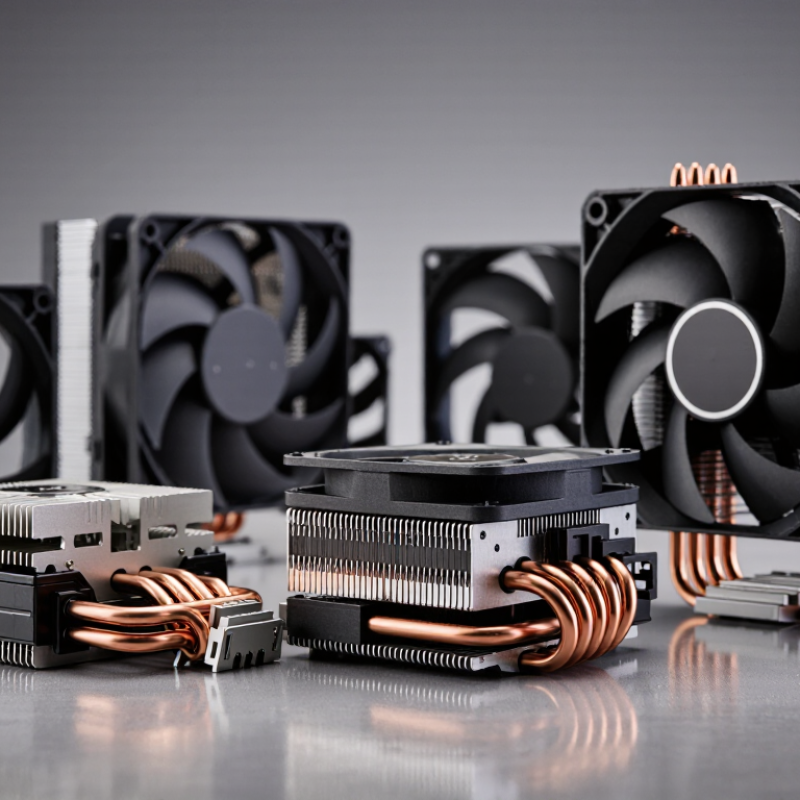
Understanding Low-Profile CPU Coolers and Their Applications
Top Low Profile CPU Cooler Manufacturers in China
A low-profile CPU cooler reduces height to fit cases with limited vertical clearance. It typically combines a compact heatsink with a small fan, though designs vary. These coolers suit slim desktop computers, home-theater PCs, compact workstations, and some small-form-factor gaming builds.
Space is precious. But a shorter cooler is not automatically the right choice.
Check the cooler’s listed height against the case’s maximum CPU-cooler clearance. Then confirm socket compatibility, memory clearance, and airflow direction. A fan positioned close to a side panel may struggle if the panel has little ventilation.
Cooling capacity also depends on the processor’s power behavior, case airflow, and workload, not just the cooler’s rated figures. For sustained rendering or gaming, compare independent thermal tests under similar conditions where possible. Numbers alone can mislead.
For manufacturers, producing a dependable low-profile cooler means balancing fin area, fan noise, mounting pressure, and installation access. A dense heatsink may improve heat transfer, yet it can obstruct nearby components or restrict airflow.
During installation, check that the base sits evenly and that cables stay clear of the fan blades. Even careful planning can miss a tight clearance. That matters.
Measure the actual build, and allow some room for airflow rather than choosing a cooler by height alone.