Icon about-block-ico-1 Icon about-block-ico-2 Icon about-block-ico-3 Icon about-block-ico-4 Icon announcement-close Icon arrow-left Icon arrow-right Icon arrow-sm Icon asterisk Icon banner-transparent-vector Icon btn-callback-ico Icon careers-item-location Icon careers-item-time Icon careers-item-type Icon careers-mail-ico Icon careers-phone-ico Icon careers-search-ico Icon careers-single-hero-vector Icon careers-single-more-vector Icon careers-vector Icon check Icon close Icon dfm-image-left-vector Icon dfm-image-right-vector Icon document Icon download-popup-vector Icon dropdown Icon envelope Icon facebook Icon faq-banner-bg Icon faq-title-ico-active Icon faq-title-ico Icon featured-links-block-bg Icon figure-1 Icon figure-10 Icon figure-11 Icon figure-12 Icon figure-13 Icon figure-14 Icon figure-15 Icon figure-2 Icon figure-3 Icon figure-4 Icon figure-5 Icon figure-6 Icon figure-7 Icon figure-8 Icon figure-9 Icon file-upload Icon form-sidebar-back Icon form-step-done Icon gmap-marker-group-icon Icon gmap-marker-icon Icon header-profile-ico Icon instagram Icon link Icon linkedin Icon loader Icon mail Icon phone Icon play-yt Icon play Icon post-nav-arr-left Icon quote-banner-vector Icon quote-block-aside-vector Icon quote-contact-phone-ico Icon quote-contact-position-ico Icon sidebar-location Icon sidebar-phone Icon technology-banner-nav-left-vector Icon technology-banner-nav-right-vector Icon twitter Icon webinar-item-date-vector Icon whitepaper-img-ico-left Icon whitepaper-img-ico-right Icon whitepapers-listing-banner-ico Icon whitepapers-single-aside-vector Icon youtube Icon yt-play-button

Top ISTA Series Test Equipment for Package Testing

As parcel networks expand, a package may face drops, vibration, compression, and changing temperatures before delivery. Pitney Bowes’ Parcel Shipping Index tracks parcel-volume growth across major markets, highlighting the scale of modern shipping. More shipments mean more opportunities for packaging failures—and costly damage claims.

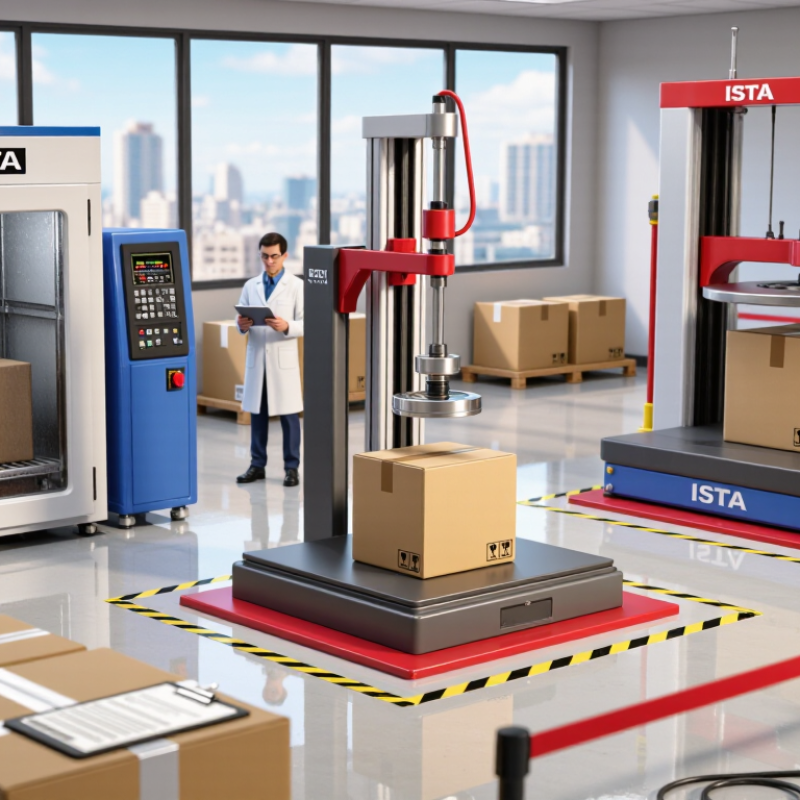
Top ISTA series test equipment helps manufacturers and laboratories reproduce selected distribution hazards under controlled conditions. A drop tester can release a packed carton onto a defined surface. A vibration table can simulate repeated motion, while compression equipment measures how much load a box can withstand. Temperature and humidity chambers add environmental stress. Together, these tests help teams compare package designs and identify weak points before shipment.

The right setup depends on the product, packaging, and applicable ISTA procedure. Not every package needs every test. ISTA procedures define test sequences and conditions; equipment specifications should match those requirements. The exact setup matters. “ISTA Series Test Equipment for Packages Test” is therefore not one universal machine, but a selection of instruments suited to particular test plans. Smithers’ packaging-market research and shipping-industry reports offer useful context, but market trends cannot predict an individual package’s performance. Test the actual packed product, document settings, and review failures carefully. A cracked corner or loose insert can reveal more than a pass-or-fail result. Even then, laboratory simulation cannot reproduce every route or handling event. Use results as evidence for design decisions, not as a guarantee of damage-free delivery.
Top ISTA Series Test Equipment for Package Testing

How ISTA Series Tests Evaluate Packaging Performance

ISTA Series tests evaluate packaging performance by recreating stresses that can occur during shipping and handling. Depending on the selected procedure, a test sequence may include conditioning, impact, vibration, or compression. The package is prepared and tested under controlled conditions, so results can be compared across samples. Small gaps matter.

During a drop test, technicians record the impact surface and orientation, then inspect corners, seams, and product condition. Vibration testing can reveal whether an item shifts, rubs, or loosens inside its carton. Compression testing checks how well stacked packages resist a measured load. These observations help distinguish cosmetic damage from failures that affect protection or function.

Results are most useful when the test procedure reflects the product, package, and distribution environment. A heavy item in a small carton may need different evaluation from a lightweight, fragile product. Teams should document sample preparation, test settings, and any damage found. This is important. No laboratory sequence captures every route, warehouse, or handling variation. A package can pass testing and still need review after real shipments, especially when materials or packing methods change. That limitation deserves attention, not dismissal.

Core Equipment Used in ISTA Package Testing

Core Equipment Used in ISTA Package Testing

ISTA package testing relies on equipment that recreates hazards during handling and transport. A compression tester applies controlled force to cartons stacked in storage. Drop testers reproduce impacts from specific heights and orientations. Vibration tables simulate repeated movement, while incline-impact testers assess sudden horizontal shocks. Short runs matter. A climate chamber can expose packaging to heat or humidity before mechanical testing, revealing changes in board strength or cushioning. Sensors and data loggers help record force, acceleration, and test conditions. Equipment selection should follow the applicable ISTA procedure and the package’s expected distribution route, not a generic checklist.

The U.S. EPA’s 2018 Advancing Sustainable Materials Management report estimated that containers and packaging made up 82.2 million tons, or 28.1%, of U.S. municipal solid waste. Better testing can help identify avoidable package failures and material use, though lab results cannot reproduce every real-world journey. Test the actual packed product. Not an idealized sample. Calibration records, consistent conditioning, and careful placement of sensors matter as much as the machine itself. One limitation is easy to overlook: a passing result may still miss damage caused by unusual handling or changing routes, so field feedback should inform future test plans.

Top ISTA Series Test Equipment for Package Testing — Core Equipment Used in ISTA Package Testing

Representative ISTA 1A drop-test heights: The chart shows the drop heights associated with package weight bands. A drop tester is one of several commonly used equipment types in package testing; other examples include vibration tables, compression testers, incline impact testers, and environmental chambers.

ISTA requirements vary by procedure and test conditions. Confirm the applicable values in the current official procedure before testing.

Key Tests for Vibration, Shock, Compression, and Climate

Package testing equipment helps reveal how a parcel behaves beyond a clean laboratory bench. Vibration systems reproduce repeated movement during transport, while shock testers apply brief impacts that can loosen closures or damage fragile contents. A carton may look intact yet hide a cracked corner or shifted insert. Small flaws matter.

During vibration testing, technicians secure the package in a repeatable position and select a profile suited to the distribution route. Loose straps or uneven contact can distort results, so setup details deserve careful checks. Drop and shock tests then show whether cushioning limits impact forces. The damage pattern is useful evidence, but it does not explain every failure by itself.

Compression equipment measures how cartons respond to stacking loads, including gradual deformation and sudden collapse. Climate chambers add heat, cold, or humidity before or during mechanical tests. This matters because damp board can lose stiffness, while temperature changes may affect seals and cushioning. Record conditioning time, package orientation, and load settings; otherwise, comparisons become unreliable. One limitation is easy to overlook: a laboratory profile can only approximate real handling, not reproduce every route. Testing should guide practical design changes, then be checked against field observations where possible.

How to Select Equipment for Different ISTA Test Procedures

Selecting equipment starts with the exact ISTA procedure, not a general “package test” label. Each procedure defines a sequence and test conditions, so check its current instructions before specifying a machine. Record the package’s dimensions, gross weight, contents, and shipping configuration. Small details matter: a filled box may respond differently from an empty sample.

For vibration steps, choose a system with a suitable load capacity and controlled frequency range. Check that its table can secure the package without blocking normal movement. For drops, match the tester’s height and orientation controls to the procedure. Some procedures may call for impact or compression equipment; others may not. Use a climatic chamber when specified conditioning is required, and verify temperature uniformity with calibrated sensors. Keep test records, including setup photographs and instrument checks. A neat-looking setup can still be wrong. It happens. Before testing, confirm that the platen, restraints, and measurement points match the procedure. If the package is unusually large or flexible, run a trial setup and document any limitations rather than assuming the equipment will behave as expected.

Safe Operation and Calibration of Package Testing Equipment

Top ISTA Series Test Equipment for Package Testing

Safe Operation and Calibration of Package Testing Equipment

Safe package testing starts before a drop, vibration run, or compression cycle. Inspect guards, fixtures, cables, and emergency stops; keep hands clear of moving platens and suspended loads. OSHA’s Control of Hazardous Energy standard requires lockout/tagout during applicable servicing. The U.S. Bureau of Labor Statistics reported 2.4 recordable injury and illness cases per 100 full-time-equivalent workers in private industry in 2023. This broad industry figure is not specific to packaging labs, but it underscores why routine checks matter. Small oversights can become serious.

Calibrate the measurements that drive test decisions: drop height, force, displacement, and vibration level. Use traceable reference instruments, document results and uncertainty, and follow intervals based on equipment use, risk, and calibration history. Recheck after repairs or unusual impacts. A perfect-looking display is not proof of accuracy. In practice, busy labs sometimes postpone checks; that deserves review, not an excuse.

Tips: Before each shift, confirm guards and emergency stops work. Check the level and condition of fixtures, then record any drift. Keep calibration certificates beside the equipment log. If readings fall outside tolerance, stop testing, label the machine, and investigate before using results.

MSIRobot