Selecting a Booster Seat manufacturer for international distribution involves more than comparing catalog prices. Buyers need to understand product design, production capacity, quality controls, and the documentation available for their intended markets. A seat may look sturdy in a product photo, yet details such as buckle operation, fabric seams, and packaging protection matter in daily use. Small details count.
This guide introduces manufacturers serving global buyers and outlines practical points for evaluating them. Consider whether a supplier can explain its testing procedures, provide current product specifications, and maintain consistent production across repeat orders. Requirements differ by destination, so buyers should verify applicable standards and labeling rules with qualified local sources rather than assume one approval covers every market. Clear communication matters, too. Ask about sample lead times, customization limits, minimum order quantities, and how production issues are handled.
A polished catalog is useful, but it cannot replace evidence or direct questions. No supplier is perfect, and a strong first impression may leave important gaps. Buyers should compare claims with documents, samples, and written answers before committing to a large order. This overview is intended as a starting point, not an endorsement of any single company. The most suitable partner is the one whose capabilities, quality processes, and delivery terms match the buyer’s needs—and can explain those claims clearly.
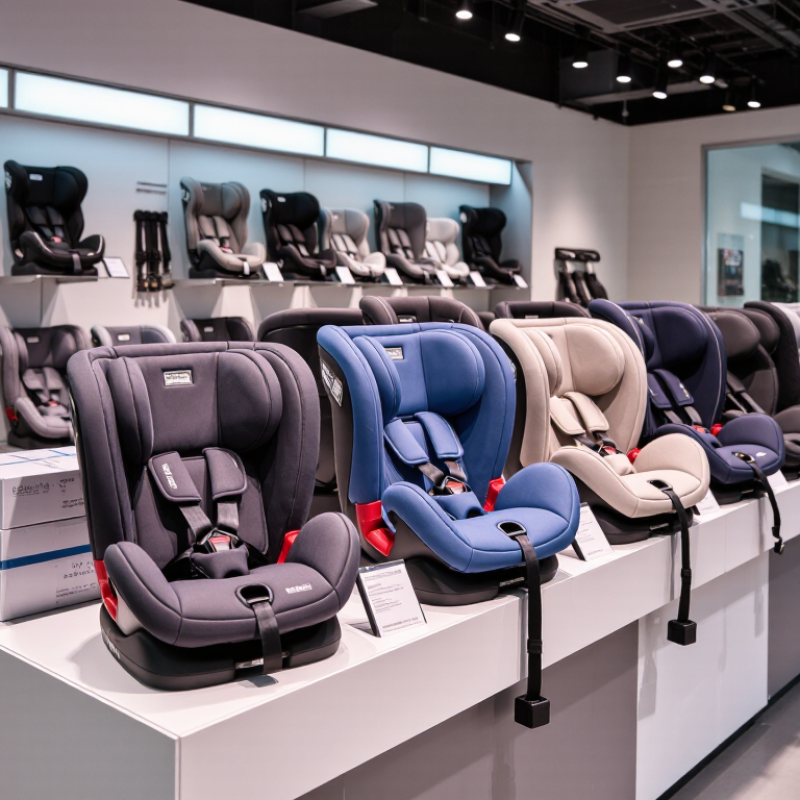
A booster seat helps position a vehicle’s adult seat belt correctly on a child. NHTSA commonly uses 4 ft 9 in as a useful seat-belt-fit benchmark, not a guarantee that every child is ready at that height. Body shape and vehicle seating can change the fit. Check the belt, not just the number.
The lap belt should rest low across the upper thighs, not the stomach. The shoulder belt should cross the chest and shoulder, not the neck or face. A child should sit with their back against the vehicle seat and knees bending comfortably at its edge. If the belt slips out of place, a booster may still be needed. Small details matter. For global buyers comparing manufacturers, clear fit guidance and consistent product testing are practical signs of careful design.
Tips: Try the booster in the vehicle before relying on it. Check the fit in every seat the child uses; belt geometry can differ. Keep the child in the back seat, and review current local safety guidance. Fit can be easy to misread, so reassess as the child grows.
High-back and backless booster seats serve different needs, but both position a child so the vehicle’s lap-and-shoulder belt fits correctly. A high-back model adds a backrest and often adjustable head support. That structure can help when a vehicle seat has a low back or limited head restraint. A backless model is lighter and easier to move between cars. It depends more on the vehicle seat for support.
Fit matters more than appearance. Check that the lap belt rests low across the hips, not the stomach, and that the shoulder belt crosses the chest without rubbing the neck. A high-back seat may suit one vehicle and feel cramped in another. Backless designs can also sit poorly on deeply contoured seats. Small details matter. Buyers should review the child’s size limits and the seat’s instructions, then assess fit in the intended vehicle.
For the U.S. market, FMVSS No. 213 sets performance and labeling requirements for child restraint systems, including booster seats. Manufacturers certify their products to the standard; buyers should check the required compliance label and instructions rather than rely on marketing claims. Requirements and approved product ranges can vary by destination market, so importers should confirm local rules separately. A careful fit check is useful, though it cannot replace testing or clear instructions.
For global buyers, booster seats must meet the rules of each intended market; one test report rarely covers every requirement. In the United States, FMVSS No. 213 sets performance and labeling requirements for child restraint systems. Manufacturers self-certify compliance, so buyers should request traceable records for the exact model and configuration. Small labels matter.
UN Regulation No. 129 uses a child’s height range for classification and includes side-impact testing. China’s GB 27887-2024 took effect on July 1, 2025, replacing the 2011 edition. Buyers should verify which standard version applies to each shipment and check that instructions match local installation practices. Fit varies.
These checks address real risks. NHTSA’s child passenger safety guidance reports that correctly used child restraints reduce fatal injury risk by 71% for infants and 54% for toddlers in passenger cars. A booster still needs a good belt fit: the lap belt should sit low across the hips, while the shoulder belt crosses the chest. Ask suppliers for current test documentation, clear height limits, and vehicle-compatibility guidance. A certificate alone may not reveal whether a seat fits a particular vehicle or child.
For global buyers, crash-test evidence should be specific, current, and tied to the booster seat being offered. Request complete reports showing the tested model, configuration, sample identification, test date, laboratory, and results. Check that the tested seat matches the production version, including its belt guides, padding, and attachment points. Small differences matter. A summary sheet alone may leave important details unclear. Ask how the test conditions relate to the seat’s intended use and destination markets.
Quality systems deserve the same scrutiny as test results. Review how incoming materials are checked, how production defects are recorded, and how corrective actions are verified. A certificate can indicate a documented system, but it does not show how consistently workers follow it. Ask to see recent inspection records and examples of closed corrective actions. Paperwork is not proof. Even a tidy audit file can miss recurring problems, so buyers should compare documents with factory practices where possible.
Traceability makes problems easier to investigate. Ask whether each finished seat can be linked to production dates, component lots, and inspection records. Test the process with a sample product: can the supplier identify its key material batches without delay? Records can lag. That is worth discussing openly. Clear answers, consistent records, and willingness to explain gaps provide stronger evidence than polished claims alone.
Global buyers should compare booster-seat makers across three practical areas: product range, regional approval, and after-sales support. Some suppliers offer high-back and backless models; others cover a wider child-restraint range. Check stated height and weight limits, belt-routing guides, and whether the seat fits the vehicle’s rear bench. A neat product catalogue cannot confirm a real-world fit.
Regional approvals need careful checking. US-market products are tested under FMVSS 213, while many European products follow UN Regulation No. 129. These frameworks differ, so approval in one market does not establish compliance in another. Ask suppliers for current test documentation, market-specific labels, and translated manuals. Details vary. Confirm them directly.
Support also matters after shipment: buyers may need replacement covers, installation guidance, or clear answers about compatibility. WHO’s Global Status Report on Road Safety 2023 reports that correctly used child restraints can reduce death risk by 71% for infants and 54% for small children. That figure covers child restraints broadly, not booster seats alone. It is useful context, not a product ranking. Compare response times and support languages, too; these are harder to judge from a brochure. That comparison is imperfect, but important.
Comparison framework: Anonymous supplier profiles are used instead of company or brand names. This is a sourcing guide, not a ranking or a claim that any individual supplier holds a particular approval. Certification and permitted use must be verified for each exact model and destination market.
| Supplier Profile | Typical Product Range | Regional Approval Checks | Buyer Support to Verify | Best Fit for Buyers |
|---|---|---|---|---|
| Established child-restraint specialist | Typically offers high-back belt-positioning boosters, backless boosters, and models with optional lower-anchor attachments. Range and features vary by model. | United States: FMVSS No. 213 Canada: CMVSS 213 Request the applicable compliance documentation and product labels. Confirm that the exact model is approved for sale and use in the destination country. | Ask for current instruction manuals, installation guidance, replacement-part availability, warranty terms, and documented support for product questions or safety notices. | Buyers seeking a focused child-restraint range and established product documentation. |
| Multi-market safety-equipment manufacturer | May supply several booster configurations, including high-back and backless designs, with different belt guides, adjustment systems, and cover options. | Europe: UN Regulation No. 129 Check the approval marking and approved size range on the exact restraint. Do not assume that a model approved in one region is approved elsewhere. | Verify market-specific manuals and labels, language coverage, technical files where applicable, and a clear process for handling product updates and recalls. | Importers serving more than one market who need market-specific product versions and documentation. |
| Regional specialist with local-market focus | Often concentrates on a smaller selection of booster seats adapted to local vehicle fleets, retail channels, or consumer requirements. | Australia / New Zealand: AS/NZS 1754 Confirm the current applicable standard, certification status, approved model identity, and required markings with the supplier and relevant local authority. | Check local-language instructions, local warranty and service arrangements, parts supply, and experience supporting regional distributors. | Distributors prioritizing local compliance familiarity and in-market service coordination. |
| OEM / private-label producer | May offer configurable seat shells, fabrics, packaging, and branding for high-back or backless booster programs, subject to engineering and production capability. | Approval is model-specific; changes to design, materials, manufacturing site, or labeling may affect compliance. Agree in writing who manages testing, certification, and change control for each destination market. | Request sample approval records, quality-management details, production traceability, change-control procedures, audit access, and written responsibilities for post-market issues. | Brands and importers developing a controlled private-label program with defined technical oversight. |
| Value-focused high-volume producer | May focus on a limited set of cost-conscious booster models, with optional differences in fabrics, packaging, or attachment features. | Confirm the precise model number, production version, approval evidence, test scope, and destination-market labeling. A factory or product certificate should not be treated as proof that every variant is approved. | Evaluate production consistency, batch traceability, defect-handling timelines, spare-part commitments, and the supplier’s ability to provide complete technical documentation. | Buyers prioritizing cost and volume, provided compliance and quality controls are independently verified. |
MSIRobot