In 2026, choosing a Diesel Fuel Generator starts with the job it must perform, not a headline power rating. A small mobile unit may suit a worksite tool trailer, while a standby model can support essential building systems during an outage. Prime-rated machines are designed for regular, variable loads; continuous-duty units serve steadier demand. These categories overlap in product catalogs, so check the manufacturer’s rating and operating limits. Labels alone can mislead.
This guide compares portable, standby, prime-power, industrial, and sound-attenuated generator types. It considers where each fits, from a farm pump beside a dusty shed to a hospital backup room with strict noise concerns. Fuel use, runtime, load changes, service access, and installation needs all affect the real cost of ownership. A technician can verify sizing against starting loads and site conditions; guessing from average wattage is a common, avoidable mistake. Details matter.
There is no universal “best” type. A compact unit may be easy to move but lack the reserve capacity a busy site needs. A larger generator can handle demand, yet spend much of its life lightly loaded. That trade-off deserves attention. Compare specifications from manufacturers, review maintenance requirements, and confirm applicable emissions and installation rules in your location. The sections ahead explain the main types and the practical questions that help match one to your needs. Some choices remain imperfect. The goal is a reliable fit, not the biggest machine on the page.
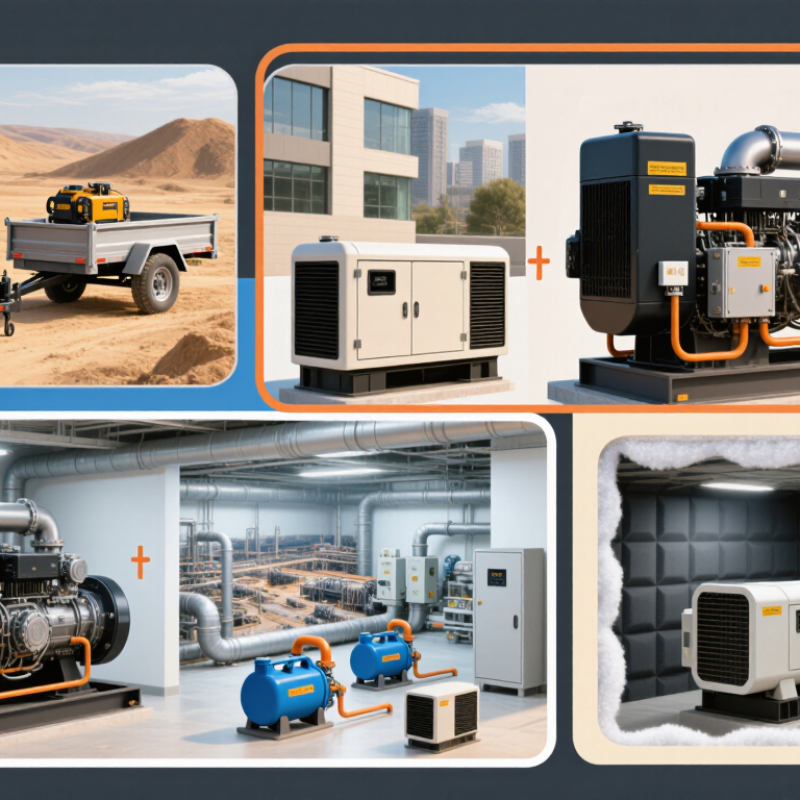
In 2026, diesel generators are best classified by how and where they operate, not by one universal list. A site unit may be stationary, while a trailer-mounted set can move between work areas. Enclosures also matter: an open frame suits a protected plant room, while a weather-resistant canopy helps shield equipment outdoors. The labels overlap. Check the installation, not just the product name.
Operating duty is another key category. Standby sets are intended for outages; prime-rated units can serve variable loads where utility power is limited. Continuous-duty models are designed for steady demand within their specified limits. These ratings are not interchangeable. Compare the maker’s rating sheet with expected run hours, load changes, and maintenance intervals. A generator sized only for peak demand may spend much of its life lightly loaded, which is worth reviewing.
Cooling method, electrical output, and control features add further distinctions. Air-cooled models are common in smaller applications, while larger units often use liquid cooling to manage heat. Output may be single-phase or three-phase, depending on connected equipment. A technician should check starting loads, voltage, frequency, ventilation, and exhaust routing before selection. Real installations are messy; catalog categories rarely capture every constraint.
ISO 8528 power ratings classify diesel generator sets by their intended operating duty—not by brand or physical size.
Reading the chart: Emergency Standby Power (ESP) is limited to 200 hours per year, while Limited-Time Power (LTP) is limited to 500 hours per year. Prime Power (PRP) and Continuous Operating Power (COP) have no fixed annual-hour cap in their rating definitions. Actual operating conditions and limits depend on the applicable ISO standard and manufacturer specifications.
Reference: ISO 8528-1 power-rating definitions. “No fixed cap” is not a numerical operating-hour limit.
Portable diesel generators suit mobile crews that need steady power at construction sites, roadside repairs, temporary events, or remote work areas. Their wheeled frames and lifting points make relocation practical, while enclosed models can reduce operating noise. Match the generator’s continuous output to the actual load, not just the brief startup surge from pumps or compressors. Real sites are messy.
Fuel planning matters. The U.S. Energy Information Administration’s Monthly Energy Review assigns distillate fuel oil about 137,000 Btu per gallon, a useful reference for estimating energy needs. It does not predict runtime by itself: engine efficiency, load level, tank size, and temperature all affect consumption. I would leave extra fuel capacity rather than trust a perfect calculation. Keep the unit level, check the oil before a shift, and allow clear airflow around its radiator.
For frequent transport, compare weight, lifting points, wheel durability, and access to service panels alongside rated output. EPA Tier 4 nonroad engine standards set particulate limits up to 90 percent below earlier Tier 3 levels in some power categories, according to the agency’s technical materials. Verify the engine’s emissions certification and maintenance schedule for the intended application. A compact set may be easier to move, but it can be undersized once several tools start together. That trade-off deserves a real load test.
Standby diesel generators provide emergency power when utility service fails, keeping essential systems operating until normal supply returns. In a clinic, that may mean lighting, refrigeration, and selected medical equipment; in a warehouse, it may mean alarms, pumps, and communications. The generator should be sized around actual starting and running loads, not just the building’s total square footage. Motors can draw a brief surge when they start.
An automatic transfer switch detects an outage, starts the generator, and shifts selected circuits to backup power. The changeover takes time, so computers and other sensitive equipment may still need an uninterruptible power supply. Placement matters: exhaust needs a safe path outdoors, while airflow and service access must remain unobstructed. Small details matter.
Reliability depends on routine care, not just the machine. Check fuel condition, batteries, coolant, and filters according to the manufacturer’s schedule, and arrange periodic tests under load. A short no-load run may not reveal how the system behaves with real demand. Even a careful plan can miss a critical circuit, so review the backed-up loads with a qualified technician. No setup is perfect; operating needs can change, and the plan should be reviewed after renovations or equipment upgrades.
| Generator type | Indicative power range | Typical emergency-backup use | Common advantages | Key considerations |
|---|---|---|---|---|
| Portable diesel generator | About 3–15 kW | Temporary power for small worksites, equipment, or limited essential loads. | Relatively easy to move; useful where a permanent installation is not practical. | Usually requires manual setup and safe outdoor operation; not generally a whole-building automatic backup solution. |
| Residential standby diesel generator | About 10–50 kW | Essential household circuits or, when correctly sized, most or all home loads. | Can be paired with an automatic transfer switch for outage response without manual changeover. | Sizing must account for starting loads; installation, fuel storage, noise, emissions, and local permits matter. |
| Small commercial standby generator | About 50–250 kW | Retail sites, offices, farms, small healthcare facilities, and building essential systems. | Offers more capacity for multiple circuits and larger motor-driven equipment than residential units. | Requires professional load assessment, electrical integration, routine testing, and a suitable fuel plan. |
| Industrial standby generator | About 250 kW to 2 MW or more | Factories, large commercial buildings, data facilities, and critical infrastructure. | Designed for high-demand backup systems and integration with facility-level controls. | May need engineered foundations, ventilation, emissions controls, larger fuel reserves, and coordination with multiple electrical systems. |
| Mobile trailer-mounted diesel generator | About 20–500 kW | Temporary backup at construction sites, events, recovery operations, or facilities awaiting permanent equipment. | Transportable between locations and available in a wide range of output sizes. | Check towing requirements, site access, grounding, cable capacity, noise limits, and local emissions rules. |
| Containerized diesel generator | About 500 kW to 3 MW or more | Large sites requiring packaged, weather-protected backup capacity or modular power installations. | Enclosed packages can simplify transport and provide integrated weather and sound protection, depending on configuration. | Requires adequate delivery access, lifting arrangements, ventilation clearances, fuel logistics, and site-specific engineering. |
Power ranges are indicative examples, not fixed industry limits. Actual capacity depends on the generator configuration, duty rating, site conditions, and the loads being served.
For extended operation, the key distinction is not simply generator size. A prime-rated diesel generator is designed to supply variable loads for many operating hours, often where utility power is unavailable. Its output can change with demand, but the rating sets limits on average load and peak use. Check the rating sheet.
A continuous-rated unit serves a steady, predictable load, such as a remote site’s base demand. It is generally specified for constant output, without an assumed overload reserve; confirm the stated limits. Starting motors, pumps, or compressors can briefly draw much more power than their running figures suggest. Plan for starts.
Choose based on measured demand, temperature, altitude, fuel storage, and service access. Dust on filters, hot-air recirculation, and long cable runs can reduce practical capacity. Avoid treating a prime unit’s maximum rating as an everyday target. For continuous duty, leave room for growth and scheduled maintenance. Load spreadsheets can look tidy while real demand pulses unevenly. That detail deserves a second look.
Industrial diesel generators are built for steady power in factories, construction areas, and remote facilities. Their heavy-duty engines and sturdy frames can handle long operating hours and demanding loads. Enclosed models add weather protection and help reduce operating noise. That matters when equipment sits near work areas or exposed service roads. Still, an enclosure is not a cure-all; poor airflow can cause overheating.
An enclosed generator typically uses ventilated panels, service doors, and sound-reducing materials. Check that technicians can reach filters and controls without awkward disassembly. Industrial open-frame units may suit sites where ventilation and quick access matter more than noise reduction. Either type needs correct load sizing. A unit running far below its efficient range may use fuel poorly, while an undersized one can struggle with motor-starting loads. Real site measurements beat guesswork.
Tips: Record peak and continuous loads before choosing capacity. Check airflow, exhaust routing, and maintenance access at the installation site. Ask for sound and weather-protection ratings, then compare them with actual conditions. Dust is easy to underestimate. Keep clearance around vents, and recheck it after nearby equipment or barriers change.
MSIRobot