Corrugated Steel Pipe supports drainage, culverts, stormwater systems, and other infrastructure where strength and efficient installation matter. Choosing a manufacturer is not just a matter of comparing prices. Pipe diameter, steel gauge, corrugation profile, coating, and connection design all affect performance in the field. A mismatch can complicate installation or shorten service life.
This guide to top Corrugated Steel Pipe manufacturers worldwide introduces companies serving different regions and project needs. It considers product range, manufacturing capacity, quality controls, technical support, and delivery reach. These details help engineers, contractors, and buyers build a practical shortlist. Ask suppliers for product specifications, test documentation, and guidance on site conditions. A useful comparison also considers soil properties, expected loads, water exposure, and local project requirements. Those details are easy to overlook.
There is no single best manufacturer for every project. Rankings can change as product lines, regional availability, and delivery schedules shift. Even a well-known supplier may not suit a remote site or a specialized installation. That deserves a second look. Treat this overview as a starting point, then verify current capabilities directly with each company. The right choice is the one that fits the design, schedule, and long-term maintenance plan—not simply the one with the broadest catalog.
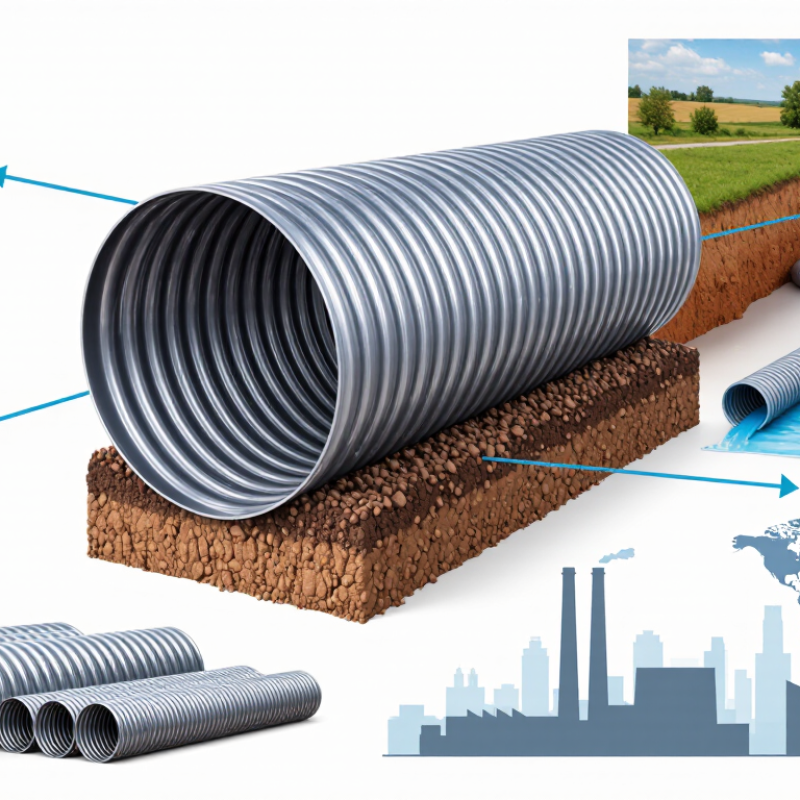
Corrugated steel pipes are made from steel sheets shaped into repeating ridges and valleys. These corrugations help the pipe resist external loads while keeping its weight relatively low. Sections may be galvanized or receive other protective coatings, depending on the expected exposure. The material and coating matter: soil chemistry, standing water, abrasion, and de-icing salts can all affect service life. Small details count.
Common uses include road culverts, stormwater drains, agricultural drainage, and crossings beneath access roads. A pipe may carry runoff under a gravel lane, where leaves, sediment, and seasonal surges put its capacity to the test. Larger installations can also support drainage beneath embankments. Selection depends on flow, burial depth, soil conditions, and traffic loads; one diameter or wall profile does not suit every site. Actual conditions can be messier than a drawing suggests.
Tips: Check inlet and outlet conditions, not just pipe size. Confirm that the specified coating suits the site, and plan for inspection after installation. A clear outlet can still fail if the inlet collects debris. Don’t overlook the bedding. Poor support or uneven compaction may cause deformation, even when the pipe itself is correctly specified.
How Corrugated Steel Pipes Are Manufactured
Manufacturing begins with steel coil, inspected for thickness, surface defects, and coating condition. The coil is slit to the required width, then fed through rollers that press repeating ridges into the sheet. Those ridges add stiffness without requiring a solid, heavy wall. The metal must bend cleanly. Cracks at the corrugation peaks can weaken a pipe before installation.
For many round pipes, corrugated sheet is formed into a helix and joined along a continuous lock seam. Other designs use corrugated plates, bolted together into larger structures. Ends may be cut square or fitted with special connectors. Protective zinc coatings are often applied before forming; handling the coated sheet carefully helps limit scratches and exposed steel.
Checks matter at every stage. Operators measure corrugation depth, pipe diameter, seam engagement, and coating thickness, then inspect finished sections for dents or loose joints. A useful scale reference: the World Steel Association’s World Steel in Figures 2024 reports 1,892.2 million tonnes of crude steel produced worldwide in 2023. That figure covers all crude steel, not corrugated pipe, but it shows the scale of the material supply chain. Quality can still vary. A neat-looking seam alone does not prove consistent dimensions or coating coverage.
Steelmaking and hot rolling involve high temperatures, while corrugating is generally performed near room temperature. Hot-dip galvanizing uses a molten zinc bath at about 450°C. Values are typical reference temperatures; actual operating conditions vary by process and facility.
A leading corrugated steel pipe manufacturer does more than form steel into a repeating profile. It can document how material grade, coating thickness, sheet gauge, and finished dimensions meet the project specification. Applicable standards vary by market and installation, so buyers should verify the referenced editions and acceptance criteria. Details matter.
Quality checks should follow the pipe through production. Inspectors may review steel certificates, measure corrugation depth, and check coatings for thin spots or damage. Dimensional records and traceable batch numbers help connect a delivered section to its production history. Testing plans should also reflect the intended use, including burial depth, soil conditions, and expected loads. A certificate alone is not the whole story.
Manufacturing capability is equally practical. Can the plant produce the specified diameter, profile, and section length consistently? Can it supply elbows, fittings, or protective end treatments when drawings require them? Ask about production tolerances, inspection frequency, packaging, and technical support for handling and installation. Capacity figures can look impressive on paper. Yet a missed delivery window or poorly protected coating can disrupt field work. Even a careful supplier may need clarification when drawings leave details open; that conversation is worth having before fabrication begins.
North American corrugated steel pipe manufacturers often serve highway drainage, culverts, and stormwater projects. Their strengths include formed-plate production, galvanized coatings, and regional delivery. The Federal Highway Administration’s drainage guidance treats material selection, hydraulic capacity, and corrosion exposure as key design considerations. Details matter. Buyers should compare coating specifications and installation support, not just nominal pipe diameter.
Asia-Pacific has the deepest steel supply base. World Steel Association’s World Steel in Figures 2025 reports 2024 crude steel production of about 1.005 billion tonnes in China and 149.6 million tonnes in India. That scale supports broad manufacturing capacity, though it does not prove every supplier makes corrugated pipe or meets a project’s requirements. Regional producers may offer varied profiles, coatings, and lead times. Confirm product testing directly.
European manufacturers tend to compete through engineered drainage systems, documented quality controls, and corrosion-resistant finishes. In Latin America, local fabricators can reduce transport distance for infrastructure projects, while imported coil may shape costs and schedules. These patterns vary by country. A regional shortlist should check fabrication range, traceability, coating thickness, and delivery records. A polished catalogue is not enough. Ask for project-specific documentation; even experienced buyers can overlook installation constraints.
| Region | Common Product Types | Typical Material and Coating Options | Common Applications | Standards and Procurement Considerations |
|---|---|---|---|---|
| North America | Corrugated steel pipe, structural plate systems, pipe-arch sections, and related fittings. | Galvanized steel is widely used; polymer-coated or other protective systems may be specified for more demanding exposure conditions. | Road and railway drainage, culverts, stormwater conveyance, and selected buried structures. | Projects commonly reference applicable ASTM or AASHTO requirements. Confirm the specified edition, design loads, coating requirements, and local agency approvals. |
| Europe | Corrugated steel drainage pipes, structural plate structures, and fabricated steel sections for infrastructure projects. | Coated steel products are selected according to the project environment; additional corrosion protection may be required for aggressive soil or water conditions. | Highway and railway drainage, culverts, water-management works, and infrastructure rehabilitation. | Requirements depend on the country and contract. Check applicable European and national standards, structural design provisions, product documentation, and conformity requirements. |
| Asia-Pacific | Corrugated steel pipes and pipe arches, structural plate systems, and drainage components in a range of project-specific sizes. | Galvanized and other specified coated-steel options are available; coating selection should account for soil, water, and service conditions. | Transport infrastructure, agricultural drainage, flood-control works, and urban stormwater systems. | Specifications differ across national markets. Verify local design codes, material traceability, coating details, fabrication tolerances, and inspection requirements. |
| Latin America | Corrugated steel culvert pipe, pipe arches, and structural plate solutions for drainage and infrastructure works. | Galvanized steel is a common option; project specifications may call for additional protective coatings based on exposure and intended service life. | Highway crossings, rural roads, agricultural drainage, and stormwater conveyance. | Check national and project-owner specifications, hydraulic capacity, installation requirements, and corrosion-protection criteria before procurement. |
| Middle East and Africa | Corrugated steel pipe and structural plate systems used for drainage, crossings, and selected buried infrastructure. | Protective coatings should be chosen with attention to local soil chemistry, water quality, temperature, and exposure conditions. | Road drainage, desert and rural crossings, irrigation infrastructure, and stormwater management. | Requirements are often project-specific. Confirm the governing design standard, environmental conditions, coating specification, construction method, and quality-control documentation. |
Comparing corrugated steel pipe manufacturers means checking more than price and nominal diameter. Ask for documented steel thickness, corrugation profile, coating type, joint details, and tolerances. The World Steel Association’s World Steel in Figures 2024 reports 1,892.2 million tonnes of crude steel production worldwide in 2023. That scale gives market context, not proof of pipe quality. Request traceable material certificates and inspection records for the actual production lot.
Match products to site conditions. Compare hydraulic capacity, burial depth, live-load assumptions, soil chemistry, abrasion exposure, and installation requirements against the project design. The Federal Highway Administration’s Hydraulic Design of Highway Culverts guidance is a useful technical reference for evaluating flow and site factors. Check whether the manufacturer provides engineering support, clear installation instructions, delivery scheduling, and replacement-part availability. A low quotation may omit these services. I would verify inclusions in writing; assumptions can slip through.
Tips: Send every supplier the same drawings, loading data, and site conditions. Compare like for like. Ask for coating-life assumptions and warranty exclusions, then confirm who handles technical questions during installation. A polished brochure is not evidence of consistent production.
MSIRobot