
Top 10 CNC Machining Companies in China for Global Buyers
Global buyers choosing a Cnc Machining partner need more than an attractive unit price. A capable supplier should interpret technical drawings accurately, select suitable materials, control tolerances, and communicate clearly when a design needs adjustment. Those details become visible in real parts: clean threads, consistent hole locations, smooth machined faces, and inspection records that match the order.
Manufacturing pioneer Taiichi Ohno is often quoted as saying, “Without standards, there can be no improvement.” That principle matters when comparing Chinese machining companies. Buyers can ask about inspection methods, equipment maintenance, material traceability, and how suppliers manage revisions. A certificate alone is not proof of consistent performance. Requesting a sample, reviewing a first-article inspection report, and confirming packaging details can reveal practical strengths and gaps.
This guide introduces ten Chinese companies for global buyers to consider, alongside factors that can shape a sensible shortlist. These include machining capabilities, industries served, quality systems, communication, lead times, and export experience. A ranking can look tidy on a screen. Real projects are messier. The best fit depends on part geometry, order volume, finish requirements, and the buyer’s own risk tolerance. Company capabilities can also change, so verify current certifications, equipment, and capacity directly before placing an order. Even a promising supplier may not suit every drawing. That deserves a second look.
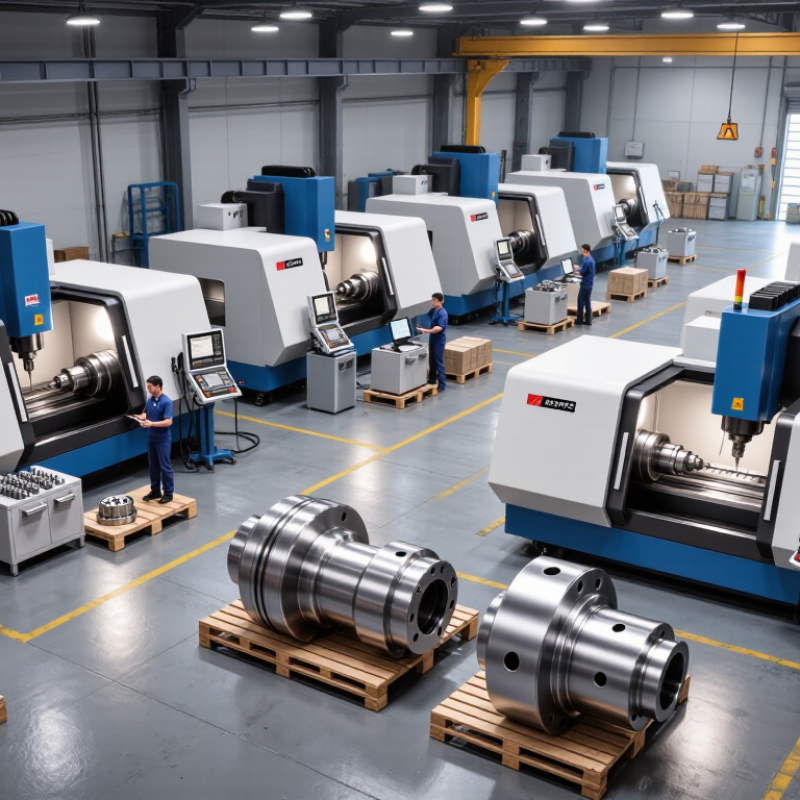
CNC Machining in China: Services, Processes, and Market Overview
CNC Machining in China: Services, Processes, and Market Overview
China’s CNC machining sector serves buyers needing prototypes, replacement parts, and production runs. Shops commonly offer milling, turning, drilling, and finishing. A milled aluminum bracket may need clean edges, tapped holes, and a specific surface treatment. Small details like these affect price and delivery time.
The process usually starts with a drawing or three-dimensional model. Engineers review material, dimensions, tolerances, and quantity before preparing a quote. For a turned steel shaft, they may check concentricity and inspect critical diameters with calibrated measuring tools. Clear drawings help. So does a realistic tolerance. Extremely tight specifications can increase machining time and inspection effort without improving a part’s function.
The market includes facilities with different equipment, quality systems, and production strengths. Some are better suited to quick prototypes; others handle repeat orders and more involved inspection plans. Buyers should ask how parts are measured, how revisions are controlled, and whether the quoted finish is included. A low price alone tells little. Even a detailed quote can leave gaps, and experienced teams sometimes discover them only after the first sample. That is worth reflecting on. Confirming assumptions early, then reviewing a physical sample, can reduce avoidable changes before full production.
Top 10 CNC Machining Companies in China for Global Buyers - CNC Machining in China: Services, Processes, and Market Overview
A practical overview of ten factors for evaluating CNC machining suppliers in China. The information below describes common industry capabilities and buyer checks; it is not a ranking of named companies.
| No. | Evaluation Dimension | Common Industry Practice | What Global Buyers Should Check |
|---|---|---|---|
| 1 | Machining services | CNC milling and turning are widely used. Some suppliers also offer multi-axis machining, drilling, tapping, and secondary operations. | Confirm that the supplier’s machine configuration and workholding suit the part geometry and required production volume. |
| 2 | Available processes | Three-axis milling is common for prismatic parts; four- and five-axis machining can reduce setups for parts with angled or multiple-sided features. | Ask which features require additional setups and whether those setups affect cost, access, or tolerance control. |
| 3 | Materials | Common options include aluminum alloys, carbon and stainless steels, brass, copper, titanium, and engineering plastics. | Specify the exact grade, condition, and applicable standard; request material certificates when traceability is required. |
| 4 | Tolerances and fit | Achievable tolerances depend on material, part geometry, feature size, datum strategy, and inspection method. Tighter tolerances generally require more process control. | Identify critical dimensions and fits on the drawing rather than applying unnecessarily tight tolerances to every feature. |
| 5 | Part size and complexity | Machine travel, spindle capacity, tooling, and workholding determine the practical size and complexity limits; these vary by facility. | Provide a 3D model and drawing, and confirm the supplier can machine and inspect the largest features. |
| 6 | Order quantity | CNC machining is used for prototypes, small batches, and production runs. Setup, programming, and material costs influence the economics at each volume. | Request pricing at realistic quantity breaks and clarify whether setup, tooling, finishing, and inspection are included. |
| 7 | Surface finishing | Common secondary finishes include deburring, bead blasting, anodizing, plating, passivation, and powder coating, depending on the material and part requirements. | Specify finish, color, coverage, masking areas, and any appearance or thickness requirements on the drawing or purchase specification. |
| 8 | Quality inspection | Inspection may use calibrated hand tools, gauges, coordinate measuring machines, and documented first-article or in-process checks. | Agree on inspection criteria, sampling plans, measurement reports, and corrective-action expectations before production. |
| 9 | Quality systems and documentation | Some suppliers operate certified quality-management systems; certification scope and current status should be verified directly. | Request relevant certificates and confirm that material, process, and inspection records meet the project’s regulatory and traceability needs. |
| 10 | Export and delivery planning | International orders require agreement on packaging, shipping method, delivery terms, customs documentation, and responsibility for transport costs and risk. | Confirm the named delivery location and applicable Incoterms® rule, and assess total landed cost rather than unit price alone. |
Note: Capabilities, tolerances, lead times, and costs are supplier- and project-specific. Obtain a current quotation and written confirmation against the part drawing and purchase requirements.