Icon about-block-ico-1 Icon about-block-ico-2 Icon about-block-ico-3 Icon about-block-ico-4 Icon announcement-close Icon arrow-left Icon arrow-right Icon arrow-sm Icon asterisk Icon banner-transparent-vector Icon btn-callback-ico Icon careers-item-location Icon careers-item-time Icon careers-item-type Icon careers-mail-ico Icon careers-phone-ico Icon careers-search-ico Icon careers-single-hero-vector Icon careers-single-more-vector Icon careers-vector Icon check Icon close Icon dfm-image-left-vector Icon dfm-image-right-vector Icon document Icon download-popup-vector Icon dropdown Icon envelope Icon facebook Icon faq-banner-bg Icon faq-title-ico-active Icon faq-title-ico Icon featured-links-block-bg Icon figure-1 Icon figure-10 Icon figure-11 Icon figure-12 Icon figure-13 Icon figure-14 Icon figure-15 Icon figure-2 Icon figure-3 Icon figure-4 Icon figure-5 Icon figure-6 Icon figure-7 Icon figure-8 Icon figure-9 Icon file-upload Icon form-sidebar-back Icon form-step-done Icon gmap-marker-group-icon Icon gmap-marker-icon Icon header-profile-ico Icon instagram Icon link Icon linkedin Icon loader Icon mail Icon phone Icon play-yt Icon play Icon post-nav-arr-left Icon quote-banner-vector Icon quote-block-aside-vector Icon quote-contact-phone-ico Icon quote-contact-position-ico Icon sidebar-location Icon sidebar-phone Icon technology-banner-nav-left-vector Icon technology-banner-nav-right-vector Icon twitter Icon webinar-item-date-vector Icon whitepaper-img-ico-left Icon whitepaper-img-ico-right Icon whitepapers-listing-banner-ico Icon whitepapers-single-aside-vector Icon youtube Icon yt-play-button

Top Pipe Coupling Clamp Manufacturers in China

Pipe Coupling Clamp sourcing in China calls for more than comparing prices and product photos. A clamp must match the pipe diameter, operating pressure, material, and installation environment. Small differences matter. A poorly matched gasket or uneven bolt tightening can lead to leaks, vibration, or repeated maintenance. Buyers should examine each manufacturer’s product range, material options, dimensional controls, and inspection practices before requesting a quote.

This guide introduces Chinese manufacturers and the capabilities buyers can investigate. Look for clear specifications, such as size ranges, housing materials, gasket types, and stated pressure limits. Ask whether the factory can provide drawings, sample parts, and documented inspection results for the intended application. Factory visits or remote production reviews may also help clarify how machining, assembly, and quality checks are managed. A polished catalog is helpful, but it is not proof. Some supplier listings leave test methods or tolerances unclear. That gap deserves a second look. Treat certifications as supporting evidence, and confirm their scope and validity with the issuing body when relevant. The right choice depends on the project, not just the lowest quotation. A careful comparison gives buyers a more practical starting point for finding a dependable Pipe Coupling Clamp manufacturer.
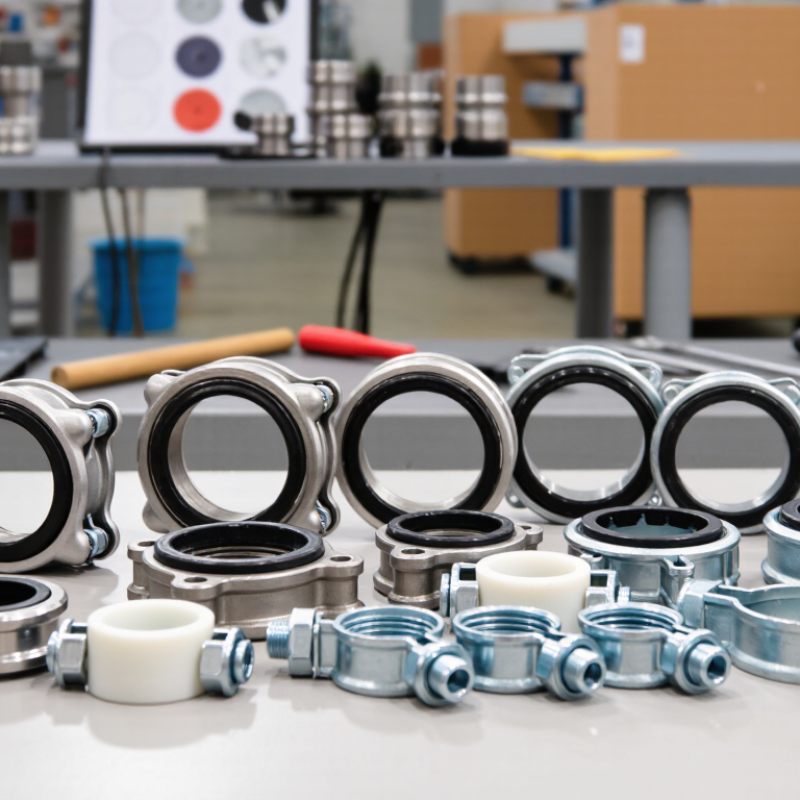
Top Pipe Coupling Clamp Manufacturers in China

What Pipe Coupling Clamps Are and How They Work

A pipe coupling clamp joins two pipe ends without welding or threading them together. It typically has a metal outer shell, a sealing gasket, and tightening bolts. The gasket sits between the pipe and clamp, creating a barrier against leakage. Tightening the bolts evenly compresses the gasket around both ends. This pressure helps seal the joint and resist movement. Simple, but not foolproof. Couplings differ by pipe material, diameter, operating pressure, and their ability to accommodate slight movement. Some use a broad sleeve; others include internal grips to reduce pipe pullout.

During installation, pipe ends should be clean, aligned, and inserted to the specified depth. Grit or a small surface defect can interfere with the seal. Tighten bolts gradually and evenly, using the recommended torque when provided. The clamp cannot correct badly mismatched pipe sizes or damaged ends. In real work, perfect alignment is not always easy, and that detail deserves a second look. A joint may appear secure while the gasket is unevenly compressed. After fitting, inspect the connection for leaks and recheck it under the intended operating conditions. The right clamp depends on the pipe and service requirements, not appearance alone.

Top Pipe Coupling Clamp Manufacturers in China - What Pipe Coupling Clamps Are and How They Work
Clamp or Coupling Type How It Works Typical Pipe Compatibility Sealing Method Common Uses Practical Installation Considerations
Flexible grooved coupling A segmented housing engages grooves near the pipe ends and compresses a gasket as the housing bolts are tightened. The flexible design permits limited angular and linear movement. Grooved-end steel, ductile-iron, or other pipes with compatible groove dimensions Elastomer gasket compressed around the pipe ends Fire-protection piping, HVAC systems, and water-distribution lines Pipe ends must have compatible grooves; check gasket material, alignment, and bolt-tightening instructions.
Rigid grooved coupling Housing keys engage the pipe grooves and form a restrained joint intended to limit movement at the connection. Grooved-end pipe made to the coupling’s specified dimensions Elastomer gasket compressed inside the coupling housing Building services and piping runs where a more rigid joint is required Confirm groove dimensions and joint design; support and anchor the piping as required by the system design.
Split-shell repair clamp A two-piece metal shell is tightened around a pipe section to cover a localized leak or damaged area. Typically round pipe; diameter range depends on the clamp design Full-circumference elastomer sleeve or gasket Localized repairs on water pipes and other compatible services Check pipe outside diameter, damage length, service fluid, and whether the repair is approved for the operating conditions.
Wide-range repair coupling A broad sealing sleeve and clamp assembly bridges a gap between pipe ends or covers a damaged joint; some designs accommodate a range of outside diameters. Compatible pipe ends within the stated diameter range; material combinations depend on the product design Elastomer sleeve compressed by stainless-steel or coated-metal bands Maintenance repairs and connections between compatible pipe sections Verify diameter range, end gap, pipe material, and resistance of the sleeve to the conveyed fluid.
Hose clamp A band tightens around a flexible hose to secure it over a spigot or fitting. Flexible hose and a compatible hose barb or spigot Hose compressed against the fitting; the clamp supplies the holding force Low-pressure fluid, air, and general-purpose hose connections, subject to product rating Match the clamp diameter to the hose and fitting; use a clamp type suitable for the pressure and environment.
Band-type pipe coupling A metal band tightens around a sealing sleeve to connect plain pipe ends without relying on grooved ends. Plain-end pipes within the coupling’s specified diameter range Elastomer sleeve compressed by a metal band Utility, drainage, and general pipe-joining applications where the coupling is approved Check pipe-end alignment, surface condition, diameter tolerance, and any required restraint against pipe movement.
Restrained coupling A coupling combines a seal with a mechanical restraint feature that helps resist axial separation under specified conditions. Pipe materials and end preparations listed for the particular coupling design Gasket or elastomer seal; restraint components transfer axial load Buried water mains and other systems where axial restraint is part of the design Restraint capacity depends on pipe type, installation, and system design; follow the applicable engineering requirements.
Selection note: Pressure and temperature limits, approved pipe materials, dimensions, gasket compounds, and applicable certifications vary by product and service conditions. Consult the manufacturer’s technical documentation and the project specifications before selection or installation.

Main Types of Pipe Coupling Clamps Made in China

Pipe coupling clamps made in China cover several practical designs. Repair clamps wrap around an existing pipe to seal leaks or local damage without replacing a long section. Many use a stainless steel shell, rubber gasket, and tightening bolts. The gasket must match the pipe’s diameter and service conditions. A clamp that looks right may still fit poorly.

Wide-range couplings connect pipes with slightly different outside diameters. Their broader adjustment range can help when measurements vary between pipe materials or older installations. Flexible couplings use a resilient sleeve to accommodate minor movement and vibration. Rigid versions hold pipe ends more firmly aligned. For pipelines that need axial restraint, restrained couplings add locking features; they require careful selection for the system’s pressure and load. Details matter.

Some models are designed for transitions between materials, such as metal and plastic pipes. Others suit temporary repairs or permanent connections. Check the actual pipe outside diameter, gasket material, working pressure, and bolt-tightening instructions before installation. These are not interchangeable details. A useful specification sheet should state tested limits, not just general suitability. Even experienced buyers can overlook end gaps or uneven bolt tightening. I would inspect both before putting a line into service.

How Chinese Manufacturers Design and Produce Pipe Clamps

Chinese pipe clamp production starts with understanding the pipe’s outside diameter, wall thickness, and working environment. Designers use these details to select clamp width, metal thickness, and closure style. A small mismatch can make installation difficult. For example, a clamp that sits unevenly around a pipe may concentrate pressure near its edges.

Engineers often create drawings or samples before approving a production run. They check fit, fastener access, and how the clamp behaves under expected loads. Materials are cut, formed, and joined using processes suited to the design. Surface treatment can help resist corrosion, but its suitability depends on moisture, chemicals, and temperature. In the workshop, gauges and sample assemblies help reveal dimensional variation. Checks are useful, though they cannot replace clear specifications.

Tips: Share pipe measurements and service conditions with the manufacturer. Ask how dimensions are inspected and whether a sample can be fitted before bulk production. Compare the finished clamp with the drawing, especially around holes and curved edges. A detail that looks minor on paper may slow installation. And tolerances deserve a second look.

Leading Pipe Coupling Clamp Manufacturers in China

Leading Pipe Coupling Clamp Manufacturers in China are distinguished by consistent forming, welding, and inspection—not production volume alone. Buyers should check clamp dimensions, bolt grade, surface finish, and stated pressure limits against the intended pipe system. Ask for material certificates and sample inspection records. Details matter. A smooth coating can hide uneven edges, while a poorly matched gasket may leak under vibration.

China’s manufacturing scale provides useful context, but it does not guarantee clamp quality. World Steel Association’s World Steel in Figures 2024 reports that China produced 1,019.1 million tonnes of crude steel in 2023. This indicates a broad materials base, not clamp-specific performance.

Not a guarantee.

When comparing suppliers, review dimensional tolerances, corrosion-test methods, batch traceability, and how production defects are handled. Request test results for the actual model, rather than relying on general factory claims. Even careful sourcing has limits: documentation can be incomplete, and a sample may not represent every production batch. A factory visit or independent inspection can help close that gap.

How to Evaluate and Select a Chinese Manufacturer

Top Pipe Coupling Clamp Manufacturers in China

How to Evaluate and Select a Chinese Manufacturer

China’s manufacturing scale is substantial: the World Steel Association reported 1,005.1 million tonnes of crude steel production there in 2023. That figure signals a broad industrial base, not proof that any specific clamp maker can deliver consistent quality. Check the factory, not just the country of origin.

Request material certificates, dimensional inspection records, and pressure-test results for the exact coupling model you plan to buy. Ask how the manufacturer controls clamp diameter, band thickness, weld quality, and surface finish. Small variations can cause leaks or uneven loading. Ask for proof. Confirm that any ISO 9001 certificate is current and covers the relevant production site; certification alone does not verify a product’s performance. A practical audit should trace one sample from incoming steel to final inspection, with batch numbers matching the paperwork. I would also compare a production sample with the approved drawing, rather than relying on a polished sales sample. That takes time. It can still miss problems that appear during long-term use, so review field feedback and warranty handling too. The World Steel Association’s World Steel in Figures 2024 provides useful market context, but supplier-level test records should guide the purchasing decision.

MSIRobot