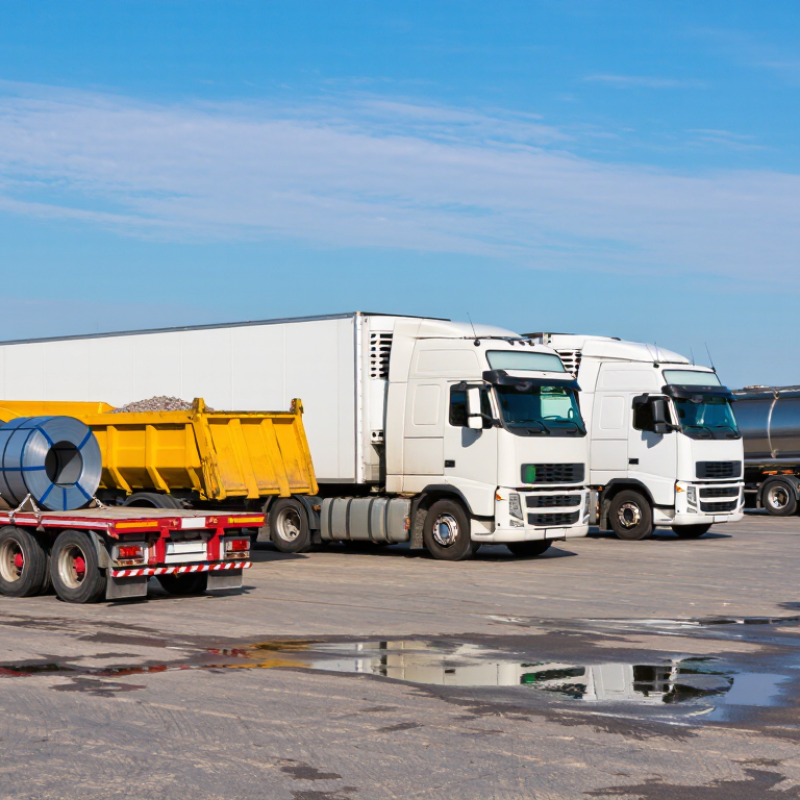
Global buyers entering the 2026 commercial vehicle market need more than attractive prices. They need the right Lories Truck for cargo, distance, climate, and local road conditions. A vehicle that performs well in a dry port may struggle on mountain routes or flooded construction sites.
This guide examines practical truck types, including flatbed, dump, box, refrigerated, tanker, and tractor units. Each type serves a different operating purpose. Flatbeds support steel coils, timber, and oversized machinery. Dump trucks handle gravel, sand, and demolition material. Refrigerated trucks protect food and medicine through controlled temperatures. Tractor units provide flexibility for regional and long-haul freight.
Real purchasing decisions depend on payload, axle design, wheelbase, fuel economy, cabin comfort, and maintenance access. Buyers should inspect frame welds, tire wear, hydraulic lines, brake systems, and service records. A clean exterior can hide expensive mechanical problems. That detail is easy to miss.
Manufacturers may describe capacity using different testing conditions. Therefore, published figures should be checked against local registration rules, road limits, and climate requirements. Import duties, spare-parts availability, emissions standards, and technician support also affect total ownership cost. These factors often matter more than the initial quotation.
The strongest choice is not always the newest truck. Sometimes, a simpler model with proven parts offers better reliability. Still, this guide cannot replace an independent inspection or a route-specific cost study. Specifications change by market, and supplier claims require verification. Use the comparisons as a practical starting point for a safer, more informed purchase.
For global buyers, lorry selection starts with gross vehicle weight, or GVW. UNECE vehicle categories place N1 trucks at 3.5 tonnes or below. N2 covers vehicles above 3.5 tonnes and up to 12 tonnes. N3 applies above 12 tonnes. This distinction affects payload, axle design, braking systems, and route planning.
N1 lorries suit urban delivery, service work, and narrow loading areas. A 3.5-tonne limit sounds generous, but cargo, fuel, tools, and the driver reduce usable payload quickly.
N2 models offer more capacity for regional distribution. They often balance maneuverability with stronger chassis construction.
N3 trucks support heavy freight, construction materials, and long-distance operations. Yet higher GVW can increase road charges, tire wear, and energy consumption.
Real-world figures support this scale. The ACEA Vehicles on European Roads 2024 report records more than six million trucks operating across the European Union. The IEA Global EV Outlook 2024 also reports strong growth in electric truck sales, especially in urban and medium-duty applications. The data is useful, but not perfect. Regional duty cycles vary widely. A buyer in a humid port city may need different corrosion protection than a buyer working on dry inland routes. Payload records should be checked against actual axle loads, not brochure numbers. Small mistakes here become expensive quickly.
For global buyers, axle configuration matters more than engine size. A 4x2 lorry suits urban distribution and lighter regional work. It has two axles, so legal payload can fall quickly on weak roads. The European Commission’s Directive 96/53/EC commonly allows 18 tonnes for a two-axle motor vehicle. Its drive axle limit is generally 11.5 tonnes.
A 6x2 adds a third axle, improving legal weight distribution. Under the same European framework, three-axle motor vehicles commonly reach 25 tonnes, or 26 tonnes under qualifying alternative-fuel provisions. A 6x4 also has three axles, but two are driven. That extra traction helps on quarry roads, snow, gradients, and construction sites. It may also increase curb weight and fuel use. Check the scales.
North American buyers face different limits. The Federal Highway Administration cites 20,000 pounds for a single axle, 34,000 pounds for a tandem axle, and 80,000 pounds gross vehicle weight on Interstate routes. Bridge-formula limits still apply. Therefore, a 6x2 can carry efficiently on paved corridors, while a 6x4 may perform better where traction is unreliable. However, legal payload depends on axle spacing, tires, suspension, road class, and local permits. Published limits are not operating guarantees. Field weighing is essential. My practical concern is often overlooked: a technically compliant lorry can still overload one axle after uneven loading. That mistake is expensive.
Representative maximum authorised mass for rigid motor vehicles under the EU heavy-vehicle framework. Local road rules, bridge formulas, axle spacing, suspension type, and permit conditions may reduce or change the applicable limit.
The 4x2 configuration has two axles and is commonly aligned with an 18-tonne rigid-vehicle ceiling in the EU benchmark. Three-axle 6x2 and 6x4 lorries can reach up to 26 tonnes where the applicable technical and suspension requirements are met; otherwise, the standard limit may be 25 tonnes. Always verify the destination country's axle-group and gross-mass regulations before selecting a vehicle.
Choosing between a rigid truck and a tractor unit starts with the route, not the brochure. A rigid truck carries its body on one chassis, which simplifies loading and daily handling. This design suits urban deliveries, construction sites, and short regional routes. Think narrow streets, frequent stops, and mixed pallets. Its shorter turning circle can reduce driver stress in crowded areas. However, a permanent body may limit future cargo changes. A heavy box, liftgate, or refrigeration system also reduces usable payload. Weight distribution must be checked carefully.
Tractor units provide greater flexibility for international and long-distance operations. They can pull different trailers for containers, curtainside cargo, temperature-controlled freight, or abnormal but lawful loads. This separation can improve fleet utilization when routes change by season. Yet, the longer combination needs more space, stronger planning, and confident reversing skills. It may also face different axle, length, and coupling rules across countries. Verify local requirements before ordering.
Payload is more than the rated maximum. Calculate cargo weight, pallet positions, fuel, equipment, and driver allowances together. A route with steep grades may reward lower tare weight, while poor roads may require stronger suspension and protection. In practical fleet reviews, buyers sometimes choose the largest configuration and regret the lost efficiency. Bigger is not always better. A modest rigid truck can outperform a tractor unit when deliveries are frequent and distances are short. The right decision comes from matching body design, payload, road conditions, and loading rhythm.
A practical comparison of rigid trucks and tractor units for selecting the right configuration, body design, payload capacity and operating route.
| Selection Dimension | Rigid Truck | Tractor Unit with Semi-Trailer | Best-Match Buying Guidance |
|---|---|---|---|
| Vehicle Concept | One permanently integrated vehicle with the cab, chassis and load body mounted on a single frame. | A powered tractor couples to a detachable semi-trailer through a fifth-wheel connection. | Choose by route structure Rigid trucks suit fixed-body operations and frequent delivery stops. Tractor units suit trailer interchange, long-haul work and return-load flexibility. |
| Typical Legal Gross Vehicle Weight | Approximately 7.5–32 tonnes, depending on axle count, road rules and market segment. | Common international combinations are approximately 40–44 tonnes gross combination weight, subject to local axle and road regulations. | Verify local limits. Permitted gross weight, axle load and dimensions differ substantially between countries and road networks. |
| Typical Payload Potential | Approximately 3–19 tonnes after accounting for chassis, body, equipment, fuel and crew. Medium-duty bodies normally carry less than heavy-duty configurations. | Approximately 20–28 tonnes for many standard dry-freight combinations, depending on tractor tare weight, trailer design, equipment and legal limits. | Use a rigid truck for moderate loads and urban access. Use a tractor-trailer combination when high payload volume or long-distance freight productivity is the priority. |
| Common Axle Configurations | 4×2, 6×2, 6×4 and 8×4 are widely used configurations. | 4×2 and 6×2 tractor units are common for road freight; 6×4 is used where higher traction or demanding terrain is required. | 4×2 supports lower tare weight and efficient highway use. More driven axles improve traction but generally increase purchase cost, tare weight and fuel consumption. |
| Body and Cargo Options | Box body, curtain-side, dropside, tipper, tanker, refrigerated body, refuse body, crane body and flatbed. | Dry van, curtain-side, refrigerated, tanker, skeletal container, low-loader, tipper and specialized semi-trailers. | Rigid bodies are permanently matched to the chassis. Tractor units provide greater operational flexibility because one tractor can work with multiple trailer types. |
| Urban Distribution | Strong fit because of compact overall length, easier maneuvering and simpler access to loading bays and narrow streets. | Usually less suitable in dense city areas because of longer combination length and wider turning requirements. | Preferred: Rigid Truck Consider a short wheelbase, rear-steer option or lift axle where local access and loading-zone restrictions are severe. |
| Regional Distribution | Effective for multi-drop deliveries, construction supply and routes where the same body is used throughout the day. | Effective when freight is consolidated, delivery points are fewer and trailer exchange or overnight line-haul is required. | Choose by stop frequency Frequent stops favor a rigid truck; depot-to-depot or hub-and-spoke work often favors a tractor unit. |
| Long-Haul Highway Freight | Capable of long-distance work, but the fixed body may reduce trailer interchange and cargo-volume flexibility. | Generally the preferred format for high-mileage highway freight, especially when standardized trailers and return-load planning are available. | Preferred: Tractor Unit Prioritize aerodynamic cab and trailer design, fuel-efficient gearing, driver comfort and service support along the route. |
| Construction and Off-Road Access | Heavy-duty 6×4 or 8×4 rigid trucks are suitable for tippers, mixers, crane bodies and other equipment requiring strong chassis integration. | 6×4 tractor units with suitable trailers can move heavy machinery, but combination length and site maneuverability may be limiting. | Preferred: Heavy Rigid Truck For quarry, site-delivery and uneven-ground work, evaluate ground clearance, frame strength, axle ratings and traction systems. |
| Container Transport | Possible with a rigid chassis, but container lengths and handling flexibility may be restricted by the fixed vehicle layout. | Well suited to interchangeable container chassis and port-to-depot operations. | Preferred: Tractor Unit Confirm compatibility with 20-foot, 40-foot and 45-foot container equipment, including twist-lock positions and axle limits. |
| Refrigerated Freight | Suitable for local and regional temperature-controlled deliveries, particularly when the body remains dedicated to one vehicle. | Suitable for long-haul temperature-controlled freight and trailer pooling, provided refrigeration equipment and service coverage are available. | Rigid refrigeration bodies are often efficient for multi-drop routes. Tractor units are advantageous when reefer trailers are exchanged or loaded at multiple hubs. |
| Turning and Site Maneuverability | Usually easier to maneuver because there is no articulation point and the overall vehicle length can be shorter. | Requires additional space for articulation, reversing and trailer swing, particularly with long or specialized trailers. | Tight access: Rigid Truck Check swept path, wheelbase, cab-to-body clearance and loading-bay geometry before purchase. |
| Trailer Interchangeability | Low to moderate; the body is normally fixed to the vehicle chassis. | High; the tractor can be assigned to dry, refrigerated, tanker, container or flatbed trailers as required. | Preferred: Tractor Unit Best for fleets that balance seasonal demand, different cargo types or cross-border trailer exchange. |
| Operational Utilization | Vehicle utilization depends on the availability of the integrated body and may be reduced during loading, unloading or maintenance. | The tractor and trailer can be separated, allowing loading, unloading or maintenance activities to occur in parallel. | Tractor-trailer fleets can improve asset utilization where loading dwell time is high and trailer parking or drop-and-hook procedures are available. |
| Initial Fleet Investment | Usually simpler for a single dedicated operation because one vehicle includes the required body. | Requires a tractor plus one or more compatible trailers, increasing the initial fleet investment but expanding operational flexibility. | Compare total cost per delivered tonne, not only vehicle purchase price. Include trailers, body equipment, insurance, tires, maintenance and driver productivity. |
| Maintenance Considerations | Body and chassis maintenance are integrated; downtime can affect the complete delivery unit. | Tractor and trailer maintenance can be managed separately, but the fleet has more components and coupling equipment to inspect. | Assess local workshop capability, spare-parts availability, trailer service capacity and roadside support before selecting the configuration. |
| Payload Planning | Payload is constrained by the fixed body weight, chassis rating, axle distribution and available body volume. | Payload depends on tractor tare, trailer tare, trailer length, equipment, axle spacing and the permitted combination weight. | Do not size by volume alone. Calculate payload using actual cargo density, axle loading, body tare, fuel, accessories and regional legal limits. |
| Best Overall Application | Urban distribution, regional multi-drop delivery, construction, municipal services and specialized body-mounted equipment. | National and international line-haul, container transport, trailer pooling, high-volume freight and cross-border logistics. | Practical rule: Select a rigid truck when access, body integration and maneuverability dominate. Select a tractor unit when payload volume, route distance and trailer flexibility dominate. |
For global lorry buyers, powertrain choice now depends on route length, payload, and depot access. Diesel remains practical, with 800–1,200 km ranges and refuelling often below 15 minutes. However, fuel-price volatility can quickly weaken its total cost of ownership. The International Energy Agency reported that electric truck sales expanded strongly in 2023, especially in China. Battery-electric lorries commonly deliver 300–500 km per charge, while newer long-range models approach 600 km under favourable conditions.
Charging changes the calculation. The European Alternative Fuels Observatory identifies high-power corridors as essential for long-distance freight. Megawatt charging can restore hundreds of kilometres during a regulated driver break, but grid upgrades remain expensive and uneven. Depot charging is usually simpler. It still needs space, transformer capacity, and careful scheduling. A missed charging window can disrupt an entire shift.
LNG can offer roughly 600–1,000 km of range, depending on tank size and payload. Its TCO depends heavily on gas prices, station density, and methane leakage control. Hydrogen fuel-cell lorries may provide 600–1,000 km ranges, with refuelling near diesel-like timeframes. Yet the Hydrogen Council’s 2024 industry analysis shows that production cost and station availability remain serious barriers. ICCT research indicates battery-electric trucks can achieve lower operating costs on high-utilisation routes, but purchase prices and infrastructure still distort early comparisons. The uncomfortable detail is this: published TCO models often assume ideal energy prices, full loads, and reliable chargers. Real fleets rarely achieve all three.
2026 Top Lorries Truck Types for Global Buyers
For global buyers, 2026 lorry selection starts with emissions certification, not brochure horsepower. Euro VI trucks require controlled NOx, particulate matter, and real-world conformity checks across European-linked markets. China VI-b models add demanding low-temperature, on-road, and remote-monitoring requirements. China VI-b became nationwide for heavy-duty vehicles in July 2023, according to Chinese regulatory implementation records. The ICCT reports that China’s heavy-duty vehicle standards rank among the world’s strictest. That matters at ports. A truck built for one fuel quality may struggle elsewhere.
EPA 2027 changes the buying calculation in North America. The U.S. Environmental Protection Agency expects new rules to reduce NOx emissions by about 75% in 2027, with deeper reductions planned later. Buyers need certified engines, durable aftertreatment, and diagnostics matched to the exact model year. Do not assume Euro VI equals EPA 2027. Testing methods differ. The IEA’s Global EV Outlook 2024 recorded nearly 70,000 electric truck sales in 2023, with China supplying most units. Battery lorries suit urban routes, but payload loss, charging time, and cold-weather range remain practical concerns. I would test a loaded 500-kilometre route before ordering. The test is imperfect. It is still better than trusting a catalogue.
MSIRobot