
Top 10 Moulded Case Circuit Breaker Suppliers Worldwide?
A Moulded Case Circuit Breaker is more than a switch in a grey cabinet. It must interrupt fault current, protect equipment, and fit the electrical system around it. Demand is supported by expanding power networks, industrial investment, and building upgrades. Fortune Business Insights estimated the broader global circuit breaker market at USD 6.37 billion in 2023, with a forecast of USD 9.24 billion by 2032. This figure covers more than MCCBs, so it should not be mistaken for an MCCB-only market estimate. Definitions matter.
Electrical engineering educator Tony R. Kuphaldt offers a useful foundational description: “A circuit breaker is an automatically-operated electrical switch designed to protect an electrical circuit from damage caused by overload or short circuit.” His wording captures the core function, though MCCB selection also depends on rated current, breaking capacity, trip settings, and installation conditions. A label alone is not enough.
This worldwide supplier overview looks beyond brand recognition. It considers product range, technical documentation, certifications, regional availability, and after-sales support. These details matter when a project needs a specific frame size or dependable replacement parts. Supplier rankings are not universal; availability and service can vary sharply by country. That is an imperfect measure. The list should therefore be read as a practical starting point, not a final purchasing decision. Check current datasheets and local support before choosing.
What Is a Moulded Case Circuit Breaker?
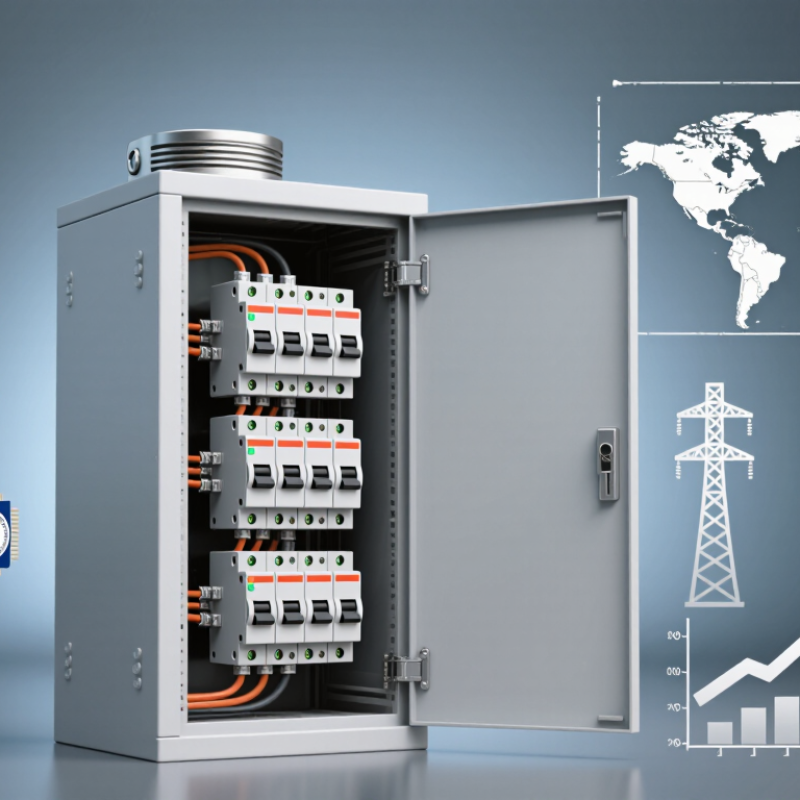
A moulded case circuit breaker, or MCCB, is a protective switching device used in low-voltage electrical systems. Its insulating case encloses contacts and a trip mechanism. When current exceeds a safe level, the breaker opens the circuit to limit damage to cables and connected equipment. The case matters. It helps contain the operating components, but it does not make the device suitable for every environment or fault level.
Many MCCBs use thermal and magnetic trip elements. The thermal element responds to sustained overloads, while the magnetic element can react rapidly to high short-circuit currents. Some models use electronic trip units for more adjustable protection. During a fault, internal contacts separate and an arc-control system helps interrupt the current. Ratings such as rated current and breaking capacity must match the installation. A higher current rating is not automatically better.
After tripping, an MCCB may be reset once the cause has been investigated and corrected. Simply switching it back on can hide a serious problem.
Not a magic shield.
In real panels, space can be tight and old drawings may be inaccurate, so selection deserves careful checking. Installers should consider the load, conductor size, available fault current, and coordination with upstream protection. A breaker can protect a circuit, but it cannot replace sound wiring, inspection, or maintenance.