What Are the Top 10 Injection Molding Automation Solutions?
Injection Molding Automation is changing how manufacturers handle repetitive tasks around the press. A robot can remove a warm part, place it on a conveyor, and keep each cycle consistent. Yet automation is not one machine or one purchase. It is a connected set of choices involving robots, end-of-arm tooling, vision systems, material handling, and process monitoring.
The scale of industrial robotics offers useful context. The International Federation of Robotics’ World Robotics 2024 report counted about 4.28 million industrial robots operating worldwide in 2023, a 10% increase from 2022. This figure covers many industries, not injection molding alone. Still, it signals the broader move toward automated production. On a molding floor, the right setup may reduce manual handling and support steadier output. The wrong setup can add complexity.
This guide examines ten solutions, from part-removal robots and sprue pickers to automated mold changes and inspection systems. Each option has practical trade-offs. A compact robot may suit a tight press area, while a vision system can check parts before packaging. Small details matter: cycle time, part geometry, mold access, and communication with the press. A polished cell is not always a productive one. Before investing, manufacturers should compare the promised gains with actual production needs—and check how the system performs during changeovers, not just in a demonstration.
Understanding Automation in Injection Molding
What Are the Top 10 Injection Molding Automation Solutions?
Understanding Automation in Injection Molding
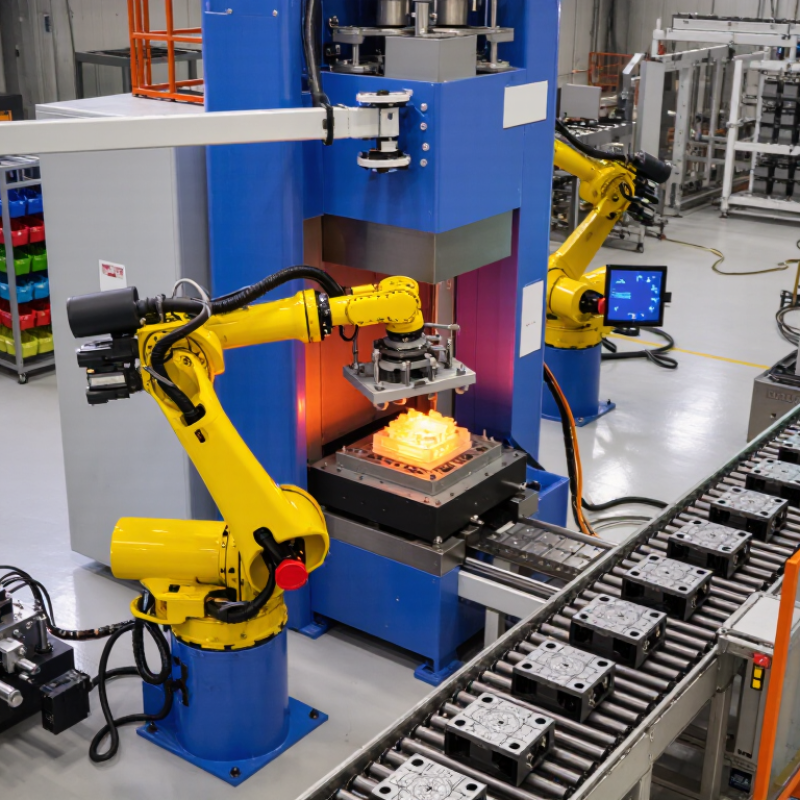
Automation in injection molding connects machines, people, and material flow. It can include resin drying and loading, precise material dosing, robotic part removal, and sprue picking. Conveyors move parts away from the press, while vision systems check for flash, short shots, or surface marks. Small details matter.
Other solutions support changeovers and consistency. Automated mold-changing equipment can reduce handling time, and packaging cells can sort parts into trays or cartons. Sensors track temperatures, cycle times, and machine conditions. Production data may reveal recurring delays before they become costly. These systems work best when their signals are checked against actual parts.
The right setup depends on part geometry, production volume, and available floor space. A robot that reaches neatly into one mold may struggle with another. Not always. Operators still need clear access for setup, cleaning, and troubleshooting. Automation can reduce repetitive handling, but it does not correct a poorly tuned process by itself. In practice, even a well-designed cell may need adjustment after the first production run. A misplaced tray or a gripper that marks a warm part can disrupt an otherwise stable cycle. Human review remains useful, especially when product requirements or materials change.
How Injection Molding Automation Systems Operate
How Injection Molding Automation Systems Operate
An automated injection molding cell connects the press, robot, sensors, and downstream equipment into one timed process. The cycle begins when the mold closes and molten plastic is injected into the cavity. After the plastic cools enough to hold its shape, the mold opens. A robot then removes the part, often using a gripper shaped to avoid marks or distortion. Timing matters. If removal starts too early, a warm part may bend.
Sensors confirm key steps, such as mold position, part presence, and robot location. A controller uses these signals to coordinate each movement and pause the cycle if something is out of sequence. Parts may then pass to a conveyor, trimming station, or visual inspection point. In real production, settings need adjustment as materials, part shapes, and cooling times change. Automation reduces repetitive handling, but it does not eliminate process checks. Small delays matter.
Tips: Keep the robot path clear and check grippers for wear. Track cycle times and rejected parts, not just output totals. When a cell behaves inconsistently, review sensor readings and part temperature before changing several settings at once. A tidy setup helps, though it cannot fix every process issue.
The Top 10 Injection Molding Automation Solutions
The Top 10 Injection Molding Automation Solutions
A practical automation cell can begin with robotic part removal, sprue picking, conveyor transfer, and vision inspection. A robot removes hot parts consistently, while a sprue picker separates runners without slowing the next cycle. Conveyors move molded components to defined work zones. Cameras can check presence, color, and visible defects, though they cannot catch every hidden flaw. Small details matter.
Insert loading, mold protection, automated material drying, and resin conveying can reduce repetitive handling and process variation. A loader places inserts into the mold, while sensors check that they are seated before closing. Mold-protection systems detect obstructions early, but incorrect sensor settings can still cause nuisance stops. Dryers and enclosed conveying help control moisture and contamination. Verify actual material requirements; one setting does not fit every resin.
Automated packaging and process monitoring complete the ten solutions. A packing system can count parts into trays or cartons, while monitoring records cycle time, temperature, and alarms for later review. These tools make problems easier to trace, not impossible to prevent. Not every cell needs all ten. Start with the task that causes the most downtime or handling risk, then test the change across different shifts and part runs. Automation can expose weak process habits, and fixing them takes real attention.
What Are the Top 10 Injection Molding Automation Solutions?
A qualitative comparison of common solutions by their typical scope in an injection molding cell. Scores are illustrative, not measured performance data or a market ranking.
How to read this chart: Higher scores indicate a broader typical role in automating tasks around the molding process. Actual scope depends on the machine, part, tooling, and production requirements.
Benefits and Challenges of Automating Molding Operations
Automation can make molding operations more consistent, especially during repetitive part removal and packing. A robot can lift warm components from a press and place them onto a cooling conveyor at steady intervals. That reduces manual handling and may help prevent scratches or uneven stacking. Material dryers, central conveying, and automatic mold-change equipment can also reduce interruptions between production runs. Small gains add up.
The benefits depend on thoughtful integration. Vision systems can flag short shots or damaged edges, while sensors track cycle times and machine conditions. This gives technicians useful information before a minor variation becomes a larger batch problem. Still, automation does not fix poor process settings. A camera may miss a defect when lighting changes, and a robot can repeat an incorrect pick with impressive consistency.
Challenges often appear during setup and changeovers. Different part shapes may require new grippers, safety checks, or revised robot paths. A tight production floor can make access for maintenance awkward. Staff also need practical training, not just a brief handover beside the cell. There is a less convenient truth: some jobs are too variable to automate profitably. A careful trial with real parts, including awkward rejects, can reveal that before a full installation.
Selecting and Integrating the Right Automation Solutions
Selecting and Integrating the Right Automation Solutions
The top 10 injection molding automation solutions often include part-removal robots, sprue pickers, conveyors, vision inspection, insert loading, mold cleaning, material drying, machine tending, packaging, and production monitoring. The right choice depends on the production problem, not the longest equipment list. Track cycle time, labor touchpoints, scrap, and changeover frequency before investing. A robot may remove parts consistently, but it will not fix unstable molding conditions.
Integration starts with the machine and the part. Check robot reach, guarding, mold clearance, cable routing, and space for bins or conveyors. Agree on handshakes between the press, robot, and downstream equipment, including what happens after a jam or safety stop. Test with real parts and the intended mold. Watch for scuffs, dropped parts, and awkward operator access. A cell can look efficient on paper and still create a bottleneck at packaging. That assumption is easy to make—and sometimes wrong.
Tips: Start with one repeatable task. Define cycle-time and quality targets, then run a trial across several shifts. Keep a manual recovery plan, and train operators before launch. Small details matter. A poorly placed tote can undo a good automation layout.
