Top 10 Bow Type Laying Up Machine Manufacturers
A Bow Type Laying Up Machine can shape a cable line’s output long before the finished cable reaches inspection. Its take-up tension, cage speed, and alignment affect how conductors sit together. Small inconsistencies matter. They can mean uneven lay, extra adjustment, or avoidable material waste.
Demand for dependable cable production is tied to wider grid investment. The International Energy Agency’s Electricity Grids and Secure Energy Transitions report says annual grid investment needs to rise above USD 600 billion by 2030, from about USD 300 billion today. That figure describes grid investment, not machine sales. Still, it signals the scale of infrastructure work that can influence demand for cable-making equipment.
This Top 10 Bow Type Laying Up Machine Manufacturers overview is intended to help buyers compare practical factors: production capacity, configuration options, control systems, service support, and documented performance. A fast machine is not automatically the right machine. Plant layout and cable specifications matter, too.
A verified public quotation from a named Bow Type Laying Up Machine specialist was not available in the supplied material, so attributing one would be unreliable. For a broader quality perspective, W. Edwards Deming is often associated with the line, “In God we trust; all others must bring data.” It is a useful reminder, though not a machine-specific statement. Buyers should request test records and references. Rankings also have limits. A strong choice for one factory may not fit another.
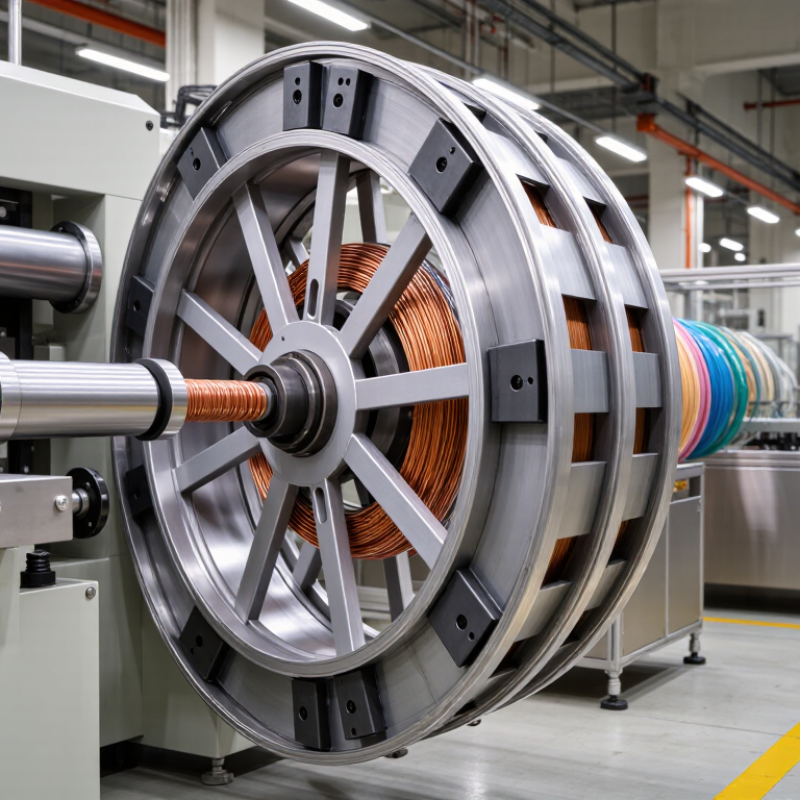
Bow-Type Lay-Up Machines: Structure, Operating Principle, and Cable-Making Role
A bow-type lay-up machine brings several wires or cable elements together around a central core. Its rotating bow carries bobbins or guides around the product path, while the core moves forward at a controlled speed. The relationship between rotation and line speed sets the lay length. Small details matter. Guide alignment, bobbin loading, and tension settings all affect how evenly the strands sit.
During operation, wire pays off from the bobbins as the bow turns. Tension devices help limit slack and reduce sudden pulls, while downstream capstans and take-up equipment keep the cable moving steadily. Operators monitor strand placement, surface marks, and tension readings during a run. A loose strand may shift; excessive tension can stretch or damage a conductor. The machine’s exact layout varies with cable design, wire size, and production requirements.
In cable making, bow-type lay-up machines form conductor bundles or assemble cores before later insulation and finishing stages. A consistent lay helps the cable bend predictably and maintain its intended geometry. Yet a setup can appear correct and still produce uneven lay when bobbins feed differently. That is easy to overlook. Trial runs, careful inspection, and recorded process settings provide useful checks, though they cannot replace adjustments for changing materials.
Cable Applications and Conductor Classes Defined by IEC 60228
IEC 60228 defines conductor classes by construction and flexibility, not by cable purpose alone. Class 1 conductors are solid; Class 2 conductors are stranded for fixed installations. Classes 5 and 6 use finer wires for flexible and very flexible applications. A bow type laying-up machine must handle these differences without damaging strands or disturbing the conductor geometry. Small details matter.
The standard also specifies nominal cross-sectional areas and maximum DC resistance at 20°C, giving cable makers measurable checks beyond appearance. For example, IEC 60228 lists a maximum resistance of 7.41 Ω/km for a 2.5 mm² copper Class 1 conductor. This is a useful production reference, though actual process control still depends on wire quality and compaction. In its 2023 report Electricity Grids and Secure Energy Transitions, the IEA says annual grid investment needs to rise from about USD 300 billion today to over USD 600 billion by 2030 in its net-zero pathway. That points to growing pressure for dependable cable production. Yet higher output alone is not enough. A lay-up line must preserve strand condition, pitch, and concentricity across conductor classes. The standard helps define the target; machine trials reveal where the process falls short.
Key Performance Metrics: Lay Length, Line Speed, Reel Size, and Core Count
For a bow-type laying-up machine, compare lay length, line speed, reel size, and supported core count together. Lay length affects cable flexibility and roundness, so check the achievable range under your actual conductor diameters and tensions. Ask for measured results, not only catalogue limits. Small differences matter. Line speed should be assessed during a continuous production run, with stops and changeovers recorded; the highest advertised speed may not reflect stable output. The IEA’s 2023 report Electricity Grids and Secure Energy Transitions says annual grid investment needs to rise from about USD 300 billion to more than USD 600 billion by 2030. That outlook raises the value of dependable production, but it does not define a suitable machine speed for every plant.
Reel size must match both finished cable dimensions and handling equipment. Confirm flange diameter, barrel diameter, width, and loaded weight, then verify winding quality at full reel capacity. Core count is equally practical: more cores can change tension balance, loading time, and setup complexity. Request a trial using the intended core configuration and record lay length, speed, and reel fill. A specification sheet can still mislead.
Tips: Ask for a witnessed run with your own materials. Log actual speed, tension stability, changeover time, and usable reel capacity. One trial may not represent every product, so note what remains untested.
Top 10 Bow-Type Lay-Up Machine Manufacturers and Their Product Capabilities
Top 10 Bow-Type Lay-Up Machine Manufacturers and Their Product Capabilities
A useful comparison of bow-type lay-up machine manufacturers starts with the work each machine can actually perform. Check compatible fiber formats, laminate width, working length, and supported material systems. Ask whether tension control and compaction pressure remain stable across curved sections. Small variations matter. A loose tow can wrinkle; excessive pressure may distort a delicate preform.
Product capabilities also differ in automation and integration. Some systems emphasize programmable motion, recipe storage, and digital monitoring; others prioritize flexible tooling and straightforward changeovers. Buyers should compare achievable placement accuracy, cycle time, operator access, and maintenance requirements using sample parts, not brochures alone. Ask for repeatability data under production conditions. It is easy to overlook loading time.
Market context helps explain this focus. MarketsandMarkets estimated the global composites market at USD 94.1 billion in 2023, forecasting USD 131.6 billion by 2028. IFR’s World Robotics 2024 report recorded 4.28 million industrial robots operating worldwide in 2023, up 10 percent year over year. These figures signal growing interest in automation, but they do not prove that every factory needs a fully automated cell. A practical shortlist should match machine capacity to part geometry, labor skills, and expected batch size. That judgment takes testing.
How to Compare Specifications, Automation, and Production Requirements
When comparing bow type laying up machine manufacturers, start with the fabric, not the brochure. Record its width, weight, stretch, and roll diameter; these details shape realistic machine limits. Ask for the usable lay width, measured spreading speed, and end-of-ply accuracy with your materials. Speed matters. Not by itself. A quoted maximum may assume stable cloth, long runs, and few stops. Request a trial using representative fabric and a specified lay length, then inspect edge alignment and tension across several plies.
Compare automation by what it actually removes from the operator’s routine. Check whether the system controls fabric tension, aligns edges, cuts ends, and records production data. Confirm which functions are standard and which require options, sensors, or extra training. Match capacity to your shift plan: daily lay meters, style changes, batch size, and staffing. A compact machine can suit a crowded cutting room, but its loading path and service access still need space. Ask about setup time, maintenance intervals, spare-part availability, and response procedures before ranking suppliers. The comparison is imperfect. Different manufacturers may measure speed differently, so normalize test conditions and document operating limits.
Top 10 Bow Type Laying Up Machine Manufacturers: How to Compare Specifications, Automation, and Production Requirements
Example evaluation weights for comparing machine options. Adjust them to match your materials, production volume, staffing, and quality requirements. These are decision weights, not manufacturer performance data.
