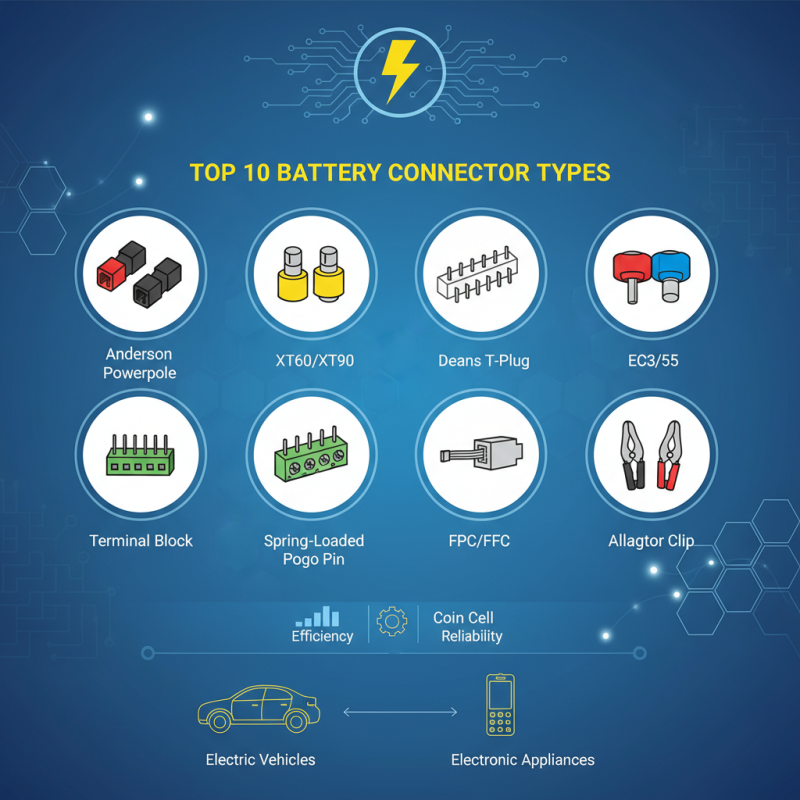
Top 10 Battery Connector Types Buyers Should Consider?
When choosing Battery Connectors, understanding the options available is vital for optimal performance. Battery connectors play a critical role in ensuring reliable power delivery. Selecting the right type can significantly impact efficiency and safety.
There are various types of battery connectors designed for different applications. Each type has its benefits and drawbacks. Some connectors may seem ideal but could underperform in specific conditions. Identifying the right connector is not just a matter of preference; it requires careful consideration of technical specifications.
Buyers should be aware of the specific demands of their projects. A well-informed decision can prevent common pitfalls associated with improper connector choices. Understanding the nuances of battery connectors enhances reliability in electronic appliances and electric vehicles.
Overview of Battery Connector Types and Their Importance
Battery connectors are critical components in various applications, from consumer electronics to electric vehicles. Choosing the right type impacts performance and safety. Understanding different connectors helps in making informed decisions. Some connectors offer reliable connections, while others cater to high-current applications.
For optimal performance, consider the connector's current rating. This rating defines how much current the connector can handle. Always check compatibility with your battery type. Misalignment here can lead to inefficiency or hazards. Don't overlook the importance of proper insulation.
Tips for selecting battery connectors: Always assess the environment where the connector will operate. Certain environments may be humid or dusty. Selecting connectors with protective features is essential in these cases. Also, think about future upgrades. Choosing versatile connectors allows flexibility in future projects. Aim for options that provide a balance between cost and durability. You'll save on replacements later.
Top 10 Battery Connector Types Buyers Should Consider
| Connector Type | Application | Current Rating | Voltage Rating | Key Features |
| Anderson Powerpole | RC and Electric Vehicles | 15-180A | 600V | Modular design, color-coded |
| XT60 | Multirotors and Drones | 60A | 14V-22V | High current, secure locking mechanism |
| Tamiya Connector | RC Cars | 20A | 7.2V | Widely used, easy to connect |
| Deans Connector (T-Connector) | Race Cars | 60A | 6.5V-14.8V | Low resistance, compact size |
| EC5 Connector | Large RC Vehicles | 120A | 30V | High conductivity, secure fit |
| Molex Connector | Consumer Electronics | Up to 5A | 500V | Versatile, available in various pin counts |
| USB Connector | Portable Devices | 500mA to 2A | 5V | Universal, multiple versions |
| Screw Terminal Connector | Industrial Equipment | Varies | Up to 600V | Secure, reliable connections |
| Ring Terminal Connector | Automotive Applications | 10A to 300A | 12V | Durable, easy installation |
Factors to Consider When Choosing Battery Connectors
When selecting battery connectors, various factors come into play. Compatibility stands out as a crucial element. According to a report by the International Electrotechnical Commission, mismatched connectors lead to over 20% of battery failures in electronic devices. It's essential to confirm that the connector style fits the battery type. Not all connectors will provide reliable performance across different applications and environments.
Another key aspect is the material composition of connectors. Reports from the Battery Innovation Center indicate that connectors made from high-quality metals, like copper and aluminum, enhance conductivity and lifespan. Connectors comprised of subpar materials can introduce resistance, causing inefficiencies that may reduce energy output by 15% or more. Evaluating the environmental resistance is also critical. Connectors must withstand various conditions, such as moisture and temperature fluctuations, to ensure longevity.
Finally, the size and ease of installation matter. Complex designs might save space but complicate the assembly process. A survey by the Electrical Connector Association showed that up to 30% of technicians struggle with installation, leading to increased costs and downtime. Adopting user-friendly designs helps streamline installation while ensuring connections are secure and reliable.
The Top 10 Battery Connector Types for Various Applications
When considering battery connectors, understanding their applications is crucial. Different devices require unique connection types. For instance, in electric vehicles, high-current connectors ensure efficient power transfer. They must handle large currents for acceleration while maintaining durability over time.
In consumer electronics, smaller connectors are more common. Miniature connectors are ideal for smartphones and tablets. These connectors need to balance compact design with reliable power delivery. Simpler connectors work for lithium-ion batteries in smaller devices. However, finding the right size can sometimes be challenging.
For industrial applications, robust connectors are non-negotiable. They should resist harsh conditions and facilitate easy maintenance. Proper sealing can protect against dust and moisture. However, some users may overlook this aspect, leading to potential failures. Each connector type offers specific advantages, but it's essential to choose wisely based on the specific application and environment. This choice impacts performance significantly, making informed decisions vital.
Top 10 Battery Connector Types Buyers Should Consider
Comparative Analysis of Each Connector Type's Features
When selecting battery connectors, understanding their unique features is crucial. There are several types to consider, each designed for specific applications. For example, the Anderson connector is popular due to its high current capabilities. These connectors easily connect and disconnect under load. However, they may be overkill for small electronics, which could lead to unnecessary bulk.
Other connectors, like JST types, are favored in compact devices. These connectors provide a reliable connection in limited spaces. However, their smaller pins can be challenging to solder, especially for less experienced technicians. Additionally, they may not handle high currents well, limiting their use in larger applications.
Then there are XT60 connectors known for their rock-solid design. Their shape prevents incorrect connections. However, they can be quite rigid, making installation in tight areas difficult. Each connector has strengths and weaknesses, so buyer preferences must align with the application needs. Choosing wisely ensures optimal performance and reliability in any project.
Best Practices for Installing and Maintaining Battery Connectors
When it comes to battery connectors, proper installation and maintenance are crucial for optimal performance. Ensuring connectors are clean and free from corrosion can greatly enhance their lifespan. Regularly inspecting connectors for signs of wear or damage is essential. Replace any frayed or degraded wires promptly. Simple visual checks can prevent larger issues down the road.
Using the correct tools for installation matters significantly. Avoid overtightening connections, as this can lead to mechanical stress and damage. A looser fit may also cause poor conductivity. Consider using dielectric grease to improve the connection's durability. However, be cautious. Applying too much grease can attract dirt and debris, potentially worsening the problem.
Routine maintenance is often overlooked. While many users believe that battery connectors require little attention, this is not the case. Conduct periodic tests with a multimeter to ensure a good connection. If you notice fluctuating readings, it's time to investigate. Sometimes, a simple cleaning can resolve issues, but in other cases, replacement might be necessary.