
What Is a Tank Container and How Does It Work?
A Tank Container is more than a steel box with a vessel inside. It is a pressure-rated tank held within a frame designed for handling and transport across road, rail, and sea. The frame fits standard lifting equipment. The tank holds liquid cargo, while valves, seals, and fittings help control filling and discharge. Yet the details matter. A worn gasket or poorly secured connection can create problems long before a shipment reaches its destination.
Mike Yarwood, a tank-container industry specialist and former managing director of the International Tank Container Organisation, has emphasized the importance of safety and operational standards in the sector. A practical way to express that principle is: “Reliable tank transport depends on sound equipment, careful inspection, and trained handling.” This wording is a summary, not a verified verbatim quotation. That distinction matters when technical advice is presented as a direct quote.
How does a Tank Container work in practice? The cargo is loaded through designated fittings, then the tank is closed and checked before transport. Its frame allows the unit to move between transport modes without transferring the liquid into another vessel. At the destination, trained personnel connect suitable discharge equipment and manage the flow. The exact setup depends on the cargo and tank design.
This guide explains the main components, loading and unloading process, and common operational checks. It also notes a practical limitation: one tank design does not suit every product or route. A clean-looking exterior is not proof of readiness. Proper inspection still matters.
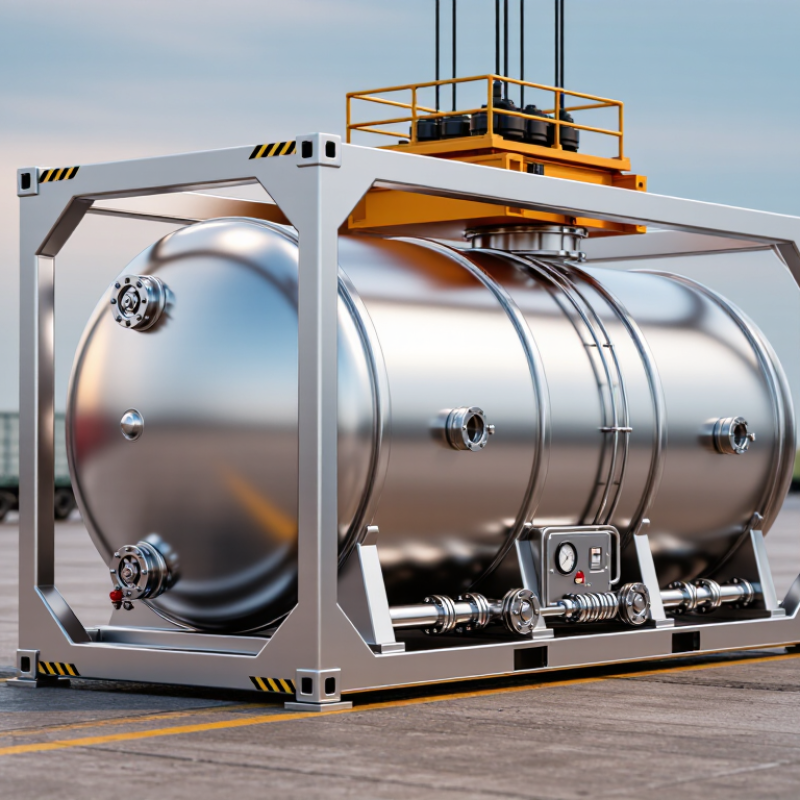
What Defines a Tank Container: 20-Foot ISO Frame, 14,000–26,000 L Capacity
What Is a Tank Container and How Does It Work?
A tank container is a cylindrical vessel secured inside a 20-foot ISO frame. The frame’s corner castings allow compatible lifting and transfer between ships, railcars, and trucks. Typical capacities range from 14,000 to 26,000 litres, but the largest figure does not mean every load can use the full volume. Tank design, insulation, heating equipment, liquid density, and operating limits all affect usable capacity. Details matter.
During filling, operators load liquid through designated openings and monitor the quantity against the tank’s specifications. At the destination, valves connect to hoses for controlled discharge, often by gravity or pumping. The International Tank Container Organisation’s 2024 survey estimated the global fleet at about 801,800 units at the start of that year. That scale reflects the format’s role in intermodal logistics, not a guarantee that every tank suits every product.
Tips: Check the tank’s stated capacity and permitted payload before booking. Compare them with the liquid’s density and temperature needs. A 26,000-litre tank may sound ideal, yet a heavier liquid can reach its weight limit before it is full. Small mismatch, real cost.