Icon about-block-ico-1 Icon about-block-ico-2 Icon about-block-ico-3 Icon about-block-ico-4 Icon announcement-close Icon arrow-left Icon arrow-right Icon arrow-sm Icon asterisk Icon banner-transparent-vector Icon btn-callback-ico Icon careers-item-location Icon careers-item-time Icon careers-item-type Icon careers-mail-ico Icon careers-phone-ico Icon careers-search-ico Icon careers-single-hero-vector Icon careers-single-more-vector Icon careers-vector Icon check Icon close Icon dfm-image-left-vector Icon dfm-image-right-vector Icon document Icon download-popup-vector Icon dropdown Icon envelope Icon facebook Icon faq-banner-bg Icon faq-title-ico-active Icon faq-title-ico Icon featured-links-block-bg Icon figure-1 Icon figure-10 Icon figure-11 Icon figure-12 Icon figure-13 Icon figure-14 Icon figure-15 Icon figure-2 Icon figure-3 Icon figure-4 Icon figure-5 Icon figure-6 Icon figure-7 Icon figure-8 Icon figure-9 Icon file-upload Icon form-sidebar-back Icon form-step-done Icon gmap-marker-group-icon Icon gmap-marker-icon Icon header-profile-ico Icon instagram Icon link Icon linkedin Icon loader Icon mail Icon phone Icon play-yt Icon play Icon post-nav-arr-left Icon quote-banner-vector Icon quote-block-aside-vector Icon quote-contact-phone-ico Icon quote-contact-position-ico Icon sidebar-location Icon sidebar-phone Icon technology-banner-nav-left-vector Icon technology-banner-nav-right-vector Icon twitter Icon webinar-item-date-vector Icon whitepaper-img-ico-left Icon whitepaper-img-ico-right Icon whitepapers-listing-banner-ico Icon whitepapers-single-aside-vector Icon youtube Icon yt-play-button

What Is a Rotary Desiccant Dehumidifier?

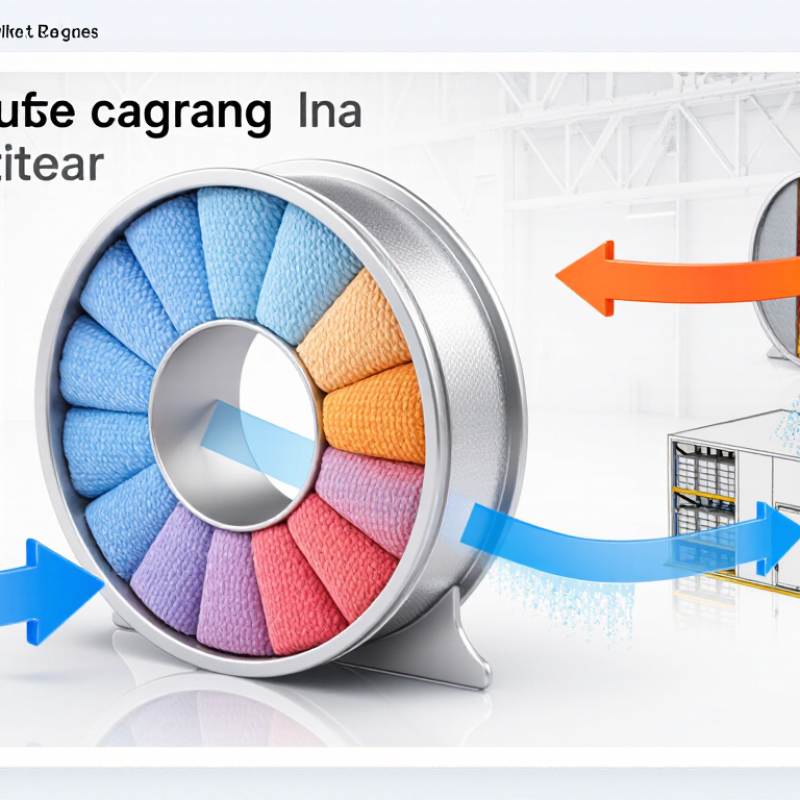
A rotary desiccant dehumidifier removes water vapor from air with a slowly turning wheel coated in moisture-attracting material. As humid process air passes through the wheel, the desiccant adsorbs moisture. The drier air then moves into the space or process requiring humidity control. A separate, heated airflow passes through another part of the wheel, releasing the collected moisture and restoring the desiccant. The wheel keeps turning, so drying and regeneration happen continuously. Small details matter. The system is not a magic fix.

This design is useful when air must be dried below the levels commonly reached by many refrigeration-based dehumidifiers. It can serve warehouses, manufacturing areas, cold storage, and other humidity-sensitive settings. Yet performance depends on more than the machine itself. Inlet temperature, airflow, target humidity, and regeneration heat all affect results and energy use. A poorly matched unit may consume more energy than expected or fail to maintain the desired conditions. This article explains how the wheel, airflow paths, and regeneration stage work together. It also looks at typical applications, advantages, limitations, and practical selection factors. The aim is to make the technology easier to assess, not to suggest that one system suits every building. Real operating conditions deserve careful review.
What Is a Rotary Desiccant Dehumidifier?

Definition and Purpose of a Rotary Desiccant Dehumidifier

A rotary desiccant dehumidifier removes water vapor using a slowly turning wheel coated with moisture-attracting material, such as silica gel. One section of the wheel treats incoming air; another receives heated regeneration air. That heat releases collected moisture, which leaves through an exhaust stream. ASHRAE’s HVAC Systems and Equipment Handbook describes this separation of drying and regeneration as a core feature of desiccant systems.

Its purpose is to control humidity when cooling alone cannot dry the air enough. This can matter in warehouses, production rooms, and spaces storing moisture-sensitive materials. The U.S. Environmental Protection Agency recommends keeping indoor relative humidity below 60%, ideally between 30% and 50%. Those figures are useful guidance, not a universal process specification. A facility may need a different target.

The practical clues are easy to miss: a warm regeneration-air outlet, a steady wheel rotation, and drier supply air. The wheel does not destroy moisture; it transfers it. Regeneration also needs heat, so energy use depends on the heat source, airflow, and operating conditions. It is not a magic fix. Poor sealing or uneven airflow can undermine performance, and even experienced operators may need to adjust the setup after measuring actual humidity.

Key Components and Their Roles

A rotary desiccant dehumidifier uses a slowly turning wheel to remove moisture from air. The wheel’s porous desiccant surface adsorbs water vapor as process air passes through it. Silica gel or molecular sieve materials are common choices. The wheel then rotates into a separate regeneration-air sector, where heated air releases the stored moisture. The wet exhaust leaves the unit. Seals between the two air paths help prevent humid exhaust from leaking back into the dry supply. Small gaps matter.

Other components support this cycle. Filters protect the wheel from dust, while fans move process and regeneration air through their respective ducts. A heater raises regeneration-air temperature; a motor and drive system keep the wheel turning steadily. Temperature and humidity sensors help operators adjust airflow and heat input. The International Energy Agency’s 2018 report, The Future of Cooling, projects that global energy demand for space cooling could more than triple by 2050. That broader trend makes careful system control increasingly relevant, though a desiccant wheel is not automatically more efficient in every application. In practice, a clogged filter or poorly set regeneration temperature can undermine performance. There is no perfect setting; site conditions matter.

What Is a Rotary Desiccant Dehumidifier? - Key Components and Their Roles
Component What It Does Role in the Dehumidification Cycle Useful Notes
Desiccant rotor (wheel) A slowly rotating, honeycomb-like matrix that carries moisture-adsorbing desiccant. Its sections pass successively through moist process air and heated regeneration air, allowing moisture to be captured and then released. Silica gel and molecular sieve are common desiccants; the material selected affects performance at different humidity levels.
Process-air sector The portion of the rotor through which the air being dried flows. Desiccant adsorbs water vapor from this air; the dry process air then leaves the unit for the space or system being served. The outlet air is typically warmer than the inlet air because adsorption releases heat.
Regeneration-air sector A separate portion of the rotor exposed to heated regeneration air. Heat drives moisture out of the desiccant and into the regeneration exhaust, restoring the rotor’s moisture-capturing capacity. Regeneration exhaust is normally discharged away from the dry-air outlet to prevent moisture from returning to the process airstream.
Regeneration heater Raises the temperature of the air used to regenerate the desiccant. Supplies the heat needed to desorb captured water vapor from the rotor. Heaters may use electric, steam, hot water, or other heat sources, depending on the system design.
Process-air fan Moves the air being dried through the process sector and associated ductwork. Maintains the airflow needed for moisture removal and delivery of dry air. Fan capacity must account for the pressure drop across the rotor, filters, and ductwork.
Regeneration-air fan Moves air through the heater and regeneration sector, then toward the exhaust. Carries heat to the rotor and transports released moisture out of the dehumidifier. Some designs use a shared or externally supplied airflow arrangement rather than a separate fan.
Rotor drive and bearings A motor and drive mechanism turn the rotor; bearings support its rotation. Gradually moves desiccant from the drying zone into the regeneration zone and back again. The rotor turns slowly, so the drive system is designed for steady, continuous operation.
Sector seals and partitions Separate the process and regeneration air paths around the rotating wheel. Limit unwanted mixing of moist regeneration air with the dry process airstream. Seal condition affects leakage, efficiency, and achievable outlet-air conditions.
Air filters Capture airborne particles from one or both incoming airstreams. Help protect the rotor and internal surfaces from dust and other contaminants. Filters require inspection and replacement as they load with particles; a clogged filter can restrict airflow.
Purge sector (where fitted) A small transition zone that directs a limited airflow through part of the rotor. Can reduce carryover of hot, moisture-laden air from the regeneration side into the process side. Not every rotary desiccant dehumidifier includes a purge sector; its use depends on the equipment design.
Controls and sensors Monitor operating conditions and control components such as fans, heaters, and the rotor drive. Help maintain the requested operating conditions and provide alarms or protective functions. Depending on the system, sensors may measure temperature, humidity, airflow, or equipment status.
Operating principle: the rotor continuously adsorbs moisture from process air and releases that moisture into a separate heated regeneration airstream.

How the Rotary Moisture-Removal Process Works

What Is a Rotary Desiccant Dehumidifier?

How the Rotary Moisture-Removal Process Works

A rotary desiccant dehumidifier uses a slowly turning wheel coated with moisture-attracting material, often silica gel. Damp process air passes through one section of the wheel, and water vapor sticks to the coating. The drier air leaves the unit. Meanwhile, heated air flows through another section, releasing the captured moisture into an exhaust stream. The wheel then rotates back into the process-air path. ASHRAE’s 2020 Handbook—HVAC Systems and Equipment describes this continuous adsorption and regeneration cycle.

That matters. In the IEA report The Future of Cooling, global cooling accounted for about 10% of electricity use in 2016. This is broader than dehumidification, but it shows why moisture control deserves careful energy planning. A desiccant wheel can help when air must be dried below the level that ordinary cooling can efficiently reach. Yet regeneration requires heat, so performance depends on the heat source, airflow, seals, and operating conditions. A dry outlet alone does not prove the system is efficient.

Tips: Check both outlet humidity and regeneration temperature during commissioning. Look for moisture leakage between the two air streams; even a small seal gap can undermine performance. And be honest about the heat source. A wheel is useful, not magic.

How Regeneration and Airflow Are Controlled

What Is a Rotary Desiccant Dehumidifier?

How Regeneration and Airflow Are Controlled

A rotary desiccant dehumidifier passes moist process air through a slowly turning wheel. The desiccant captures water vapor; a separate, heated airstream dries the wheel so it can absorb moisture again. Controls balance wheel speed, regeneration temperature, and both airflow rates. ASHRAE psychrometric charts show why temperature alone can mislead: air at 25°C and 60% relative humidity would read about 34% RH after warming to 35°C, even without removing moisture. Track dew point or humidity ratio too.

Regeneration air must supply enough heat to release moisture, but excessive heat wastes energy and may stress the desiccant. A temperature sensor after the heater and humidity readings before and after the wheel help operators adjust heat and rotation speed.

Airflow matters just as much: uneven flow can leave wet zones in the wheel. Pressure readings across filters and ducts can flag blockage or fan problems. AHRI Standard 921 provides a recognized framework for rating desiccant dehumidification equipment; actual settings still depend on the unit and process conditions. A neat control display is not proof of even airflow.

Tips: Check sensor calibration and filter pressure regularly. Compare inlet and outlet dew points during steady operation. Small checks catch drift early. Don’t treat a single RH reading as the whole story.

Where Rotary Desiccant Dehumidifiers Are Used

Rotary desiccant dehumidifiers are used where ordinary cooling coils struggle to maintain very dry air. A slowly turning wheel absorbs moisture from process air; a separate, heated airstream dries the wheel for reuse. That makes the equipment useful in battery-material production, pharmaceutical processing, and other controlled manufacturing spaces. Requirements differ sharply. A dry room may need a very low dew point, while a storage area may only need steady humidity.

They also serve museums, archives, food storage, and printing plants, where damp air can damage materials or disrupt production. The US Environmental Protection Agency recommends keeping indoor relative humidity below 60%, ideally between 30% and 50%, to limit moisture-related risks. That is a broad indoor-air guideline, not a process specification. Actual setpoints need to come from product requirements and facility measurements.

Data centers are another setting, but a desiccant wheel is not automatically the right choice. Lawrence Berkeley National Laboratory’s 2024 US Data Center Energy Usage Report estimates that US data centers used about 176 terawatt-hours of electricity in 2023. That figure does not mean they all need desiccant systems; it shows why cooling and humidity decisions deserve careful review. Engineers should check outdoor-air moisture, target dew point, regeneration heat, and exhaust routing. Small details matter. A poorly matched wheel can add energy use without solving the real moisture problem.

MSIRobot