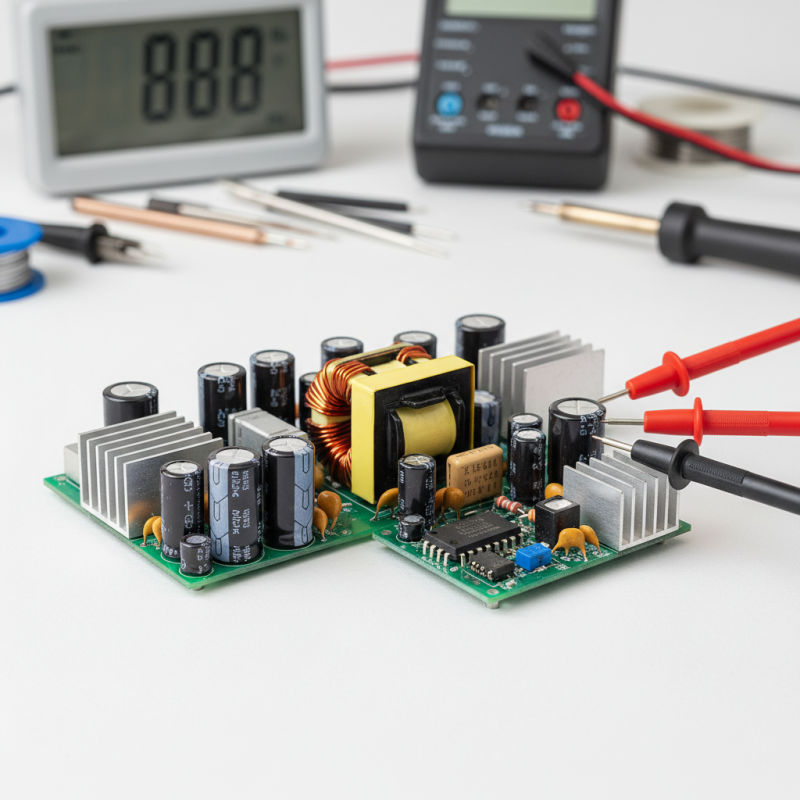
What is a Regulated Power Supply and How Does It Work?
A Regulated Power Supply is essential in many electronic applications. It ensures a stable voltage output, regardless of changes in load or input power. This reliability is critical for sensitive devices, which can be affected by voltage fluctuations.
These power supplies use feedback mechanisms to maintain a constant output. They adjust their voltage based on real-time conditions. This process can seem complex, but it is necessary for proper device operation. However, even a Regulated Power Supply can have its limitations. Factors like temperature changes and aging components can affect performance.
Understanding the workings of a Regulated Power Supply is important. It allows designers to make informed choices for their projects. There are various types, each with unique benefits and drawbacks. Reflecting on these aspects can improve design decisions and enhance device reliability.
What is a Regulated Power Supply: Definition and Overview
A regulated power supply is essential in various electronic applications. It ensures a steady voltage output despite changes in load or input voltage. This regulation helps to protect sensitive electronic components. According to industry reports, over 70% of electronic devices rely on regulated power supplies for optimal performance.
In a regulated power supply, feedback mechanisms continuously monitor output voltage. If voltage drifts, adjustments are made to correct it. This process enhances safety, reducing the risk of damage from voltage spikes or drops. Industry data suggests that unregulated power supplies can lead to a failure rate of 15% in electronic circuits.
Tips: When choosing a regulated power supply, consider the load requirements carefully. Matching voltage and current ratings is crucial. Regularly inspect and maintain power supplies to ensure they function properly. Small issues can escalate, leading to significant downtime. Remember, investing in quality power supplies pays off in the long run.
Key Components of Regulated Power Supplies: An In-Depth Look
Regulated power supplies are crucial for stable electronic applications. They consist of several key components. The main parts include transformers, rectifiers, filters, and voltage regulators. Each component plays a distinct role in ensuring a consistent voltage output.
Transformers adjust voltage levels. They convert high voltage to low voltage and vice versa. Often, these devices operate with efficiencies over 95% according to industry reports. This efficiency is vital for minimizing energy loss. Rectifiers then convert AC to DC, allowing the power supply to serve sensitive electronic devices.
Voltage regulators maintain output despite input variations. This stability is essential for devices where fluctuations can cause malfunction. Many reports suggest that poor voltage regulation can lead to a 20% increase in operational failure rates. Filters smooth out the power supply, reducing noise and ensuring clean power delivery. While these components work well together, they have limitations. For example, overheating can be an issue, especially under heavy loads. Regular audits and maintenance are often necessary to prevent system failures.
What is a Regulated Power Supply and How Does It Work? - Key Components of Regulated Power Supplies: An In-Depth Look
| Component | Description | Function | Typical Values |
| Transformer | Modifies input voltage to required levels | Step up or step down AC voltage | 220V to 12V |
| Rectifier | Converts AC to DC | Full-wave or half-wave conversion | Peak Inverse Voltage: 50V |
| Filter Capacitor | Smoothens the output voltage | Reduces ripple voltage | Capacitance: 1000μF |
| Voltage Regulator | Maintains constant output voltage | Adjusts output according to load changes | Output: 5V, Max Current: 1A |
| Heat Sink | Dissipates heat generated by components | Prevents overheating | Material: Aluminum |
How Regulated Power Supplies Operate: Voltage Regulation Mechanisms
Regulated power supplies are crucial in modern electronics. They maintain a constant output voltage, regardless of input voltage fluctuations or load changes. This stability is vital for sensitive components, preventing damage and ensuring optimal performance. Key mechanisms for voltage regulation include linear and switching regulations. Linear regulators are simple and provide low noise, but at a cost of efficiency. In contrast, switching regulators are more efficient, but can introduce electromagnetic interference.
In a recent report by the IEEE, over 70% of electronic devices rely on regulated power supplies. This dependency highlights their importance across industries, from consumer electronics to industrial systems. Switching regulators have surged in popularity, increasing their efficiency from 70% to over 95% in some applications. However, the complexity of their design can lead to potential challenges. Engineers must carefully consider layout to minimize noise and interference.
**Tips:** When designing circuits with regulated supplies, prioritize filter design. A good filter can reduce noise effectively. Always test your prototypes under different load conditions. This can reveal unexpected voltage drops. Regularly revisit your design when new components are available. Continuous improvement can lead to significant gains.
Voltage Regulation Mechanisms in Regulated Power Supplies
This bar chart illustrates the voltage levels in a regulated power supply. The input voltage is typically higher, while the output voltage is stabilized for consistent performance under varying load conditions.
Types of Regulated Power Supplies: Linear vs. Switching Technology
When discussing regulated power supplies, it's essential to differentiate between linear and switching technology. Linear power supplies deliver a stable voltage through constant regulation. They are simple, reliable, and have low noise. However, they can be bulky and inefficient, especially at higher output levels. The heat generated can be significant, leading to the need for large heat sinks.
Switching power supplies, on the other hand, use high-frequency switching to control output voltage. This design allows for smaller, lighter units. They are more efficient, as they waste less energy as heat. However, switching supplies may introduce electrical noise, which can interfere with sensitive equipment.
Tip: Choose the type based on your needs. If space and weight are concerns, consider switching supplies. For sensitive audio and video systems, linear might be your best bet.
Note that both types have their flaws. Linear supplies might struggle with high-current demands. Meanwhile, switching supplies could malfunction if not properly designed. Evaluate your requirements carefully. Testing with real loads can provide clarity.
Applications of Regulated Power Supplies in Various Industries
Regulated power supplies play a crucial role in various industries. They ensure that devices receive stable voltage and current. This stability is vital for sensitive equipment, such as medical devices. For instance, in hospitals, precision is critical. A regulated power supply helps ventilators function properly. It can save lives by preventing malfunctions.
In manufacturing plants, these supplies support automation systems. They provide consistent power to robotics and control systems. Fluctuations in power can disrupt operations, leading to costly downtimes. Regulated supplies help maintain productivity. However, if not regularly maintained, they can fail unexpectedly.
In telecommunications, reliable power is non-negotiable. Data centers depend on them to keep servers running smoothly. An interruption can lead to data loss and security issues. That’s a risk companies cannot afford. Thus, regulated power supplies are essential across multiple sectors. They keep systems operational, but ongoing assessments are necessary to avoid potential problems.