Icon about-block-ico-1 Icon about-block-ico-2 Icon about-block-ico-3 Icon about-block-ico-4 Icon announcement-close Icon arrow-left Icon arrow-right Icon arrow-sm Icon asterisk Icon banner-transparent-vector Icon btn-callback-ico Icon careers-item-location Icon careers-item-time Icon careers-item-type Icon careers-mail-ico Icon careers-phone-ico Icon careers-search-ico Icon careers-single-hero-vector Icon careers-single-more-vector Icon careers-vector Icon check Icon close Icon dfm-image-left-vector Icon dfm-image-right-vector Icon document Icon download-popup-vector Icon dropdown Icon envelope Icon facebook Icon faq-banner-bg Icon faq-title-ico-active Icon faq-title-ico Icon featured-links-block-bg Icon figure-1 Icon figure-10 Icon figure-11 Icon figure-12 Icon figure-13 Icon figure-14 Icon figure-15 Icon figure-2 Icon figure-3 Icon figure-4 Icon figure-5 Icon figure-6 Icon figure-7 Icon figure-8 Icon figure-9 Icon file-upload Icon form-sidebar-back Icon form-step-done Icon gmap-marker-group-icon Icon gmap-marker-icon Icon header-profile-ico Icon instagram Icon link Icon linkedin Icon loader Icon mail Icon phone Icon play-yt Icon play Icon post-nav-arr-left Icon quote-banner-vector Icon quote-block-aside-vector Icon quote-contact-phone-ico Icon quote-contact-position-ico Icon sidebar-location Icon sidebar-phone Icon technology-banner-nav-left-vector Icon technology-banner-nav-right-vector Icon twitter Icon webinar-item-date-vector Icon whitepaper-img-ico-left Icon whitepaper-img-ico-right Icon whitepapers-listing-banner-ico Icon whitepapers-single-aside-vector Icon youtube Icon yt-play-button

What Is a Range Exhaust System and How Does It Work?

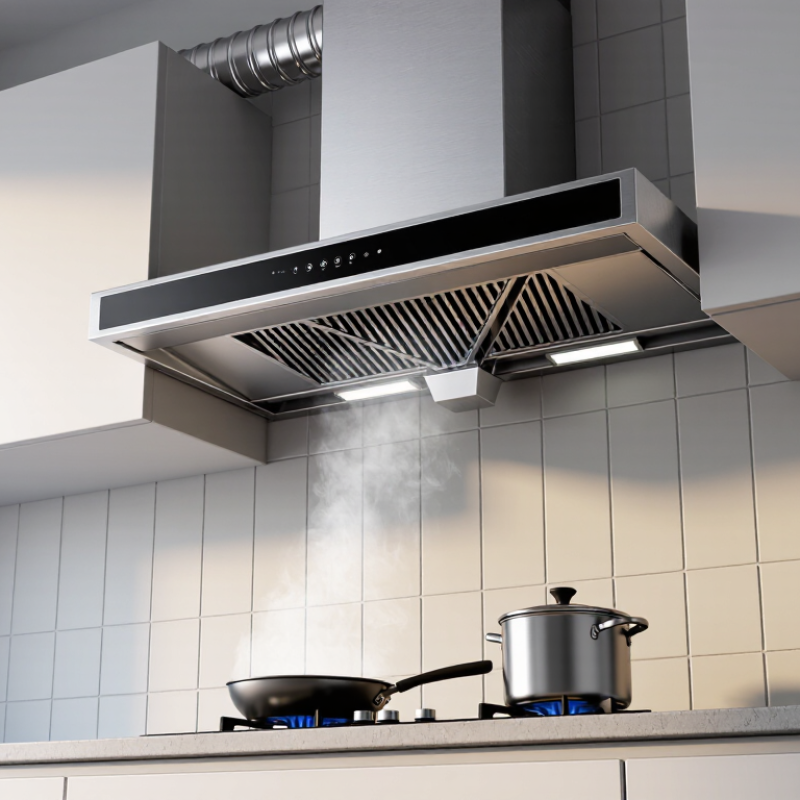
A Range Exhaust system removes cooking fumes from the air around a stove. It can capture smoke, grease particles, steam, and strong odors before they spread through the kitchen. For example, searing food may send a visible plume toward the hood, while boiling water adds moisture to the room. A well-designed system helps carry these pollutants away or filter the air before returning it indoors. Small details matter.

Most systems include a hood, grease filters, a fan, and either ductwork or a recirculating filter. The hood collects rising air, and the fan moves it through the system. Metal filters trap grease; they need regular cleaning to keep airflow effective. In a ducted setup, air travels through a passage and exits outdoors. A damper can help limit air flowing back inside. Recirculating models instead pass air through filters and return it to the kitchen, so they do not remove moisture in the same way.

Performance depends on more than fan power. Hood size, placement, duct layout, filter condition, and cooking habits all affect what the system captures. A noisy fan may discourage everyday use, while a poorly fitted hood can let fumes escape around its edges. No setup is perfect. Manufacturer instructions and local installation requirements should guide selection, cleaning, and servicing; complex duct or electrical work may call for a qualified professional. This guide explains how each part works, what distinguishes ducted and recirculating designs, and which practical details to consider when choosing a range exhaust system.
What Is a Range Exhaust System and How Does It Work?

What a Range Exhaust System Includes: Hood, Filter, Fan, Duct, and Makeup Air

A range exhaust system moves smoke, grease, heat, and cooking odors outdoors. The hood captures the plume above the cooktop; its shape and overhang matter. A mesh or baffle filter catches grease before it enters the fan and duct. Clean filters help maintain airflow. The fan creates suction, but its rated airflow does not guarantee effective capture.

In a Lawrence Berkeley National Laboratory study, installed hoods captured about 34–38% of front-burner pollutants and 54–72% from rear burners. Placement matters.

The duct carries exhausted air outside. Keep it as short and straight as practical, with smooth walls and few bends. Long or restrictive runs can reduce airflow and add noise. Makeup air replaces what the fan removes, often through a planned inlet or a controlled system. Without it, doors may resist opening, and exhaust performance can suffer.

ASHRAE Standard 62.2 specifies kitchen exhaust rates of 100 cubic feet per minute for intermittent operation or five air changes per hour for continuous operation. These are ventilation benchmarks, not a guarantee of pollutant capture.

A useful design check is to test the installed system, not just read the fan label. That step is easy to overlook.

How the Hood Captures Cooking Emissions: Coverage, Placement, and Airflow

A range exhaust system removes cooking emissions by drawing air into a hood and carrying it outdoors through a duct. The hood must cover the active cooking area, not just look centered above it. A narrow canopy can miss smoke rising from a front burner, especially when a pan sits near the edge. Small gaps matter.

Placement affects capture. Mounting height should follow the hood’s installation guidance; too high, and rising heat and grease can spread before reaching the intake. Too low, and the hood may obstruct cooking or feel uncomfortable. A wider hood can improve coverage, but only if its position and airflow suit the cooktop. Check the front and rear burners, not just the middle.

Airflow keeps emissions moving through the system, but a high rating alone does not guarantee good capture. Long or sharply bent ducts can reduce performance, while cross-drafts from windows or fans can push smoke away from the hood. Clean filters and an unobstructed duct help maintain airflow. Real kitchens are messy, and even a well-sized hood may miss a sudden plume from a sizzling pan. That is worth noticing. Adjusting a burner’s position or reducing nearby drafts can sometimes help more than simply running the fan harder.

How Performance Is Measured: CFM for Airflow and Sones for Sound

A range exhaust system pulls cooking smoke, grease, heat, and moisture away from the cooktop. Its fan draws air through filters and pushes it into a duct that carries it outdoors. Two ratings help describe its performance: CFM and sones. CFM means cubic feet per minute, or the volume of air the fan can move. A higher number can mean stronger ventilation, but only under the conditions used for testing. Long ducts, tight bends, and dirty filters can reduce airflow in a real kitchen.

Sones measure perceived sound, not airflow. A lower sone rating generally means quieter operation. The difference matters when the hood runs during conversation or a simmering dinner. Still, numbers do not tell the whole story. A fan may seem louder when mounted close to the cook, and its sound can change at different speeds. Ratings are useful, but they are not a guarantee of your kitchen’s exact experience.

Tips: Compare CFM and sones at the same fan speed. Check duct size and routing, then clean filters regularly. A very powerful fan may be unnecessary for light cooking; matching ventilation to your stove and habits takes a little thought.

What Is a Range Exhaust System and How Does It Work?

A range exhaust system removes cooking smoke, heat, and airborne grease. Airflow is commonly rated in cubic feet per minute (CFM); this chart shows the equivalent airflow in cubic metres per hour (m³/h), using 1 CFM = 1.699 m³/h.

How to read the ratings: Higher CFM means more air can be moved under the stated test conditions. Sound is rated separately in sones: a higher sone value is perceived as louder, and a doubling of sones is approximately a doubling of perceived loudness. CFM and sones measure different things, so compare both ratings when choosing a system.

How to Estimate Hood Capacity: 100 CFM per Linear Foot as a Sizing Rule

A range exhaust system draws cooking fumes, heat, grease, and moisture through a hood, then moves them outdoors through a duct. To estimate hood capacity, a common starting point is 100 cubic feet per minute (CFM) for each linear foot of hood width. A 30-inch hood is 2.5 feet wide, suggesting about 250 CFM. A 36-inch hood suggests about 300 CFM. Treat these as estimates, not guarantees.

The rule is easy to remember. Real kitchens are less tidy. A long duct, several elbows, or a restrictive filter can reduce airflow before it reaches the hood. For example, a hood above a busy gas range may need more capacity than the simple width calculation suggests. Check the hood maker’s airflow guidance, duct requirements, and local installation rules before choosing a fan.

Capture matters, too. A hood that barely covers the cooking surface may let steam escape around its edges, even with a strong fan. Wider coverage can help contain rising smoke from a sizzling pan. Balance airflow with practical details: stronger exhaust can increase noise and may require replacement air. The 100-CFM rule is a useful first pencil mark, but it deserves a second look against the actual range and duct layout.

How Ductwork and Makeup Air Affect Installation: IRC Trigger Above 400 CFM

A range exhaust system captures heat, grease, moisture, and cooking odors above the cooktop, then carries them outdoors through ductwork. Its performance depends on more than fan capacity. A long duct run, several tight elbows, or an undersized duct can restrict airflow and increase noise. Picture a hood connected to a narrow, winding path through a cabinet: the fan may be powerful, but the air still struggles to escape.

The IRC generally requires makeup air when a kitchen exhaust system can move more than 400 CFM. The incoming air system should operate automatically with the exhaust, though local code editions and amendments can differ. Makeup air replaces what the hood removes. Without it, the house can become depressurized, making doors harder to open or drawing air from fireplaces and other openings. Not a small detail.

Installation planning should account for the duct route, hood rating, and a practical path for replacement air. An installer may check airflow and pressure after the system is running, rather than relying only on product specifications. I have seen duct planning left until cabinets are already in place; that can mean awkward bends or costly changes. Confirm the adopted code with the local building department before work begins.

What Is a Range Exhaust System and How Does It Work? — How Ductwork and Makeup Air Affect Installation: IRC Trigger Above 400 CFM

System element What it does Installation considerations Practical check
Range hood or exhaust unit Captures cooking heat, moisture, smoke, and grease-laden air and moves it into the exhaust path. Choose a unit suited to the cooking equipment and layout. Actual airflow depends on the installed system, not just the product’s rated capacity. Check the specified airflow rating and installation instructions. Use a hood designed to exhaust outdoors when an exterior exhaust system is intended.
Grease filters Capture grease droplets before air enters the fan and duct. Filters must be correctly installed and kept clean; clogged filters can reduce airflow and increase operating noise. Confirm the filters are in place and follow the manufacturer’s cleaning guidance.
Exhaust ductwork Carries air from the hood or exhaust unit to an approved outdoor termination. Duct size, length, bends, and transitions affect airflow and noise. Follow the appliance instructions and locally adopted code requirements; avoid unnecessary restrictions. Verify the route, duct dimensions, connections, and termination against the equipment instructions and local requirements.
Outdoor termination Discharges exhaust air outside and helps prevent air from returning through the duct. The location and termination details must comply with applicable code and equipment instructions. Do not terminate a duct in an attic, crawlspace, or other concealed interior space. Confirm the exhaust outlet is outdoors and that its damper can open freely.
Makeup air Replaces air removed by the exhaust system, helping limit excessive negative pressure in the home. Under the applicable IRC provision, a kitchen exhaust system capable of exhausting more than 400 CFM generally requires makeup air at approximately the exhaust rate, subject to the adopted code, its conditions, and any applicable exceptions. Check the system’s rated capacity and the locally adopted code. Where required, makeup air is generally arranged to operate automatically with the exhaust system.
Building pressure and combustion appliances Exhaust airflow can affect indoor pressure and may interfere with proper venting of some fuel-burning appliances. The impact depends on the house’s airtightness, other exhaust fans, and appliance venting. A qualified professional can assess the complete installation. Include fireplaces, dryers, bathroom fans, and fuel-burning equipment in the pressure and venting review.
Commissioning and maintenance Confirms the system operates as intended and helps preserve airflow over time. Installation conditions can change delivered airflow. Keep ducts, filters, dampers, and makeup-air components accessible for inspection and maintenance. Test the exhaust and any interlocked makeup-air system after installation; clean filters regularly and inspect the duct and termination periodically.

Code note: The 400 CFM threshold refers to the exhaust system’s capacity, and requirements depend on the IRC edition and amendments adopted by the local jurisdiction. Confirm the applicable provisions with the local building department or a qualified professional.

MSIRobot