Icon about-block-ico-1 Icon about-block-ico-2 Icon about-block-ico-3 Icon about-block-ico-4 Icon announcement-close Icon arrow-left Icon arrow-right Icon arrow-sm Icon asterisk Icon banner-transparent-vector Icon btn-callback-ico Icon careers-item-location Icon careers-item-time Icon careers-item-type Icon careers-mail-ico Icon careers-phone-ico Icon careers-search-ico Icon careers-single-hero-vector Icon careers-single-more-vector Icon careers-vector Icon check Icon close Icon dfm-image-left-vector Icon dfm-image-right-vector Icon document Icon download-popup-vector Icon dropdown Icon envelope Icon facebook Icon faq-banner-bg Icon faq-title-ico-active Icon faq-title-ico Icon featured-links-block-bg Icon figure-1 Icon figure-10 Icon figure-11 Icon figure-12 Icon figure-13 Icon figure-14 Icon figure-15 Icon figure-2 Icon figure-3 Icon figure-4 Icon figure-5 Icon figure-6 Icon figure-7 Icon figure-8 Icon figure-9 Icon file-upload Icon form-sidebar-back Icon form-step-done Icon gmap-marker-group-icon Icon gmap-marker-icon Icon header-profile-ico Icon instagram Icon link Icon linkedin Icon loader Icon mail Icon phone Icon play-yt Icon play Icon post-nav-arr-left Icon quote-banner-vector Icon quote-block-aside-vector Icon quote-contact-phone-ico Icon quote-contact-position-ico Icon sidebar-location Icon sidebar-phone Icon technology-banner-nav-left-vector Icon technology-banner-nav-right-vector Icon twitter Icon webinar-item-date-vector Icon whitepaper-img-ico-left Icon whitepaper-img-ico-right Icon whitepapers-listing-banner-ico Icon whitepapers-single-aside-vector Icon youtube Icon yt-play-button

What Is a Nylon Ring Nut and How Does It Work?

A Nylon Ring Nut looks ordinary at first glance, yet its small nylon insert changes how a threaded joint behaves. This insert grips the bolt threads and increases resistance against loosening from vibration. It does not permanently lock the fastener. Instead, it creates controlled friction while allowing later removal with suitable tools. That difference matters in machinery, automotive assemblies, electrical enclosures, and light structural applications.

Fastener specialist John H. Bickford wrote, “The reliability of a bolted joint depends on understanding how the joint works.” This principle explains why a Nylon Ring Nut should never be selected by appearance alone. The nut must match the bolt diameter, thread pitch, strength grade, temperature range, and installation torque. A practical check is simple: inspect the nylon ring before assembly. It should remain flexible, complete, and firmly seated. Damaged threads or repeated reuse can reduce its holding ability.

The mechanism is straightforward, but real performance is less predictable. Excessive torque may crush the insert or stretch the bolt. Heat, solvents, and outdoor exposure can weaken nylon over time. The nut may still look secure while its locking effect has faded. That is an easy detail to miss. This guide explains the construction, working principle, selection limits, installation process, and inspection points of a Nylon Ring Nut. It also considers a common mistake: assuming more tightening always means better security. Usually, careful fit and accurate torque matter more.
What Is a Nylon Ring Nut and How Does It Work?

Nylon Ring Nut: Definition and Basic Structure

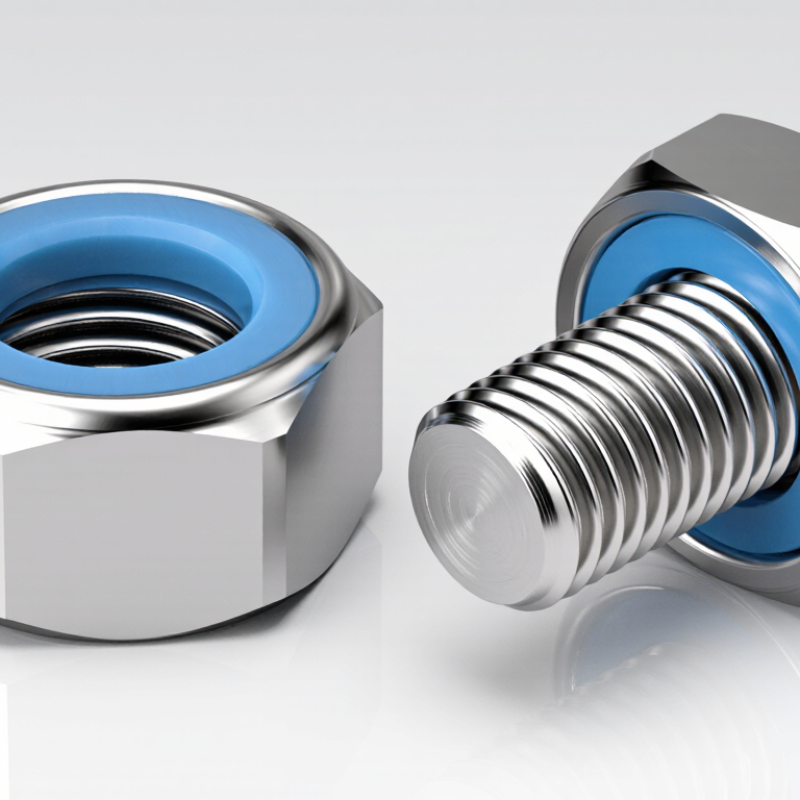
A nylon ring nut is a threaded nut with an integrated nylon collar, often called a nylon-insert locknut. Its basic structure has three parts: a metal hexagonal body, an internal thread, and a slightly smaller nylon ring at the top. The metal carries the clamping load. The ring creates resistance against the bolt threads.

During installation, the bolt pushes through the nylon insert and slightly deforms it. This deformation increases friction and helps prevent loosening from vibration. The nylon ring is not adhesive. It works through elastic pressure and thread interference. A practical inspection should check thread damage, insert cracking, and smooth engagement. Small defects matter.

NASA’s Fastener Design Manual, NASA-RP-1228, explains that torque alone can produce roughly 25% variation in preload under ordinary conditions. This matters because a nylon ring nut adds prevailing torque before clamping begins. ISO 7040 also specifies dimensions and performance requirements for hexagon nuts with non-metallic inserts. These standards support controlled selection, but field conditions remain important. Heat, chemicals, repeated installation, and dirty threads can reduce reliability.

The nut must fit the bolt correctly.

A common mistake is treating it as permanently reusable. It is not. After removal, the nylon insert may lose interference, although the exact limit depends on the specification and application. I would verify the remaining locking resistance instead of trusting appearance alone. The ring can look intact and still grip poorly.

Key Materials and Design Features of a Nylon Ring Nut

A nylon ring nut is a threaded fastening component with a circular ring or flange around its body. The ring spreads clamping pressure across a wider surface. It can also help position a panel, cable gland, or lightweight enclosure. Unlike steel, nylon does not rust and offers natural electrical insulation. These qualities make it useful around moisture, wiring, and sensitive surfaces.

Most nylon ring nuts use nylon 6/6 because it balances strength, toughness, and machinability. Some designs include glass fibers for improved stiffness and dimensional stability. However, reinforcement can make the part less flexible and more abrasive during installation. Nylon also absorbs moisture, which may slightly change its dimensions and thread fit. This detail is easy to overlook.

The internal thread must match the mating screw or stud accurately. A clean, even thread reduces cross-threading and uneven pressure. The ring should sit flat against the panel, without trapped dust or burrs. In practical assembly work, hand-starting the nut helps protect both parts. Tighten it gradually with moderate torque. Excessive force can strip the nylon or deform the ring. Heat matters too. Continuous exposure near the material’s temperature limit can reduce strength and encourage creep. That assumption is not always safe. A nylon ring nut may feel secure today, yet loosen after long loading, vibration, or repeated temperature changes. Check the application conditions before selecting the material grade.

How a Nylon Ring Nut Works Step by Step

A nylon ring nut, often called a nylon insert lock nut, has a small nylon collar inside its threaded opening. This collar grips the bolt during installation. Unlike a standard nut, it resists loosening from vibration and light movement.

The working process is simple. The nut first turns freely onto the bolt. As the threads reach the nylon ring, they press into its softer material. Friction increases at this point. Keep turning until the nut reaches the joint surface. Apply the specified torque with a calibrated wrench. The clamping force holds the parts together, while the nylon ring helps prevent unwanted rotation. The nylon may leave a visible thread mark. That is normal. However, a damaged or overheated ring may lose its grip. This detail is easy to overlook.

Tips: Check that the bolt extends beyond the nylon section by at least one full thread. Keep the threads clean and dry unless the fastener instructions state otherwise. Do not reuse the nut automatically. Repeated installation can reduce the collar’s friction. I would also inspect it after strong vibration or service work. Nylon performance depends on temperature, moisture, and chemical exposure, so the most convenient choice is not always the safest one.

What Is a Nylon Ring Nut and How Does It Work? - How a Nylon Ring Nut Works Step by Step

Step / Data Category What Happens Technical Detail Practical Consideration
1. Nut identification The fastener is identified as a prevailing-torque hex nut with a nylon insert, commonly called a nylon ring nut or nylon-insert lock nut. The nut normally has a metal threaded body and a ring-shaped nylon insert at one end. The insert must be positioned so the bolt enters it after passing through the metal threads.
2. Bolt alignment The bolt is passed through the joined components and aligned with the nut. Correct thread size and pitch are required; for example, an M8 × 1.25 nut fits an M8 bolt with a 1.25 mm pitch. Cross-threading can damage both the metal thread and the nylon insert.
3. Initial tightening The nut starts by turning relatively freely on the metal portion of the bolt. The mating metal threads carry most of the initial load. Hand-start the nut for several turns before using a wrench.
4. Nylon engagement The bolt reaches the nylon ring and slightly deforms or compresses the polymer. The nylon creates radial pressure against the bolt threads, producing prevailing torque. Additional turning force is normal once the bolt contacts the insert.
5. Clamping force Further tightening pulls the joint components together and stretches the bolt slightly. The required tightening torque depends on bolt grade, lubrication, thread condition, joint design, and nut specification. Use the fastener or engineering specification rather than a universal torque value.
6. Resistance to loosening The compressed nylon maintains friction against the bolt threads when vibration or movement occurs. The locking effect is mechanical friction, not chemical bonding. The nut is not intended to replace correct joint preload or suitable vibration-control engineering.
7. Removal The nut can normally be removed with a wrench while the nylon continues to create resistance. Repeated installation reduces the insert’s prevailing-torque capability as the nylon wears or takes a set. Replace the nut when the insert is damaged, loose, melted, or no longer provides adequate resistance.
8. Temperature limitation Heat can soften, deform, or degrade the nylon ring. Many standard nylon inserts are commonly used around −40°C to 120°C, but the exact limit depends on the nylon grade and design. For elevated-temperature service, verify the approved material rating before installation.
9. M3 reference size Metric fine-detail reference for a small nylon-insert lock nut. Nominal diameter: 3 mm; coarse pitch: 0.50 mm; typical across-flats dimension: 5.5 mm. Use a compatible M3 bolt and the applicable dimensional standard.
10. M4 reference size Metric reference size for light-duty assemblies. Nominal diameter: 4 mm; coarse pitch: 0.70 mm; typical across-flats dimension: 7 mm. Confirm clearance, washer size, and required joint preload.
11. M5 reference size Metric reference size for compact structural and equipment joints. Nominal diameter: 5 mm; coarse pitch: 0.80 mm; typical across-flats dimension: 8 mm. Avoid over-tightening, which can strip the joint or damage the insert.
12. M6 reference size Common metric size for general mechanical fastening. Nominal diameter: 6 mm; coarse pitch: 1.00 mm; typical across-flats dimension: 10 mm. The bolt should extend sufficiently through the nylon insert for full engagement.
13. M8 reference size Common metric size for medium-load assemblies. Nominal diameter: 8 mm; coarse pitch: 1.25 mm; typical across-flats dimension: 13 mm. Actual tightening requirements depend on bolt property class and joint materials.
14. M10 reference size Metric size used in higher-load general fastening applications. Nominal diameter: 10 mm; coarse pitch: 1.50 mm; typical across-flats dimension: 17 mm. Check whether the chosen insert and nut class are suitable for the service temperature and load.
15. M12 reference size Larger metric size for substantial mechanical joints. Nominal diameter: 12 mm; coarse pitch: 1.75 mm; typical across-flats dimension: 19 mm. For safety-critical joints, follow the specified nut standard, property class, and installation procedure.

Note: Reference dimensions are typical coarse-thread metric values for standard hexagonal nylon-insert lock nuts. Exact dimensions, allowable temperature, prevailing torque, and reuse limits may vary by applicable fastener standard and nut specification.

Common Applications and Installation Methods

What Is a Nylon Ring Nut and How Does It Work?

A nylon ring nut contains a nylon insert near its threaded opening. The insert grips the bolt thread and increases resistance to vibration. It does not permanently lock the joint. Instead, it helps maintain clamping force during normal movement and equipment operation. The nylon also reduces metal-to-metal contact around the thread. However, heat, solvents, and repeated installation can weaken its holding ability. Check the material limits before using it in harsh conditions.

Common applications include electrical enclosures, appliance panels, vehicle interiors, control cabinets, and light machinery. These joints often experience mild vibration but do not require frequent adjustment. A nylon ring nut works well when the joint stays dry and within its rated temperature range. It is not a substitute for correct torque or suitable joint design. Small details matter here. A loose washer, damaged bolt, or dirty thread can reduce its performance.

For installation, inspect both threads and remove oil, burrs, and debris. Place the nut squarely on the bolt, then turn it by hand until the nylon ring engages. Finish with a calibrated wrench and follow the equipment maker’s torque specification. Avoid impact tools, because they can crush the insert or overstress the joint. The bolt should engage the nylon section fully, but it should not bottom out. In practice, this step is easy to rush. I would also avoid reusing the nut unless its condition and locking resistance are verified. It may look fine while gripping less effectively.

Nylon Ring Nut: Material Reference and Practical Use

Nylon ring nuts are commonly used for lightweight fastening, electrical insulation, corrosion-resistant assemblies, and applications where a non-metallic locking element is preferred. Typical nylon 6/6 reference values include a density of approximately 1.14 g/cm³, tensile strength of about 75 MPa, a melting point near 255°C, and water absorption of approximately 1.2% after 24 hours.

For installation, start the nut by hand to prevent cross-threading, then tighten it with a suitable wrench or socket. Use controlled torque when the joint specification requires it, and avoid excessive tightening because nylon can deform or lose locking performance under high heat or load.

Advantages, Limitations, and Maintenance Considerations

A nylon ring nut combines a metal nut with an internal nylon ring. As the nut tightens, the bolt threads press against this ring. The resulting friction helps resist loosening from vibration and ordinary movement. It does not create a permanent lock. Correct tightening still matters.

Its main advantage is simple installation. No separate locking washer is needed. The nut is also relatively light and usually protects mating threads from sharp metal contact. However, the nylon insert has limits. Heat can soften it and reduce holding strength. Oil, solvents, or repeated exposure to harsh chemicals may also damage the material. Repeated removal gradually wears the ring. That judgment is not always perfect; inspect the insert instead of relying only on appearance. A loose-feeling fit deserves replacement.

During maintenance, check for cracked nylon, flattened sections, damaged threads, and corrosion on the metal body. Use a calibrated torque tool when the assembly has a specified tightening value. Avoid forcing a damaged nut onto a bolt. After removal, compare the ring’s grip with a new nut. Keep the fastening area clean and dry. For hot machinery or joints requiring frequent adjustment, another locking method may be more suitable.

MSIRobot