Icon about-block-ico-1 Icon about-block-ico-2 Icon about-block-ico-3 Icon about-block-ico-4 Icon announcement-close Icon arrow-left Icon arrow-right Icon arrow-sm Icon asterisk Icon banner-transparent-vector Icon btn-callback-ico Icon careers-item-location Icon careers-item-time Icon careers-item-type Icon careers-mail-ico Icon careers-phone-ico Icon careers-search-ico Icon careers-single-hero-vector Icon careers-single-more-vector Icon careers-vector Icon check Icon close Icon dfm-image-left-vector Icon dfm-image-right-vector Icon document Icon download-popup-vector Icon dropdown Icon envelope Icon facebook Icon faq-banner-bg Icon faq-title-ico-active Icon faq-title-ico Icon featured-links-block-bg Icon figure-1 Icon figure-10 Icon figure-11 Icon figure-12 Icon figure-13 Icon figure-14 Icon figure-15 Icon figure-2 Icon figure-3 Icon figure-4 Icon figure-5 Icon figure-6 Icon figure-7 Icon figure-8 Icon figure-9 Icon file-upload Icon form-sidebar-back Icon form-step-done Icon gmap-marker-group-icon Icon gmap-marker-icon Icon header-profile-ico Icon instagram Icon link Icon linkedin Icon loader Icon mail Icon phone Icon play-yt Icon play Icon post-nav-arr-left Icon quote-banner-vector Icon quote-block-aside-vector Icon quote-contact-phone-ico Icon quote-contact-position-ico Icon sidebar-location Icon sidebar-phone Icon technology-banner-nav-left-vector Icon technology-banner-nav-right-vector Icon twitter Icon webinar-item-date-vector Icon whitepaper-img-ico-left Icon whitepaper-img-ico-right Icon whitepapers-listing-banner-ico Icon whitepapers-single-aside-vector Icon youtube Icon yt-play-button

Top 10 Natural Gas Steam Boilers for Industrial Use

Industrial steam systems keep food lines, laundries, chemical processes, and manufacturing equipment moving. Choosing a Natural Gas Steam Boiler is not simply a matter of selecting the largest output. A boiler must match the plant’s steam demand, operating pressure, fuel supply, available floor space, and maintenance capacity. Small mismatches can show up as unstable pressure, unnecessary cycling, or higher fuel use. Those details matter.

This guide introduces ten natural gas steam boilers designed for industrial use, with attention to practical factors rather than headline ratings alone. It considers rated capacity, thermal efficiency, turndown, burner and control features, installation needs, and access to service support. Buyers should also review manufacturer documentation and confirm that each model suits their process conditions and local requirements. Specifications can change, and published efficiency figures may rely on test conditions that differ from a real plant. That part is easy to overlook.

A shortlist is a starting point, not a purchasing decision. A boiler that performs well in a steady-load facility may be a poor fit for a site with sharp demand swings. Comparing options with an experienced boiler engineer can clarify trade-offs in fuel use, redundancy, emissions, and lifecycle costs. No single model is best for every facility. And even careful comparisons leave uncertainties: actual performance depends on system design, water quality, operating habits, and upkeep.
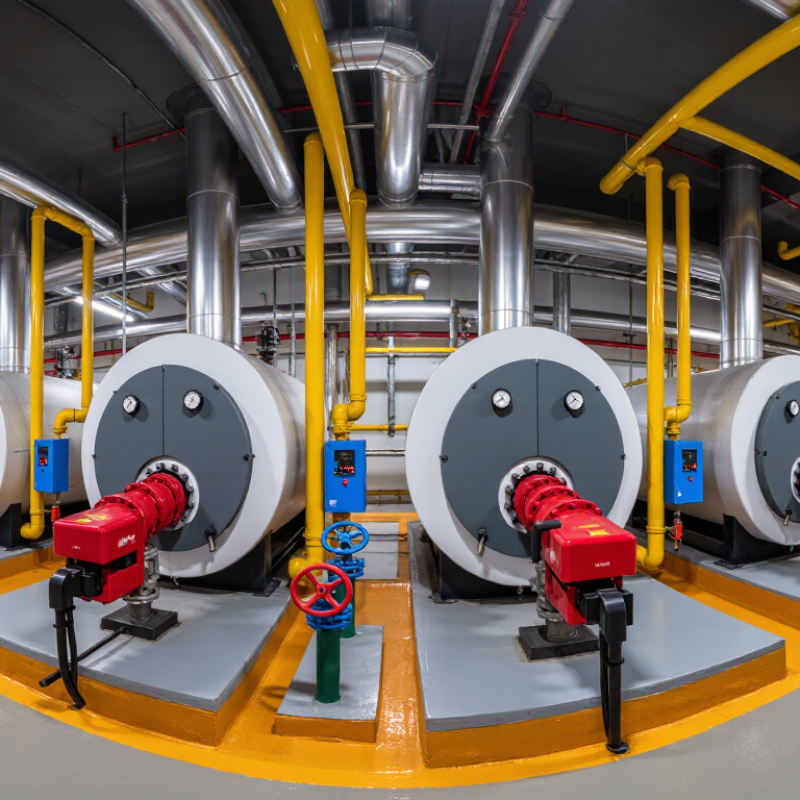
Top 10 Natural Gas Steam Boilers for Industrial Use

How Natural Gas Steam Boilers Work in Industrial Systems

Natural gas steam boilers turn fuel into usable process heat through controlled combustion. A burner mixes gas with combustion air and ignites it inside the furnace. Hot flue gases transfer heat to water through metal surfaces. Depending on the design, water sits inside tubes or surrounds them. As the water absorbs heat, steam forms and collects in the boiler drum or upper chamber. It is then sent through insulated pipes to equipment such as dryers, sterilizers, and heat exchangers.

Pressure controls help match steam output to changing demand. When a production line opens a valve, pressure may dip, prompting the burner to increase its firing rate. Sensors monitor flame, pressure, and water level; protective controls can stop fuel flow when unsafe conditions arise. Operators still need to check the gauge glass, listen for unusual burner sounds, and review operating trends. Automation helps, but it does not replace attention.

After steam gives up heat, condensate can often return to the boiler system, reducing the energy needed to heat fresh water. That return line deserves inspection: leaks, poor insulation, or contamination can quietly waste heat. Real plants are rarely perfectly steady. Loads change, and settings may need adjustment as equipment ages. A rising flue-gas temperature, for example, can indicate fouling, though it should be checked alongside other operating data before drawing conclusions.

Key Criteria for Selecting an Industrial Steam Boiler

Selecting a natural gas steam boiler starts with measured steam demand, not catalog capacity. Record peak and average loads across a normal production week. A food-processing line may need a sharp morning surge, while a drying process may draw steam steadily. Match boiler output and turndown range to those patterns. An oversized unit can cycle often at light load, wasting fuel and stressing components. An undersized unit may struggle to hold pressure during simultaneous process demand. Small details matter. Check required steam pressure, feedwater temperature, and water-treatment needs before comparing models. Poor feedwater quality can cause scaling, reduce heat transfer, and shorten equipment life.

Compare efficiency at realistic operating loads, not only at a published rating point. Ask for clear test conditions and expected fuel use at typical demand. Review burner controls, startup behavior, and how the system responds to changing loads. A neat spreadsheet can still miss losses from distribution leaks or poorly insulated pipes. Allow room for those realities. Also assess emissions data, applicable site requirements, inspection support, and access to replacement parts. Operators need safe access to controls and service areas; cramped layouts can turn routine maintenance into a delay. The best choice is not always the unit with the highest stated efficiency. Confirm assumptions with actual load records, and revisit them when production schedules change.

Top 10 Natural Gas Steam Boilers for Industrial Use — Key Criteria for Selecting an Industrial Steam Boiler

Estimated Natural Gas Consumption by Steam Capacity

Use steam capacity and fuel consumption to compare boiler sizes during initial selection. Estimates assume saturated steam at 10 barg, feedwater at 80°C, 90% boiler efficiency, and natural gas with a lower heating value of 35.8 MJ/Nm³. Actual consumption varies with operating conditions, gas composition, and boiler performance.

Ten Types of Natural Gas Steam Boilers for Industrial Use

Industrial natural gas steam boilers are classified by construction, installation, and operating duty. Ten common types are fire-tube, water-tube, horizontal, vertical, packaged, field-erected, once-through, modular, low-pressure, and high-pressure boilers. These categories overlap. A packaged unit, for example, may use a fire-tube design and operate at low pressure.

Fire-tube boilers pass hot gases through tubes surrounded by water. They often suit steady steam demand and compact plant rooms. Water-tube designs move water through heated tubes and are commonly selected for higher pressure or faster load response. Horizontal and vertical describe the boiler’s orientation, which affects floor space and access for inspection. Packaged boilers arrive largely assembled; field-erected units are built on site for larger or more complex installations. Fit matters.

Once-through boilers heat water in a continuous flow, while modular systems combine smaller units to match changing demand. Low-pressure models serve duties such as building heat or light process work; high-pressure models require carefully specified controls and safeguards. A type name alone cannot establish suitability. Check peak and average steam demand, feedwater quality, available space, and maintenance access with a qualified boiler professional. Real operating schedules can be messier than design estimates. That detail matters.

Industrial Applications and Operating Requirements

Industrial steam boilers serve process loads that need dependable heat, including food processing, pulp and paper, chemicals, and textile production. Food plants may use steam for cooking and cleaning; paper mills need it for drying. A wet return line, poor condensate recovery, or sudden load change can disrupt production. Loads rarely stay flat.

The U.S. Department of Energy’s Advanced Manufacturing Office estimates that steam systems use about 30% of manufacturing energy. That figure makes operating discipline important: regular checks of flue-gas oxygen, blowdown, traps, and insulation can reveal avoidable losses. The U.S. Energy Information Administration’s Natural Gas Annual reports industrial natural-gas consumption of roughly 10.5 trillion cubic feet in 2023. Not all of it fuels boilers, but the scale shows why fuel supply and combustion control deserve attention.

Sizing should reflect peak demand, turndown, pressure, water quality, and the cost of downtime—not just the nameplate rating. A hospital laundry with steady demand may need a different arrangement from a factory with short, intense steam draws. Operators should trend feedwater temperature, stack temperature, and condensate return, then investigate unusual changes. I would not assume a new boiler fixes poor system design; that is an easy, expensive mistake. Verify applicable pressure-vessel and combustion-safety requirements with qualified engineers.

Top 10 Natural Gas Steam Boilers for Industrial Use - Industrial Applications and Operating Requirements

The configurations below are common industrial boiler arrangements, not a ranking of specific products. Capacity and pressure figures are indicative planning ranges; actual limits depend on the engineered design, applicable codes, and operating conditions. Confirm requirements with a qualified boiler engineer and local authorities.

No. Boiler configuration Indicative steam capacity Common operating pressure Typical industrial applications Key operating requirements
1 Packaged fire-tube 5,000–100,000 lb/hr 15–300 psig Food processing, laundries, hospitals, and general process steam Provide treated feedwater, reliable condensate return, regular waterside inspection, and burner tuning. Verify that the selected pressure and output meet the process load.
2 Large fire-tube Up to about 100,000 lb/hr, depending on design Typically 15–300 psig Central plants and medium-to-large facilities with steady steam demand Allow adequate room for installation and maintenance. Control water quality, blowdown, combustion air, and stack conditions; avoid sustained operation far below design load.
3 D-type water-tube About 50,000–1,000,000+ lb/hr Approximately 150–1,500 psig Refineries, chemical plants, power and utility systems, and large process sites Requires a site-specific pressure-part design, close feedwater chemistry control, trained operators, and code-compliant inspection. Higher-pressure service may require additional steam-purity controls.
4 O-type water-tube About 10,000–500,000 lb/hr Approximately 150–1,500 psig Industrial plants needing a compact water-tube arrangement and responsive steam supply Plan for suitable water treatment, safe access to pressure parts, regular burner and tube inspections, and operating procedures matched to the boiler’s pressure and load range.
5 A-type water-tube About 10,000–500,000 lb/hr Approximately 150–1,500 psig Process plants where a water-tube design suits the available footprint and steam duty Confirm clearances and maintenance access during layout. Maintain feedwater quality, burner safeguards, level controls, and inspection schedules in accordance with the approved design.
6 Modular packaged boiler plant About 1,000–20,000 lb/hr per module Commonly 15–300 psig Facilities with variable demand, staged expansion, or a need for operating redundancy Use coordinated sequencing controls and ensure each module operates within its specified turndown range. Provide adequate headers, isolation, feedwater capacity, and a maintenance plan for each unit.
7 Once-through / coil-type About 500–50,000 lb/hr Design-dependent; commonly 100–1,500 psig Sites needing compact equipment, rapid steam response, or specialized process conditions Follow the manufacturer’s specified feedwater chemistry and flow limits closely. Controls must protect against low flow, overheating, and unstable operation; operator and code requirements vary by jurisdiction and design.
8 Low-pressure process boiler About 1,000–100,000 lb/hr Typically up to 15 psig for low-pressure steam service Building services, humidification, food preparation, and low-pressure process heating Keep the system within its permitted pressure rating and use correctly set pressure controls and safety valves. Maintain water level, feedwater quality, condensate return, and routine safety checks.
9 High-pressure superheated-steam boiler Typically 50,000–1,000,000+ lb/hr, project-dependent Often 300–1,500+ psig, design-dependent Power generation and industrial processes requiring superheated steam Requires engineered superheater protection, precise temperature and pressure control, high-purity feedwater, qualified operating staff, and inspection under applicable pressure-vessel and boiler rules.
10 Lead-lag / standby boiler plant Combined output depends on the number and size of boilers Set by the individual boilers and system design Continuous-process facilities where steam availability and maintenance flexibility are important Size the plant for peak demand and the required backup duty. Test automatic changeover, isolation valves, alarms, and standby readiness; maintain each boiler even when it is not the lead unit.

Efficiency, Emissions, and Safety Considerations

When comparing the top 10 natural gas steam boilers, look beyond rated efficiency. Actual performance depends on load, feedwater temperature, blowdown, and maintenance. A boiler serving a steady process may operate differently from one facing sharp demand swings. Ask for verified efficiency data at your expected operating range, not just a best-case figure. Small details matter.

Emissions deserve equal attention. The U.S. EPA’s greenhouse-gas emission factors estimate about 53 kg of carbon dioxide per million Btu of natural gas input. That makes fuel use a practical emissions indicator: wasted steam still has a carbon cost. Compare burner controls, excess-air settings, and stack oxygen readings. A clean-looking exhaust is reassuring, but it does not prove efficient combustion. For safety, check that the design includes suitable pressure relief, flame safeguards, and low-water protection, with inspection and maintenance procedures suited to the site.

Tips: Record fuel use, steam output, and stack readings under normal loads. Trend them monthly. Changes can reveal fouling or control drift before a failure occurs. Keep the log simple; busy teams may not maintain a complicated one.

MSIRobot