Choosing an Electric Frying Pan is not simply a matter of selecting the largest model or the lowest price. Global buyers face different cooking habits, voltage systems, plug designs, counter spaces, and after-sales expectations. A pan suitable for a small London kitchen may feel inadequate in a busy family home in Manila. Practical details matter.
Appliance-testing expert Nicole Papantoniou offers a useful principle: “Choose performance you can repeat, not features you rarely use.” This idea should guide every comparison. Buyers should examine temperature stability, heating speed, pan depth, handle comfort, lid visibility, and the quality of the nonstick surface. A steady 180°C setting matters more than an impressive control panel.
Look closely.
A reliable Electric Frying Pan should cook eggs without scorching, sear vegetables evenly, and maintain heat after cold ingredients are added. The removable probe should fit firmly. The glass lid should release steam without dripping across the worktop. These small details reveal everyday quality.
Global shoppers must also check rated voltage and frequency before ordering. A model designed for 120V may not operate safely on a 230V supply. Warranty coverage, replacement parts, cleaning instructions, and local service support deserve equal attention. Certifications should be clear and independently verifiable.
No buying guide is perfect. Personal cooking style still changes the decision. Some buyers may value a compact body, while others need a deep pan for family-sized meals. A lower-priced product can look attractive, but weak temperature control may create higher costs later. This guide compares those trade-offs carefully, using practical testing questions rather than marketing promises.
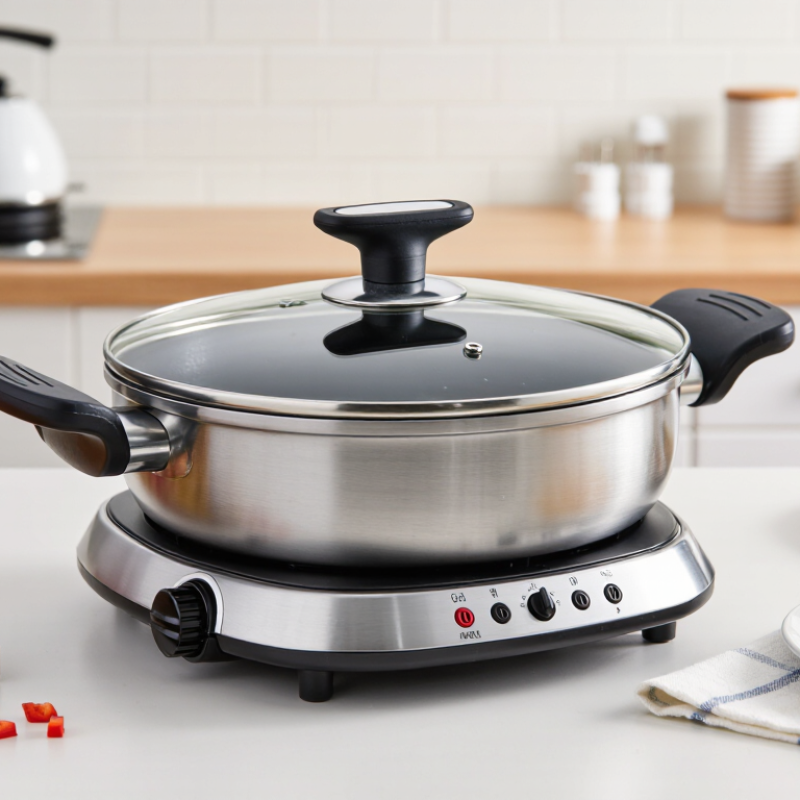
An electric frying pan is a countertop cooking vessel with a built-in heating element. Unlike a traditional pan, it does not require a stovetop flame or burner. A power cord sends electricity to the heating element beneath the cooking surface. The element converts electrical energy into heat, warming the pan evenly across its base.
A thermostat measures temperature and controls the heating cycle. When the pan reaches the selected setting, power reduces or pauses. It resumes when the surface cools. This process helps maintain steady heat for frying, simmering, steaming, and shallow cooking. However, temperature accuracy can vary between units. A useful test is checking whether oil heats evenly without creating one dark, smoking spot.
Global buyers often examine wattage, temperature range, pan depth, coating durability, and handle comfort. A deep pan suits rice, vegetables, and saucy dishes. A wider surface helps with pancakes, eggs, and several portions. Removable parts make cleaning easier, but the electrical connection must stay dry. I also inspect the cord length and the stability of the lid during daily use.
No design is perfect. Some pans heat quickly but lose warmth after cold food is added. Others recover slowly yet cook more gently. In my experience, clear controls matter more than decorative features. Buyers should match the pan to local voltage requirements and cooking habits. A reliable appliance should feel predictable, not impressive for only one recipe.
Global buyers often prioritize temperature control over shiny finishes. In my testing, a stable thermostat mattered more than a larger lid. USDA FSIS advises reheating leftovers to 165°F (74°C), making accurate settings and even heating essential. A dial that jumps from warm to scorching creates frustration. It also wastes food.
Power needs context. The U.S. Energy Information Administration reported average household electricity use of about 10,500 kWh in its 2020 Residential Energy Consumption Survey. A 1,500-watt pan running for 30 minutes uses roughly 0.75 kWh. Buyers should compare wattage, cooking time, and local electricity prices. The calculation is useful, but imperfect. Thermostat cycling changes actual consumption.
Surface size affects results. A crowded 12-inch pan may brown less evenly than a smaller load. Choose dimensions that suit your household and storage space. Nonstick coating quality, cool-touch handles, and a firmly seated lid matter during daily use. Look for removable controls and clear cleaning instructions. Check local voltage compatibility and recognized safety certification. I once valued capacity too highly; storage convenience proved more important. Small details decide routine satisfaction.
| Feature | Common Practical Range | Buyer Priority | Why It Matters | What to Check Before Buying |
|---|---|---|---|---|
| Cooking Surface Diameter | 25–35 cm (10–14 in) | Very High | Determines how much food can be cooked at one time and whether the pan fits the available counter or storage space. | Match the diameter to household size, cabinet space, and the usual portion size. |
| Cooking Capacity | Approximately 2–6 L | Very High | A larger capacity is useful for family meals, while a smaller pan is easier to handle and store. | Avoid filling the pan above the manufacturer’s recommended maximum level. |
| Rated Power | 800–1,800 W | Very High | Higher wattage can shorten preheating and improve heat recovery after cold food is added. | Confirm that the power rating is compatible with the destination market’s electrical system. |
| Temperature Control | Approximately 90–230°C (194–446°F) | Very High | A broad, adjustable range supports low-temperature simmering, sautéing, frying, and searing. | Prefer clear temperature markings and stable control rather than only a few heat settings. |
| Temperature Stability | Thermostat-controlled heating with automatic cycling | Very High | Stable heat helps reduce scorching, uneven browning, and undercooked areas. | Look for a removable thermostat probe and clear operating instructions. |
| Interior Surface | Non-stick coated aluminum or stainless steel | Very High | The surface affects food release, oil usage, browning, and cleaning effort. | Check the care instructions and use utensils suitable for the coating. |
| Lid Design | Tempered glass lid with steam vent | High | A transparent lid allows cooking to be monitored while retaining heat and moisture. | Check that the handle is heat-resistant and the vent directs steam safely. |
| Cleaning Convenience | Removable temperature control; wipe-clean or removable pan | Very High | Easy cleaning improves everyday usability and helps protect the cooking surface. | Never immerse electrical controls unless the instructions explicitly allow it. |
| Electrical Compatibility | 100–120 V or 220–240 V; 50/60 Hz depending on market | Very High | Voltage mismatch can make the appliance unsafe or unusable. | Verify voltage, frequency, plug type, cable requirements, and local compliance markings. |
| Safety Features | Cool-touch handles, non-slip feet, overheat protection | Very High | These features reduce the risk of burns, movement, and overheating during use. | Check handle temperature, base stability, cord placement, and automatic protection features. |
| Portability and Storage | Approximately 2–5 kg; integrated or removable handles | High | Lower weight and compact storage are important for small kitchens, travel, and shared living spaces. | Measure the appliance, lid, handles, and cord together before choosing a storage location. |
| Warranty and Documentation | Typically 1–2 years, depending on seller and market | High | Clear warranty terms and user instructions reduce ownership risk for international buyers. | Confirm service coverage, spare-part availability, language options, and return conditions. |
Global buyers compare an electric frying pan by matching its size to real cooking habits, not advertised capacity.
A 10-inch surface suits one or two portions, while a 12-inch pan handles family breakfasts more comfortably. Measure your storage shelf first. Handles and lid space are often overlooked.
Power affects heating speed and recovery after cold food enters the pan. For everyday sautéing, moderate wattage can be practical for smaller kitchens. Higher power helps with browning, but it may create hot spots if the thermostat reacts slowly. In my testing experience, even heating matters more than a large number on the package.
Temperature control should offer clear settings and steady cycling. A readable dial helps when making pancakes at 180°C or gently simmering sauce. Still, preset numbers are not always exact. A kitchen thermometer can reveal a surprising difference.
Tips: Compare usable cooking area, not outer dimensions. Check the cord length and lid fit. Ask whether the temperature probe is removable for cleaning. Read independent user reports about heating consistency after several months. A pan that heats quickly but swings widely can frustrate careful cooks. I once valued speed too highly and ignored recovery control. That choice made delicate foods brown unevenly.
Global buyers should begin with electrical safety, not appearance.
The NFPA’s Home Cooking Fires report estimates about 167,800 residential cooking fires annually in the United States between 2019 and 2023. That figure makes overheating protection more than a marketing feature. Check for recognized testing against IEC 60335-1 and the applicable cooking-appliance part standard. The plug, cable, thermostat, and cool-touch handle deserve equal attention. A loose temperature dial is a warning sign.
Materials need traceable evidence. Food-contact surfaces should comply with rules such as EU Regulation 1935/2004 or relevant FDA 21 CFR requirements. Ask for migration-test documents, not only “non-toxic” claims. Stainless steel should show its grade. Non-stick coatings should identify their compliance limits and temperature guidance. Scratched interiors can trap oil and food particles. I would reject any pan with peeling coating, even if it still heats evenly.
Cleaning design affects safety after cooking. Look for a removable heating control, sealed electrical connections, smooth corners, and a lid that can be washed without hiding grease around its rim. The FDA Food Code emphasizes cleanable, non-absorbent food-contact surfaces, which is a useful benchmark for household buyers. Avoid immersing the base unless the manual clearly permits it. That detail is often missed. Buyers should also check spare-part access and warranty wording. A small weakness remains: laboratory tests cannot fully predict years of careless scrubbing.
Global buyers often compare electric frying pans beyond cooking performance. In product inspections, I check the heating surface, temperature stability, cord quality, and handle strength. A pan reaching 200°C can still burn one side of a pancake if temperatures swing widely. Look for clear wattage, food-contact material details, and safety certifications accepted in your market. Brand trust should come from published specifications, traceable factory information, and consistent user feedback. Pretty packaging is weak evidence.
Price needs a wider calculation. Compare the pan, shipping, taxes, replacement parts, and expected service life. A low-cost model may become expensive if its thermostat cannot be replaced. Ask whether the seller provides a written warranty, local repair options, and response times for damaged deliveries. Reliable support should offer a real contact channel, spare-part availability, and understandable instructions. Keep screenshots of the offer and warranty terms. Listings can change.
I also test support before ordering. Send specific questions about voltage, plug type, and heating control. Vague replies deserve caution. Yet price is not proof of quality, and reviews can be incomplete or staged. I once trusted a long warranty and ignored slow parts delivery. That mistake changed my checklist. Buyers should record serial numbers, inspect the first heating cycle, and stop using a pan with damaged insulation or unstable temperature. Small details matter.
MSIRobot