7 Electric Winch Buying Tips for Global Buyers
An Electric Winch can look straightforward on a product page: a motor, a drum, and a stated pulling capacity. In the field, selection is less tidy. A wet dock, a dusty worksite, or a vehicle parked on a steep ramp can change what dependable operation requires. Aerospace engineer Theodore von Kármán offered a useful design principle: “Scientists study the world as it is; engineers create the world that never has been.” Buyers can apply that mindset by checking real operating conditions, not just headline specifications.
This guide shares seven practical checks for global buyers. Match the winch’s rated capacity to the load and the actual pulling arrangement. Review duty cycle, supply voltage, rope or cable, mounting space, and environmental protection. A compact unit may fit neatly beneath a truck bed, yet still be unsuitable for repeated, heavy pulls. Small detail. Big difference. Ask suppliers for clear datasheets, installation guidance, and support for replacement parts in your destination market. Confirm that electrical and safety documentation fits the intended application; requirements can vary by location and industry. Do not assume a larger rating solves every problem. It may add weight, cost, and installation demands without addressing poor anchoring or an unsuitable power supply. Even careful checks cannot predict every site condition. That is worth remembering. Use the following tips to compare offers consistently, ask sharper questions, and choose an Electric Winch suited to the work rather than the brochure.
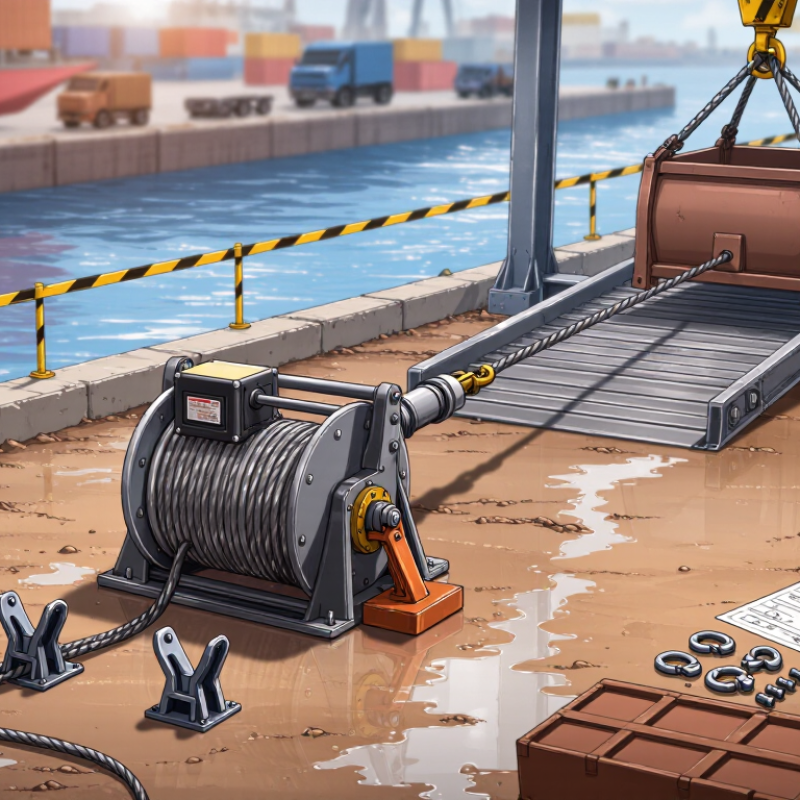
Assess load, line pull, and first-layer capacity before selecting a winch
Start with the heaviest expected pull, not the winch’s headline rating. A vehicle’s weight alone may not describe the load: slope, soft ground, rolling resistance, and friction can increase the force required. Separate the load’s weight from the line pull needed to move it. Check the winch’s rated line pull and operating limits in its technical documentation. A steep ramp changes the calculation.
Confirm which drum layer the rating refers to. Many winches provide their highest line pull on the first layer, where the effective drum radius is smallest. As rope builds up, pulling force can decrease. The exact figures vary by design, so check the capacity table rather than assuming one rating applies at every layer. Small numbers matter.
Do not confuse rope storage capacity with pulling capacity. A drum may hold enough rope for the job while delivering less pull on its outer layers. Estimate the required line length, then check the winch’s pull at the layer you expect to use. Also consider how the load is anchored and whether the rope, fittings, and mounting structure are rated for the task. Buyers sometimes compare only maximum pull; that shortcut is easy, but it can leave an awkward gap between the specification sheet and the real job. Verify the details before selecting.
Match motor duty cycle to IEC 60034-1 service types S1–S10
Choosing a winch motor by rated power alone can be misleading. IEC 60034-1 service types describe how operating patterns affect motor heating. S1 means continuous running at a steady load. S2 covers a short, defined operating period followed by enough rest for cooling. S3 describes repeated load-and-rest cycles, where starting has little effect on heat. S4 and S5 account for starting, with S5 also including electric braking. Small labels, big consequences.
For a loading bay winch, record starts per hour, lifting time, load, pauses, and lowering method. A 20-second lift repeated every few minutes differs from a long, uninterrupted pull. S6 covers periodic load and no-load operation without rest; S7 adds starting and electric braking. S8 describes repeated changes in load and speed, while S9 covers non-periodic variations. S10 specifies discrete constant loads and speeds. Ask the supplier to confirm the declared duty type and its assumptions, including ambient temperature and cycle duration. A neat spreadsheet can still miss a jammed load or longer-than-planned lift. Real operating logs help. So does honest uncertainty.
7 Electric Winch Buying Tips for Global Buyers — Match Motor Duty Cycle to IEC 60034-1 Service Types S1–S10
For a winch motor, match the IEC duty type to the actual lifting pattern, including load, run time, starts, braking, speed changes, and cooling intervals. The chart shows the preferred rated operating durations for S2 short-time duty.
Reading the chart: S2 means the motor runs at a constant load for a specified time, then rests long enough to return to ambient temperature. The listed durations are preferred rating durations, not a universal winch operating limit. For S3–S8, check the specified cyclic duration factor and account for starts, braking, and load or speed changes.
IEC 60034-1 service types at a glance
- S1: Continuous duty at a constant load long enough to reach thermal equilibrium.
- S2: Short-time duty at a constant load, followed by a sufficient rest period.
- S3: Intermittent periodic duty; starting effects on temperature are negligible.
- S4: Intermittent periodic duty with starting that affects temperature.
- S5: Intermittent periodic duty with starting and electric braking.
- S6: Continuous-operation periodic duty with load and no-load periods, without rest.
- S7: Continuous-operation periodic duty with starting and electric braking, without rest.
- S8: Continuous-operation periodic duty with related load and speed changes, without rest.
- S9: Non-periodic duty with load and speed variations.
- S10: Duty with discrete constant loads and speeds.
Check rope, drum, and brake requirements against EN 14492-1
For an electric winch, rope choice is not just a strength question. Check the specified diameter, construction, length, and end termination against the winch documentation and EN 14492-1 requirements. The rope must sit correctly in the drum grooves and suit the intended load and duty. Small details matter. A rope that looks close enough may still wind unevenly or wear quickly.
Inspect the drum dimensions and usable capacity, not only the advertised line pull. Confirm how much rope remains on the drum at the rated load, and whether the specified dead wraps are maintained. Check the permitted fleet angle and the rope’s approach path. A cramped installation can cause crossed turns, abrasion, and poor spooling. Do not guess. Ask for drawings or written limits when the setup is unusual.
The brake deserves equally careful attention. Request documentation showing the winch’s rated load, braking arrangement, and relevant test or conformity information under the applicable edition of EN 14492-1. Confirm that the brake suits the operating conditions, including frequent starts, stops, or suspended loads. A polished datasheet can still leave gaps; compare it with the actual lifting plan and installation. If the rope, drum, or brake details conflict, pause the purchase and get a written clarification.
Choose enclosure protection using IEC 60529 IP ratings, such as IP66
For an electric winch, enclosure protection should match the actual working environment. IEC 60529 defines IP ratings: the first digit describes protection against solid objects and dust, while the second covers water ingress. An IP66 enclosure is dust-tight and tested against powerful water jets. That can suit outdoor equipment exposed to windblown dust, washdown, or heavy rain. It does not mean the winch can be submerged. Details matter.
Check the complete installed setup, not just the rating printed on an enclosure. Cable glands, connectors, inspection covers, and damaged seals can create weak points. A strong rating on the control box is less useful if water can enter through an unsuitable cable entry. Ask the supplier which components carry the rating and whether it applies after installation. Also consider salt spray, cleaning chemicals, temperature changes, and condensation; IP ratings do not describe all of these hazards. A common buying mistake is choosing IP66 automatically for every site. Sometimes that adds cost without solving the real exposure. Review the site conditions, then confirm the rating and installation requirements in the product documentation.
Verify voltage, certifications, and capacity requirements for each market
Before comparing electric winches, confirm the site’s actual power supply. Check voltage, AC or DC type, and frequency against the winch nameplate. A matching plug does not prove electrical compatibility. Long cable runs can also cause voltage drop, especially during startup. Ask a qualified technician to verify the circuit and connector before ordering. Small details matter.
Certification requirements differ by destination market and application. Request documents for the exact winch model, not just a similar product family. Check whether the documentation covers the motor, controls, and supplied electrical components. Keep copies with the shipment records, and confirm acceptance with the importer or relevant local authority. A certificate that looks complete may still miss a required detail.
Capacity needs more than the vehicle or load’s listed weight. Include the load, rigging, friction, slope, and any changes in pulling direction. Line pull can vary across drum layers, so check the manufacturer’s capacity chart for the expected setup. Avoid choosing solely by maximum or stalled pull; those figures may not reflect normal operation. A modest safety margin is sensible, though the right value depends on the application. It is easy to overestimate how much a clean, level test tells you about a muddy jobsite.
