What is a Cooling Tower and How Does It Work?
cooling towers play a crucial role in many industrial processes. They help dissipate heat from machinery and keep systems operating efficiently. But how exactly do they function?
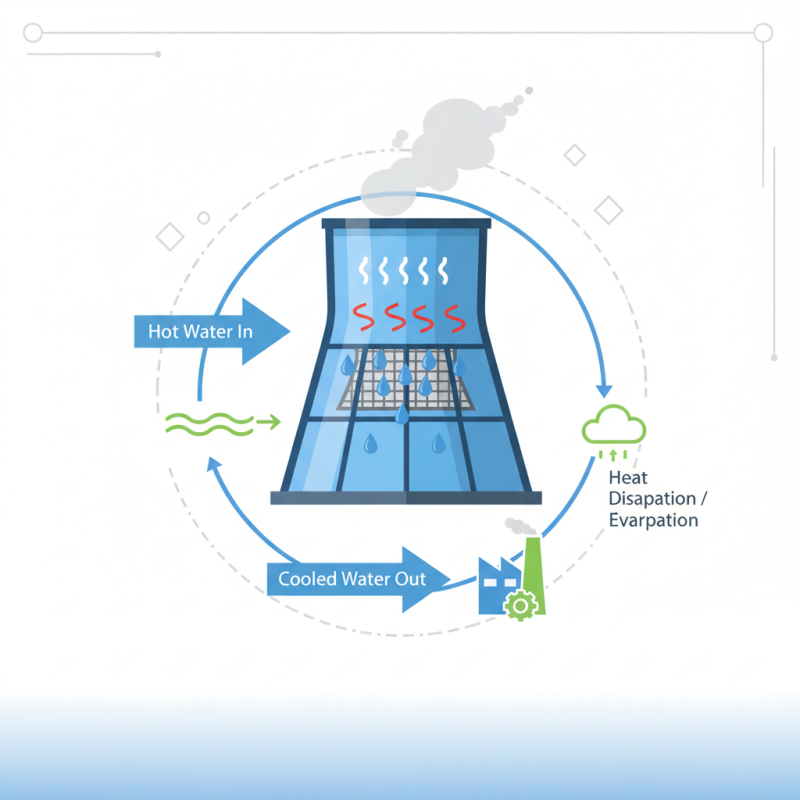
At their core, cooling towers use water to absorb heat and release it into the atmosphere. This process involves evaporation, which cools the remaining water. The design of a cooling tower can vary significantly, affecting its efficiency and effectiveness. Some towers are designed for specific applications, while others are more universal.
Understanding a cooling tower's operation is essential for optimal performance. However, many still struggle with maintenance or the efficiency of these systems. It's a complex interplay of physics, engineering, and environmental factors. As industries evolve, the need for better cooling solutions grows. Reflecting on our current practices could lead to innovations that enhance sustainability and performance.
What is a Cooling Tower?
A cooling tower is a crucial component in various industrial processes. It dissipates heat from fluids, typically water, used in cooling systems. The primary purpose is to maintain optimal operating temperatures within equipment like boilers and chillers. According to the American Society of Heating, Refrigerating and Air-Conditioning Engineers (ASHRAE), evaporative cooling methods used in these towers can reduce energy consumption by up to 30%.
Cooling towers work by expelling excess heat into the atmosphere through water evaporation. Water circulates through the system, absorbing heat, and then flows over fill media inside the tower. This maximizes the surface area to promote cooling. The evaporated water reduces the temperature of the remaining water, which is then recirculated. Data from the U.S. Department of Energy highlights that optimizing cooling tower performance can lead to significant energy savings and operational efficiency.
However, not all cooling towers operate efficiently. Poor maintenance can lead to mineral buildup and algae growth, affecting performance. In fact, studies show that neglected cooling systems can consume up to 50% more energy. Regular inspections and maintenance practices are essential. All these factors contribute to a growing need for innovation in cooling tower technology.
Types of Cooling Towers and Their Applications
Cooling towers are essential in many industries. They help dissipate heat from various processes. There are several types of cooling towers. Each type has its specific application.
Natural draft cooling towers are tall and use airflow to cool water. They rely on thermal buoyancy. These towers are often seen in power plants. They require less energy but occupy more space. Mechanical draft towers are smaller and use fans to push air through. They’re easier to install in limited spaces and are more versatile.
Tips: Regular maintenance is vital. Clean filters and check for leaks often. This can greatly improve efficiency. Also, consider the local climate when choosing a cooling tower type. Hotter environments may need more powerful cooling solutions.
Crossflow cooling towers have water flowing downward while air moves horizontally. This design maximizes cooling efficiency. They are commonly used in HVAC systems. Counterflow towers allow air to move up while water descends. Both types have pros and cons regarding space and effectiveness. Understanding these differences can be crucial for your project's success.
Principle of Operation: How Cooling Towers Function
Cooling towers are essential in many industrial processes. They help remove excess heat from systems, ensuring optimal performance. These structures operate on a simple principle: heat exchange. Warm water from a facility flows through the tower. As it descends, it comes into contact with air, which stimulates evaporation. This process cools the water before it returns to the system.
The design of the cooling tower is significant. It can be open or closed. In an open cooling tower, water and air interact directly. This can lead to water loss due to evaporation. Closed cooling towers use a heat exchanger, reducing water loss but shifting some operational risks. Each type has its advantages and drawbacks.
Tips: Always monitor water levels to avoid system inefficiencies. Regular maintenance checks can prevent failures. Consider seasonal changes to temperature and humidity, as they affect performance. Don't overlook signs of scaling or corrosion; these can hinder heat transfer efficiency. The balance between cost and efficiency is crucial.
Key Components of a Cooling Tower
Cooling towers are essential in industrial and commercial cooling systems. They help dissipate heat from equipment, maintaining optimal operating temperatures. Understanding the key components of a cooling tower is crucial for efficient operation and maintenance.
The primary components include the basin, fill material, and fans. The basin collects water and allows it to circulate. This water absorbs heat from the system before flowing through the fill material. The fill increases the surface area, promoting efficient heat exchange. A recent report indicates that cooling tower efficiency can improve by 20% with optimal fill design.
Another vital component is the fan. Fans facilitate airflow through the tower, aiding in evaporation. They help cool the heated water as it trickles down. If fans become clogged or malfunction, cooling efficiency decreases. According to the ASHRAE (American Society of Heating, Refrigerating and Air-Conditioning Engineers), dirty fans can reduce performance by up to 30%. Proper maintenance and regular inspections are critical. Overlooked components lead to operational inefficiencies and higher energy costs.
Cooling Tower Efficiency by Type
This bar chart illustrates the efficiency percentages of different types of cooling towers, showcasing their performance in various applications. Open circuit cooling towers have an efficiency of 85%, while closed circuit towers lead with 90%. Hybrid cooling towers are slightly less efficient at 80%, and dry cooling towers trail at 75%.
Common Uses and Benefits of Cooling Towers
Cooling towers are essential for various industries, providing effective heat management. They help maintain optimal temperatures in large facilities. Common uses include power plants, manufacturing facilities, and HVAC systems. By dissipating heat from processes or equipment, cooling towers contribute to energy efficiency and operational reliability.
The benefits of cooling towers are substantial. They reduce energy consumption by using evaporative cooling. This process often lowers costs significantly. Additionally, cooling towers improve equipment lifespan, preventing overheating. However, maintenance is crucial. Neglect can lead to inefficiencies and health risks, like Legionella bacteria growth. Regular inspections and cleanings are necessary for optimal performance.
Despite their advantages, cooling towers aren't without challenges. They require a constant water supply, which may strain local resources. Some facilities face limitations on water use. Also, they can be noisy, creating potential disturbances. It’s essential to strike a balance between cooling needs and environmental impact. Planning and thoughtful operation can mitigate these concerns effectively.