Icon about-block-ico-1 Icon about-block-ico-2 Icon about-block-ico-3 Icon about-block-ico-4 Icon announcement-close Icon arrow-left Icon arrow-right Icon arrow-sm Icon asterisk Icon banner-transparent-vector Icon btn-callback-ico Icon careers-item-location Icon careers-item-time Icon careers-item-type Icon careers-mail-ico Icon careers-phone-ico Icon careers-search-ico Icon careers-single-hero-vector Icon careers-single-more-vector Icon careers-vector Icon check Icon close Icon dfm-image-left-vector Icon dfm-image-right-vector Icon document Icon download-popup-vector Icon dropdown Icon envelope Icon facebook Icon faq-banner-bg Icon faq-title-ico-active Icon faq-title-ico Icon featured-links-block-bg Icon figure-1 Icon figure-10 Icon figure-11 Icon figure-12 Icon figure-13 Icon figure-14 Icon figure-15 Icon figure-2 Icon figure-3 Icon figure-4 Icon figure-5 Icon figure-6 Icon figure-7 Icon figure-8 Icon figure-9 Icon file-upload Icon form-sidebar-back Icon form-step-done Icon gmap-marker-group-icon Icon gmap-marker-icon Icon header-profile-ico Icon instagram Icon link Icon linkedin Icon loader Icon mail Icon phone Icon play-yt Icon play Icon post-nav-arr-left Icon quote-banner-vector Icon quote-block-aside-vector Icon quote-contact-phone-ico Icon quote-contact-position-ico Icon sidebar-location Icon sidebar-phone Icon technology-banner-nav-left-vector Icon technology-banner-nav-right-vector Icon twitter Icon webinar-item-date-vector Icon whitepaper-img-ico-left Icon whitepaper-img-ico-right Icon whitepapers-listing-banner-ico Icon whitepapers-single-aside-vector Icon youtube Icon yt-play-button

How to Choose the Right Garment Labels for Your Products

Choosing the right Garment Labels begins with a simple question: what must the label tell customers, and what must it withstand? A soft cotton neck label may feel comfortable against skin, while a woven brand label can add texture and a sharper visual finish. A care label needs clear, readable instructions that remain legible after washing. Small details matter. A scratchy edge, faded print, or crowded line of text can undermine an otherwise carefully made product.

The best choice depends on the garment, its audience, and how it will be worn. Consider the fabric, placement, label size, printing method, and expected care routine. Then check a physical sample. Rub the edge between your fingers. Read the smallest text under ordinary lighting. Wash the sample if appropriate. Real testing often reveals problems that a screen preview misses.

Garment Labels are small, but their job is not. They identify a brand, support product information, and shape the customer’s first close-up impression. One caution: no verifiable expert quotation was supplied for this topic, so this introduction avoids inventing one. A named specialist’s comment should be checked against a reliable source before publication. The outline that follows can compare label materials, construction, readability, and practical selection criteria. There is no universal winner. The right label is the one that fits the product and performs reliably in everyday use.
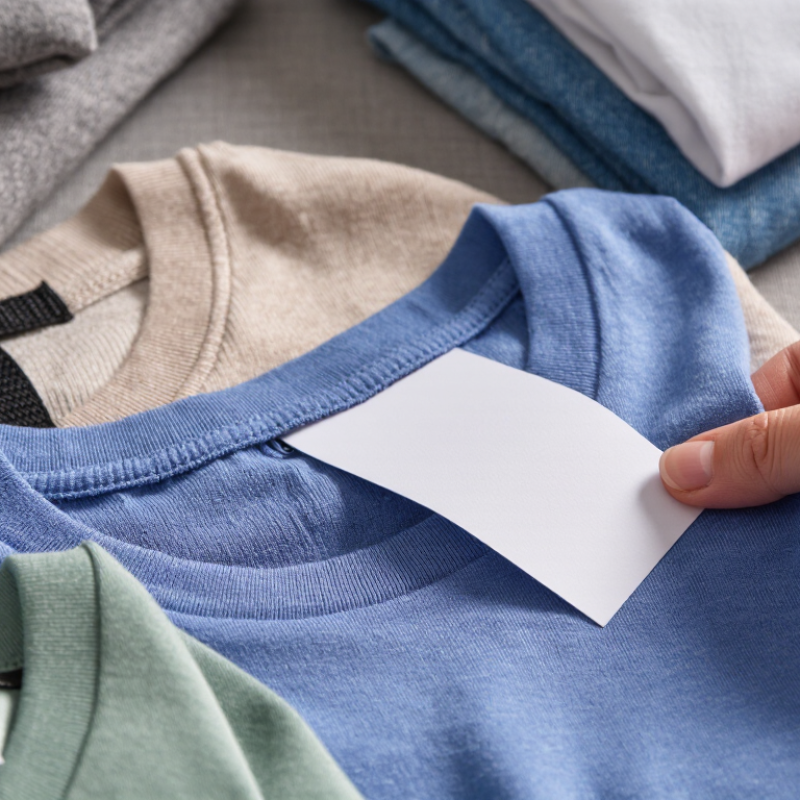
How to Choose the Right Garment Labels for Your Products

Determine the Information Your Garment Labels Must Communicate

Before choosing a garment label, list the questions customers are likely to ask while shopping and caring for the item. They may need to know the fiber content, size, care method, and country of origin, where applicable. Keep each detail accurate and consistent with the product itself. A soft cotton shirt, for example, should not have care instructions that could damage its fabric.

Check the current labeling rules for every market where the product will be sold; requirements can vary by location and product type. Leave enough room for required information before adding optional details such as a short product description. Small label. Make text easy to read under ordinary indoor lighting, and avoid pale ink on a shiny background. Care instructions should describe realistic steps, not simply the gentlest possible treatment. If the garment shrinks or loses shape after routine washing, customers may lose trust. Test instructions on the actual fabric, though one sample may not reveal every production variation. A quick review with your production or quality team can catch mismatched fiber details, unclear symbols, or size wording before labels are printed in bulk.

How to Choose the Right Garment Labels for Your Products - Determine the Information Your Garment Labels Must Communicate

Information Dimension What the Label Should Communicate Example Label Wording When to Include It Practical Check
Fiber composition Identify the generic names and percentages of textile fibers, listed in descending order by weight where required. Shell: 100% cotton
Lining: 100% polyester
Required for many textile products in markets such as the United States and the European Union. Exact rules and exemptions vary by product and market. Confirm percentages against the final product specification, including separate components such as shell, lining, and contrast panels where applicable.
Country of origin State the product’s country of origin using a clear, accurate country name. Made in Vietnam Required for many imported garments sold in the United States. Origin marking rules differ between markets and may depend on how the product was made. Verify the origin claim against the product’s actual manufacturing steps and applicable customs rules.
Responsible business identity Provide the identity of the responsible manufacturer, importer, or dealer when required. In the United States, a business name or an assigned Registered Identification Number (RN) may be used under applicable rules. Imported by: [Responsible business name] Required for many garments sold in the United States. The permitted identification method and requirements may vary by jurisdiction. Use accurate, traceable information. Do not use another business’s name or identification number without authorization.
Care instructions Give clear instructions that help consumers clean and maintain the garment without causing avoidable damage. Machine wash cold
Do not bleach
Tumble dry low
Care labeling is required for many clothing products sold in the United States. Requirements and accepted formats differ by market. Test the instructions against the garment’s materials, construction, trims, and finishes. Use words or symbols accepted in the destination market.
Size or fit Show the garment’s size using a clear sizing system, with measurements or fit details if useful. Size: M
Chest: 96–102 cm
Often useful for consumer selection, although general clothing-size labels are not universally required by law. Sizing conventions vary by country and product type. Make the sizing system consistent across the product, packaging, and online listing. Include units with measurements.
Animal-origin materials Disclose the presence of non-textile parts of animal origin when required. Contains non-textile parts of animal origin Required for covered textile products marketed in the European Union when they contain non-textile parts of animal origin. Check components such as leather, fur, feathers, or other animal-origin parts and confirm whether the rule applies to the product.
Product-specific safety information Include warnings or safety details that apply to the garment’s intended use and design. Keep away from fire May apply to specific products or product categories, such as certain children’s sleepwear subject to flammability requirements. Identify applicable safety standards for the product, age group, and destination market before finalizing the label.
Label placement and legibility Present required information so it is easy to find, read, and durable enough for the required period of use. Care and fiber details on a sewn-in label Legibility, attachment, language, and placement rules depend on the information and destination market. Check the finished garment for readable text, secure attachment, and any required language translations.

Important: Labeling requirements vary by product type and destination market. Confirm current rules with the relevant regulatory authority or a qualified compliance professional before production.

Compare Common Label Types and Placement Options

Garment labels do more than identify a product. They can share care details, size, or a small visual touch. Woven labels have a textured finish and suit collars or cuffs, but tiny text may be hard to read. Printed satin labels feel smooth and work well for care instructions. Cotton labels offer a softer, natural look, though their edges can feel rough if unfinished. Choose by checking readability, comfort, and how the label behaves after washing.

Placement changes both appearance and wear. A neck label is easy to find, but stiff edges may bother sensitive skin. A side-seam label keeps the back of the neck clear and can hold care information. Hem labels add a visible detail, yet they may fold or rub during movement. Before ordering a full batch, sew a sample into a finished garment. Wear it, wash it, and check whether the text stays legible. I have seen a neat label look awkward once fabric gathers around it.

Tips: Match label size to the available space, not just the artwork. Use a ruler to check the finished fold and seam allowance. Keep essential text large enough to read under ordinary indoor light. If unsure, test two placements on the same garment; the more polished option is not always the more comfortable one.

Match Label Materials to Your Product and Care Requirements

A label should survive the same conditions as the garment. For washable everyday shirts, a tightly woven polyester label can resist repeated laundering and abrasion; soft, printed satin may feel gentler against the neck but can fray or fade if its edges and print are poorly matched. For heat-sensitive fabrics, check the label material and attachment method against the garment’s pressing and drying temperatures. Test it first.

Textile Exchange’s Materials Market Report 2024 estimates that polyester made up 57% of global fiber production in 2023. That figure does not mean polyester labels suit every product. It does show why suppliers offer many polyester options, including woven and printed constructions.

Match the label to the garment’s actual care routine: test a sample through washing, drying, and ironing, then check legibility, curling, and skin comfort. For delicate knits, a soft printed label may reduce irritation; for workwear, durability and clear care instructions may matter more. A mistake I would not ignore: testing only a fresh label. Repeated washes can reveal problems that a quick inspection misses.

Check Legal, Durability, and Wearability Standards

Choosing a garment label starts with the rules for the markets where your products will be sold. Check official guidance on required fiber content, country of origin, care instructions, and language. Requirements can vary by product and location, so do not rely on a supplier’s template alone. Keep records of approved label text and confirm it matches the finished garment. Small wording differences can matter.

Durability is practical, not just a lab result. Wash sample garments according to their care instructions, then inspect the label for fading, fraying, shrinking, or loose stitching. Check whether printed text remains readable after repeated washes. A label that looks neat before washing may not hold up. Test more than one fabric and color, because results can differ.

Wearability matters too. Feel the label against the neck or side seam, and check for scratchy edges, bulky folds, or stiff backing. Ask wearers to try the garment through a full day, not just a quick fitting. Comfort is easy to underestimate. I would also revisit the choice after testing; a softer label may need stronger attachment, while a durable finish can feel less pleasant. Balance compliance, legibility, wash performance, and skin comfort before approving production.

Evaluate Printing Methods, Costs, and Supplier Capabilities

How to Choose the Right Garment Labels for Your Products

Evaluate Printing Methods, Costs, and Supplier Capabilities

Choosing garment labels means matching the finish to how a product is worn and washed. Woven labels hold small text and resist fading, but may feel firm against lightweight fabric. Printed satin or cotton labels allow finer artwork and can suit shorter runs. Heat-transfer labels remove seams, though placement and wash testing still matter. Request samples, then rub the edges and wash them with the garment. A label that looks perfect on a desk may scratch at the neck.

Price depends on material, size, colors, finishing, order quantity, and setup fees. Compare quotes using identical specifications; a low unit price can hide tooling or shipping charges. Supplier capability matters just as much. Ask whether the supplier can match colors, keep dimensions consistent across batches, and provide a clear production schedule. Check sample approval steps and how defects are handled. One test wash cannot predict every customer’s laundry routine.

Tips: Send vector artwork, specify label placement and finished dimensions, and request a pre-production sample. Keep a written specification. Confirm whether the quoted lead time includes shipping, and approve samples under conditions that match the final order.

MSIRobot