
How to Choose a Flat Laminating Machine
Choosing a Flat Laminating Machine is a production decision, not merely an equipment purchase. The right model must match substrates, adhesives, output targets, and operating conditions. A machine that handles coated paper may struggle with thin film. Small differences matter.
Industry reports show why this choice deserves careful attention. Smithers’ report, The Future of Global Flexible Packaging to 2028, identifies continued demand for lightweight, recyclable, and high-performance packaging materials. These trends increase pressure on laminating lines to control tension, coating weight, energy use, and material waste. PMMI’s 2024 packaging research also highlights automation, workforce skills, and operational efficiency as major investment considerations. These findings support a practical view: speed alone does not define productivity.
Look beyond the nameplate.
A reliable evaluation begins with real production samples. Measure the widest web, the narrowest web, adhesive viscosity, drying requirements, and expected changeover frequency. Check whether the nip rollers maintain stable pressure across a 1,600-millimeter width. Examine edge alignment after several hours, not only during a short demonstration. Ask suppliers for test records, energy data, maintenance intervals, and references from similar factories. ISO 9001-based quality systems can strengthen supplier confidence, but certification does not replace process verification. That point is easy to miss. A first specification may still be wrong. Your material mix could change next year, while the machine remains. Therefore, this guide compares machine structure, control systems, safety features, total ownership cost, and after-sales support. The goal is not to select the fastest machine. It is to select a stable, adaptable, and commercially sensible solution.
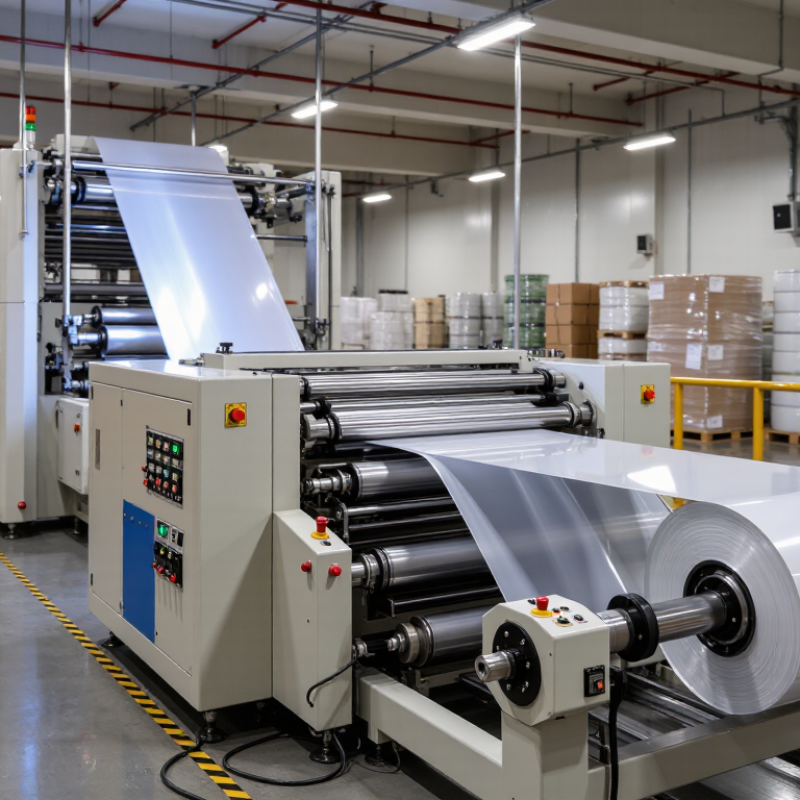
Identify the Materials and Applications for Your Laminating Needs
Choosing a flat laminating machine starts with the material, not the machine’s appearance. Identify whether you will laminate paper, cardboard, fabric, foam board, film, or printed panels. Each material reacts differently to heat, pressure, and moisture. A thin poster may need gentle pressure and moderate heat. A rigid board may require wider rollers and stronger feeding control. Measure the largest sheet and note its thickness before comparing equipment.
Think about the application. Menus, signs, packaging samples, classroom displays, and industrial overlays rarely share the same requirements. Glossy film can improve color and wipe resistance, while matte film reduces reflections under bright lights. For heat-sensitive prints, cold lamination may be safer. I once underestimated adhesive behavior on textured stock. The finish looked acceptable, but small bubbles appeared the next day. That mistake showed me why testing matters.
Tips: Run a small sample first. Check edge adhesion, flatness, clarity, and surface feel after twenty-four hours. Record temperature, speed, and pressure settings. Leave room for adjustment. A machine with simple controls may be more reliable than a faster model with confusing settings. Also inspect roller alignment and cleaning access. Dust often causes defects before operator skill becomes the real issue. A practical choice should match your actual materials, daily volume, workspace, and staff experience. Perfect settings rarely exist immediately. Further testing is usually worthwhile.
| Material or Application | Typical Substrate | Recommended Lamination Method | Typical Temperature Range | Typical Pressure Range | Common Speed Range | Recommended Machine Features | Selection Notes |
|---|---|---|---|---|---|---|---|
| Paper, menus and printed documents | Paper, coated paper, card stock | Thermal film lamination | 90–120°C | Light to medium | 1–5 m/min | Adjustable temperature, heated rollers, pressure adjustment, anti-static control | Use lower heat for heat-sensitive inks and digitally printed sheets. Confirm film compatibility before production. |
| Photographs and high-quality graphics | Photo paper, inkjet media, coated graphics | Thermal or low-temperature thermal lamination | 70–110°C | Light to medium | 1–4 m/min | Fine temperature control, uniform roller pressure, adjustable cooling, low-wrinkle feeding | A lower operating temperature helps reduce color shift, silvering and distortion on sensitive prints. |
| Outdoor signs and posters | Vinyl, synthetic paper, coated banner media | Cold pressure-sensitive or thermal lamination | 20–80°C | Medium | 1–6 m/min | Consistent nip pressure, dust-resistant work area, adjustable speed, wide working width | Cold lamination avoids heat-related deformation. Select an outdoor-rated film and allow printed ink to dry fully. |
| Labels and product stickers | Self-adhesive paper, synthetic label stock, film labels | Cold pressure-sensitive or low-temperature thermal lamination | 20–90°C | Light to medium | 1–8 m/min | Accurate web alignment, tension control, clean rollers, repeatable pressure adjustment | Match the laminating film adhesive to the label face stock. Excessive pressure may cause adhesive squeeze-out. |
| ID cards and small rigid cards | PVC, PET, paper core, synthetic card stock | Flat-press thermal lamination | 110–150°C | Medium to high | Batch cycle: 3–12 min | Heated platens, programmable dwell time, even clamping pressure, cooling cycle | The temperature must suit the card core and overlay film. Controlled cooling helps prevent curling. |
| Fabric and textile graphics | Polyester fabric, coated textile, transfer paper | Heat-press or thermal roller lamination | 120–180°C | Medium to high | 0.5–3 m/min | Stable heat distribution, dwell-time control, adjustable pressure, release liner handling | Use a temperature profile recommended for the adhesive and textile. Excessive heat can change fabric texture or color. |
| Decorative films and furniture surfaces | MDF, plywood, particleboard, PVC film, decorative paper | Hot press or flat roller lamination | 100–160°C | 0.3–1.0 MPa | 0.5–4 m/min | Rigid flat bed, high-pressure capability, uniform heating, platen parallelism control | Choose a press size that supports the largest panel. Moisture and surface flatness strongly affect bonding quality. |
| Composite panels and insulation boards | Foam board, honeycomb core, aluminum composite panel | Cold adhesive or controlled hot lamination | 20–120°C | 0.1–0.6 MPa | 0.3–3 m/min | Low-pressure setting, flat support table, adjustable gap, controlled adhesive application | Avoid excessive heat and pressure when the core can compress, melt or deform. Test the complete panel structure. |
| Electronics and flexible circuits | Polyimide film, PET film, copper foil, flexible printed circuits | Precision hot press or vacuum-assisted lamination | 80–180°C | 0.2–1.0 MPa | Batch cycle: 2–20 min | Accurate temperature control, programmable pressure, vacuum option, clean-room-compatible surfaces | Process settings depend on the adhesive system and circuit construction. Uniform pressure is essential for avoiding voids. |
| Safety glass and transparent interlayers | Glass, EVA film, PVB film, transparent protective layers | Vacuum laminator or autoclave-assisted lamination | 60–140°C | Vacuum or 0.6–1.3 MPa | Batch cycle: 30–180 min | Vacuum control, programmable heating and cooling, pressure monitoring, large flat work area | The correct process depends on the interlayer type and glass construction. Air removal and controlled cooling are critical. |
| Books, covers and packaging prototypes | Paperboard, book cloth, coated paper, synthetic cover stock | Thermal film or adhesive lamination | 80–130°C | Light to medium | 1–5 m/min | Quick warm-up, adjustable roller gap, edge-to-edge pressure control, easy setup for short runs | A machine with fast changeover is practical for varied formats. Check whether the film requires heat activation or pressure only. |
| High-volume commercial production | Paper, film, board, synthetic sheets and mixed media | Continuous roll-to-roll or sheet-fed thermal lamination | 80–160°C | Light to high | 5–30 m/min | Automatic feeding, web-tension control, programmable recipes, cooling rollers, slitting and rewind options | Prioritize throughput, repeatability and uptime. The machine width should exceed the normal sheet or web width with working clearance. |