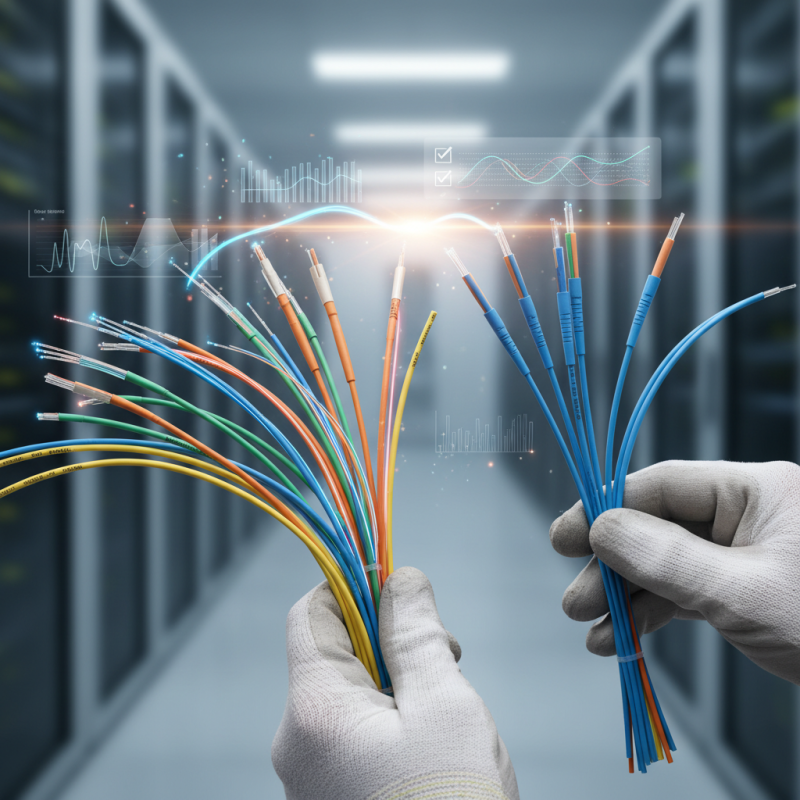
2026 How to Choose the Right Fiber Optic Cable for Your Needs?
Choosing the right Fiber Optic Cable can be a challenging task. The market offers various options, each catering to different needs. Understanding the unique features of each cable type is essential for making an informed decision.
Fiber Optic Cables transmit data at incredible speeds. They use light pulses, making them ideal for long-distance communication. However, the choice between single-mode and multi-mode cables can be confusing. Each type has its specific advantages and applications. Evaluating your unique requirements is crucial.
Consider factors such as bandwidth, distance, and installation environment. Not all Fiber Optic Cables suit every situation. Some may offer excellent speed but are costly. Others may be more affordable but lack performance. Ultimately, selecting the right option demands careful consideration.
Understanding Fiber Optic Cable Types and Their Applications
When choosing the right fiber optic cable, it's vital to understand the different types available and their unique applications. The primary categories are single-mode and multi-mode fibers. Single-mode fibers have a small core, allowing only one light path. They're ideal for long-distance communication, like between cities. Multi-mode fibers have a larger core and support multiple light paths. They work well in shorter runs, such as within a building, but can face signal loss over long distances.
Different scenarios require different features. For high-speed internet, single-mode fiber is often preferred due to its performance. Multi-mode fiber, on the other hand, may suffice for local area networks. Think about your actual usage, not just specs. Will you need high bandwidth for streaming? Is the distance manageable? Analyze your needs carefully before deciding. A hasty choice could lead to inadequate performance and frustration. Always consult with a knowledgeable expert to ensure you're on the right path.
Key Factors to Consider When Selecting Fiber Optic Cables
When selecting fiber optic cables, certain key factors can make or break your setup. One crucial consideration is the type of fiber you need—single-mode or multi-mode. Single-mode fibers are optimal for long distances, while multi-mode fibers work well over shorter distances. Understanding your distance requirements can guide your choice.
Another important factor is the cable's bandwidth and transmission speed. If your application requires high data rates, select cables with higher bandwidth capacity. Additionally, consider the environment where the cable will be installed. For example, outdoor cables must be durable and weather-resistant. Proper installation strategies are essential to avoid issues later.
Reflect on future needs as well. Technology evolves quickly, and what works today may not be sufficient in a few years. Think about scalability. Choosing a cable that allows for upgrades can save you time and money down the line. Balancing these factors can be challenging, but thorough research and reflection will help clarify your needs.
Comparing Single-Mode and Multi-Mode Fiber Optic Cables
When choosing between single-mode and multi-mode fiber optic cables, understanding their key differences is crucial. Single-mode fibers feature a small core diameter, around 9 microns, allowing only one light mode to propagate. This design enables long-distance data transmission, sometimes exceeding 40 kilometers without significant loss. According to a 2022 report by the Fiber Optic Association, single-mode cables account for over 60% of the long-haul network market. Their high bandwidth capacity, often exceeding 100 Gbps, is beneficial for large enterprises and data centers needing robust connections.
Conversely, multi-mode fibers, with core diameters of 50 or 62.5 microns, support multiple light modes and are ideal for shorter distances, typically up to 300 meters. They are more cost-effective and easier to install, making them suitable for internal networks within buildings. However, multi-mode fibers present modal dispersion, which can affect performance over longer runs. A survey from IEEE in 2023 indicated that approximately 70% of businesses opt for multi-mode fibers for their local area network setups. While these statistics showcase popular choices, it’s essential to evaluate specific needs. An organization might need to balance cost against performance, leading to reflections on whether to invest in future-proof solutions or settle for immediate cost savings.
Assessing Fiber Optic Cable Specifications for Your Needs
When selecting the right fiber optic cable, understanding specifications is crucial. There are two primary types: single-mode and multi-mode fibers. Single-mode fibers have a smaller core diameter of about 9 microns. They are designed for long-distance communication, often exceeding 100 kilometers. According to the Fiber Optic Association, single-mode cables reduce signal loss compared to multi-mode cables.
In contrast, multi-mode fibers have a larger core of around 50 to 62.5 microns. They are better suited for shorter distances, typically within 300 meters. However, multi-mode fiber can be less efficient over longer runs due to modal dispersion. The choice between these two types depends heavily on the distance and bandwidth requirements. Industry reports indicate that organizations often underestimate the impact of fiber type on total system performance.
Consider the cable's specifications closely. Look for factors such as bandwidth, attenuation rate, and tensile strength. For instance, the attenuation rate for single-mode cable can be as low as 0.2 dB/km, while some multi-mode options may reach up to 3.5 dB/km. It's essential to reflect on how these figures will affect overall performance in your specific application. Having detailed information allows for a more informed decision, ultimately leading to better system reliability.
2026 How to Choose the Right Fiber Optic Cable for Your Needs? - Assessing Fiber Optic Cable Specifications for Your Needs
| Specification | Single-Mode Fiber | Multi-Mode Fiber |
| Core Diameter | 8-10 µm | 50-62.5 µm |
| Maximum Distance | Up to 100 km | Up to 550 m |
| Light Source | Laser | LED |
| Bandwidth | High | Moderate |
| Typical Applications | Telecommunications | Local Area Networks (LAN) |
Installation and Maintenance Considerations for Fiber Optic Cables
When installing fiber optic cables, several factors must be considered for optimal performance. The environment is a key aspect. Cables must withstand specific conditions such as temperature extremes and moisture. According to the Fiber Optic Association, proper installation can enhance the lifespan of the cable by up to 40%. Choose cables with the right jacket material for protection against harsh elements.
Maintenance of fiber optic networks is critical. Regular inspections can prevent potential failures. The International Telecommunication Union recommends testing connections and cleaning end-faces every six months. Simple steps can significantly reduce network downtime.
Tips: Always label your cables for easy identification. Use splice trays for organized management. Regular training for technicians can ensure proper handling of delicate fibers. These practices prevent errors and promote reliability in your fiber optic installations.
2026 Fiber Optic Cable Selection: Installation & Maintenance Considerations