
How to Choose the Right Carbon Steel Grade?
Choosing the right Carbon Steel grade starts with the job, not the price tag. A bracket in a dry workshop faces different demands from a pressure-carrying pipe or a truck frame exposed to road salt. Strength matters, but so do formability, weldability, hardness, impact performance, and the surrounding environment. Small differences can affect how a plate bends, how a weld performs, or how quickly corrosion becomes a concern. Details matter.
Grade names can look familiar while referring to different specifications. Check the applicable standard, product form, and mill test certificate before comparing options. A36, 1018, and 1045, for example, have different compositions and typical applications; they are not automatic substitutes. This guide looks at how to match grade properties to service conditions, fabrication methods, and purchasing requirements. It also explains why published values need context: thickness, heat treatment, and test methods can influence results. A datasheet is useful, but it cannot describe every detail of the finished part. Not always. When a component carries significant loads or operates in a demanding environment, confirm the selection with a qualified materials or design professional. The right choice is the one supported by verified specifications and the actual conditions the steel must withstand. Sometimes the overlooked detail is the one that changes the decision.
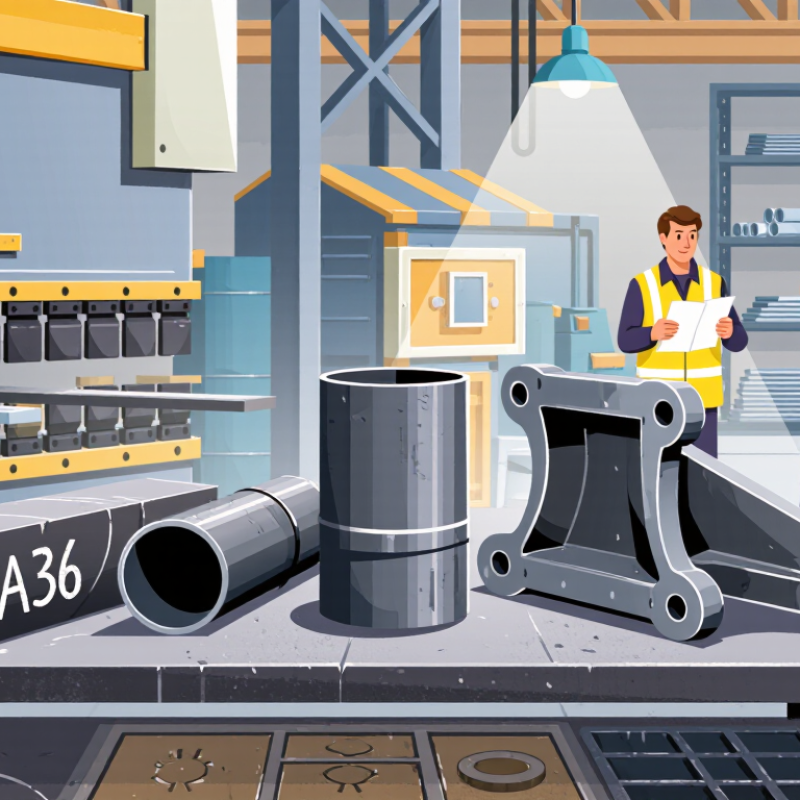
What Defines a Carbon Steel Grade?
How to Choose the Right Carbon Steel Grade?
What Defines a Carbon Steel Grade?
A carbon steel grade identifies a material’s chemistry and the properties required by a particular standard. Carbon content is important, but it is not the whole definition. Manganese levels, permitted impurities, manufacturing route, and heat treatment can also affect performance. SAE J403, for example, specifies 0.43–0.50% carbon for grade 1045. That range helps distinguish it from lower-carbon steels, but it does not alone guarantee a part’s strength or behavior after welding. Check the applicable standard and product specification.
Mechanical requirements matter, too. ASTM A36 specifies a minimum yield strength of 36 ksi for relevant product thicknesses, showing that grades can be defined by performance as well as chemistry. A common specification trap is treating a familiar grade name as a complete purchasing instruction. It may omit thickness, delivery condition, or testing requirements. World Steel Association’s World Steel in Figures 2024 reports 1.89 billion tonnes of crude steel production in 2023; at that scale, clear grade and test documentation matter. Still, a standard cannot predict every shop-floor result. Verify the material certificate, then consider forming, welding, and service conditions.