How to Choose the Best Ultra Narrow Bandpass Filter for Your Needs?
Choosing the right Ultra Narrow Bandpass Filter is essential for various applications, from telecommunications to medical diagnostics. These filters allow only a tight range of wavelengths to pass through while blocking others, providing clarity in signal processing. However, selecting the best one can be a complex task.
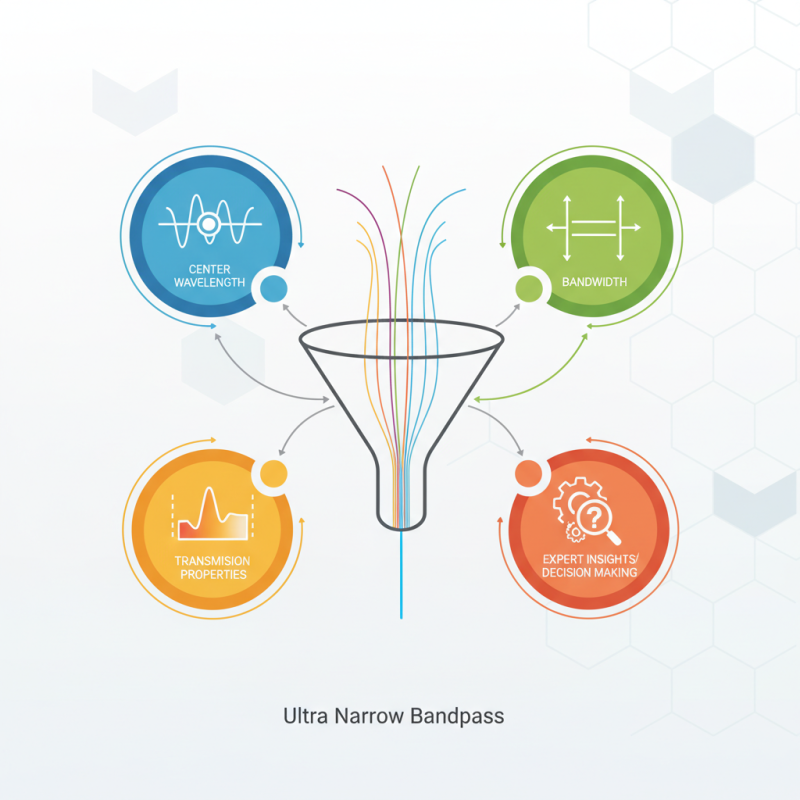
Users must consider several factors, such as center wavelength, bandwidth, and transmission properties. An Ultra Narrow Bandpass Filter that performs excellently in one setting may not work well in another. Understanding these nuances is vital for achieving optimal performance.
In some cases, vendors may not provide sufficient technical details, leading to confusion. This lack of clarity can be frustrating for those relying on precise specifications. Therefore, gaining insights from experts in the field can greatly enhance decision-making. Overall, navigating the choices available can be daunting, but careful evaluation will lead to better outcomes.
Understanding Ultra Narrow Bandpass Filters and Their Applications
Ultra narrow bandpass filters (UNBFs) play a crucial role in various fields, such as telecommunications, spectroscopy, and optical sensing. These filters allow specific wavelengths of light to pass while blocking others. This ability makes them essential for applications requiring high precision. For example, a recent report indicates that the global optical filter market is projected to grow significantly, reaching a value of $4.6 billion by 2027, largely driven by advancements in photonics technologies.
Understanding the technical specifications of UNBFs is paramount for effective application. Key parameters include wavelength range, bandwidth, and transmission efficiency. A typical UNBF can have bandwidths as narrow as 1 nm. This narrow range can enhance signal clarity while minimizing interference from adjacent wavelengths. Moreover, data from industry experts suggest that filters with higher quality coatings can achieve transmission rates exceeding 90%. However, these high-quality filters often come with increased costs. Choosing the right balance between performance and budget is essential.
Applications of UNBFs extend to biomedical imaging, where precise wavelength selection is vital. For instance, in fluorescence microscopy, filters improve contrast and resolution by reducing background noise. Nonetheless, selecting an inappropriate filter could lead to subpar imaging results. This dilemma highlights the importance of thorough research and expert consultation before making a choice. Each application has unique requirements, making it critical to understand these needs fully.
How to Choose the Best Ultra Narrow Bandpass Filter for Your Needs?
| Parameter | Description | Value |
| Central Wavelength | The wavelength at which the filter transmits the most light. | 520 nm |
| FWHM (Full Width at Half Maximum) | The width of the filter at half of its maximum transmission level. | 5 nm |
| Transmission Efficiency | The percentage of light that passes through the filter at the central wavelength. | 90% |
| Input Polarization | The polarization state of the light entering the filter. | Linear or Circular |
| Size | The physical dimensions of the filter. | 2 inch diameter |
| Material | The substrate material of the filter. | Fused Silica |
| Application Field | Common usage areas for the filter. | Spectroscopy, Fluorescence Microscopy |
Key Factors to Consider When Choosing a Bandpass Filter
When selecting an ultra-narrow bandpass filter, several key factors come into play. The center wavelength is vital. It defines the specific frequency your application will focus on. Make sure to understand the transmission bandwidth as well. A narrow bandwidth allows for higher precision, but it can also limit the overall light throughput. This creates a trade-off that requires careful consideration.
Tips: Determine your application requirements early on. Knowing your target wavelength can significantly simplify the selection process. Consider the environment too. High temperatures or humidity may affect filter performance.
Another important factor is the filter's optical density. Higher optical density offers better blocking of out-of-band light. This can enhance the effectiveness of the filter in noisy conditions. However, consider potential reflections and losses in your specific setup. These elements can affect the system's efficiency.
Tips: Test various filters under similar conditions to see how they perform. Don’t hesitate to consult with experts in your field. Their insights can provide invaluable guidance when making your choice.
Frequency Response of Ultra Narrow Bandpass Filters
This bar chart shows the transmission loss in decibels (dB) for five different ultra narrow bandpass filters. When choosing a bandpass filter, it's important to consider its transmission characteristics across the desired frequency range.
Analyzing the Specifications: Bandwidth, Center Frequency, and Insertion Loss
When selecting an ultra narrow bandpass filter, understanding the specifications is crucial. Key factors include bandwidth, center frequency, and insertion loss. Bandwidth refers to the range of frequencies the filter effectively passes. A narrower bandwidth often improves selectivity but may limit application versatility. Recent studies suggest that filters with a bandwidth of less than 5 MHz can enhance performance in sensitive communication systems, achieving signal-to-noise ratios exceeding 50 dB in optimal conditions.
Center frequency is another critical specification. This frequency represents the midpoint of the bandpass range. A precise center frequency aligns with your application's needs. Misalignment can lead to signal distortion or loss. Research indicates that filters with a center frequency variance of +/- 1 MHz may yield unreliable results, particularly in high-frequency communication systems.
Insertion loss significantly impacts overall system performance. It quantifies the signal loss that occurs as it passes through the filter. A lower insertion loss is generally preferred, as it means more signal power remains intact. Reports show that achieving an insertion loss below 1 dB is often ideal for maintaining signal integrity. However, the trade-off between insertion loss and bandwidth may require careful consideration. Balancing these factors can be challenging, yet it is vital for optimizing your filter selection.
Material and Design Types of Ultra Narrow Bandpass Filters
When selecting an ultra narrow bandpass filter, material and design are critical. Common materials include glass and optical coatings. Glass typically offers excellent durability. It withstands environmental conditions well. Optical coatings can enhance transmission but may require careful handling.
The design of the filter affects performance significantly. Factors like the thickness of the material and the coating type play essential roles. Thicker filters can improve stability but might introduce unwanted reflections. The choice of design often reflects a balance between performance and cost. Different applications demand different considerations.
It’s important to remember that not all filters are created equal. Some may not meet expectations in specific environments. Users must assess their needs thoroughly. Testing filters in real-life scenarios is beneficial. Experimenting may lead to surprising results. Understanding these nuances can guide better choices in the long run.
Cost vs. Performance: Finding the Best Value for Your Needs
Choosing the right ultra-narrow bandpass filter requires balancing cost and performance. According to a recent industry report, around 60% of professionals prioritize performance over price. However, it's essential to identify specific needs. Performance can include factors like transmission efficiency and wavelength selectivity. An optimal choice might yield a performance increase of up to 30%.
Cost can vary significantly. Entry-level filters might start around $100, while higher-end options can exceed $1,000. This disparity can make decision-making quite challenging. Consider whether higher costs provide a substantial increase in quality. A study published in the Journal of Optical Communications noted that 40% of users felt they overspent on filters that didn’t meet unique requirements.
When assessing value, reflect on the intended applications. Filters for spectrum analysis need different specifications compared to those used in telecommunications. Many users often overlook installation and operational costs. These ongoing expenses can affect long-term satisfaction and budget constraints. Evaluating these aspects carefully can lead to better investment choices and improved operational efficiency.
