How to Choose the Best PCB Board for Your Projects?
Choosing the right Pcb Board for your projects is crucial. A well-selected PCB can significantly affect performance and reliability. This task can be daunting due to the variety of options available. The wrong choice may lead to functional issues or increased costs.
When evaluating PCB boards, consider the specific needs of your project. Material quality, thickness, and finish are vital factors. Boards must withstand environmental conditions, like moisture or temperature fluctuations. Additionally, think about the design complexity and the components you plan to use.
Some may underestimate the importance of sampling. Testing different types can reveal strengths and weaknesses. Don’t ignore feedback from peers or professionals in the field. This information can guide your decision and help refine your choices. Remember, selecting the best PCB board is not merely technical; it’s a process that requires careful thought and reflection.
Understanding PCB Boards: Types and Applications
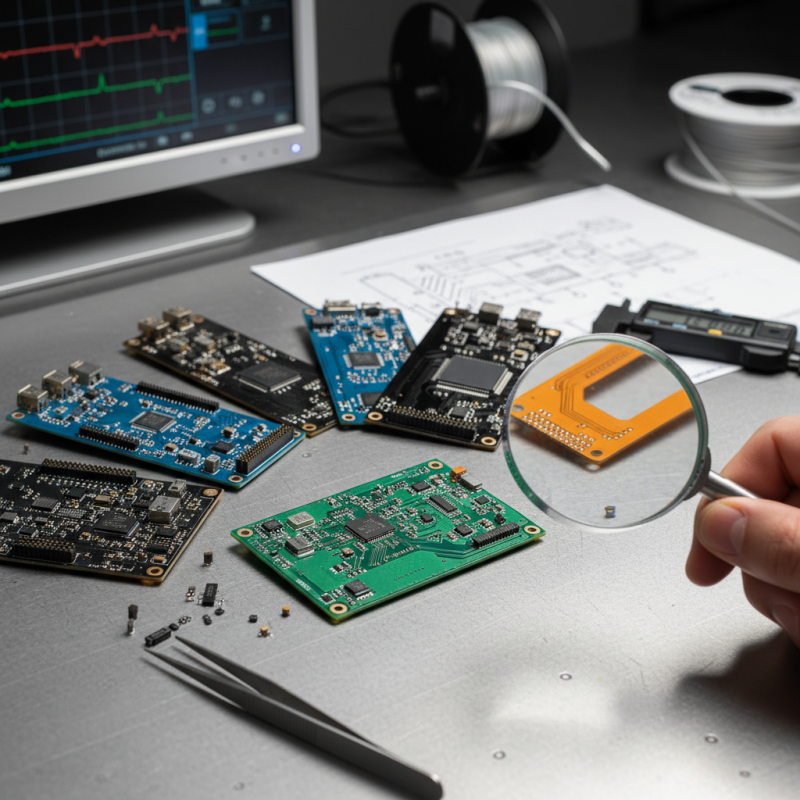
When diving into printed circuit boards (PCBs), it’s essential to explore the various types and their applications. Understanding these distinctions can help you select the right board for your project. You have rigid, flexible, and rigid-flex PCBs. Rigid boards are the most common. They provide a stable platform for various electronic components. But they can be limited in design flexibility. On the other hand, flexible PCBs offer versatility. They can bend, twist, or fold, which is excellent for compact devices. However, their manufacturing can be more expensive.
Applications vary widely. Rigid PCBs are often used in consumer electronics, like smartphones. Meanwhile, flexible PCBs excel in wearables and medical devices. They adapt well to space constraints. Rigid-flex designs combine the best of both worlds. But they can be complicated to fabricate. This means that unexpected costs may arise. It's crucial to weigh the trade-offs between these options. Be mindful of your project's specific needs. Sometimes, the most intuitive choice isn't the most practical one. Consider aspects like cost, space, and assembly ease. These factors will guide you toward a suitable PCB type for your endeavor.
Comparison of Different PCB Board Types for Various Applications
Key Factors to Consider When Choosing a PCB Board
Choosing the right PCB (Printed Circuit Board) is essential for successful electronic projects. Several key factors play a role in this decision. First, consider the size of your project. A compact design demands a smaller PCB, while larger systems might require more complex layouts. Ensure the dimensions fit your enclosure perfectly.
Material selection is another critical aspect. Different materials affect performance and cost. FR-4 is common for general use, but you might need specialized materials for high-frequency applications. The thickness of the board also impacts signal integrity. Thicker boards can support heavier components, yet they increase weight and cost.
Next, think about the number of layers. Single-layer boards are cheaper, but multi-layer options provide more space for complex circuits. Also, factor in the type of components you’ll use. Surface-mount devices require different manufacturing techniques than through-hole components. This choice could limit your options or increase difficulty during assembly, prompting a reevaluation of your initial design.
How to Choose the Best PCB Board for Your Projects? - Key Factors to Consider When Choosing a PCB Board
| Factor | Description | Typical Use Cases |
| Material Type | The base material of the PCB which affects electrical performance and thermal properties. | Consumer electronics, automotive applications |
| Layer Count | Number of layers in the PCB design, influencing complexity and cost. | Multilayer applications, compact devices |
| Thickness | The thickness of the PCB, crucial for mechanical strength and component mounting. | IoT devices, wearable technology |
| Surface Finish | Type of finish applied to the PCB surface for soldering and corrosion resistance. | High-frequency applications, solderability requirements |
| Copper Weight | The thickness of copper on the PCB, affecting current handling and thermal dissipation. | High-power circuits, RF applications |
| Cost | Overall cost considerations that include material, manufacturing, and design expenses. | Budget-sensitive projects, hobbyist designs |
Assessing PCB Specifications: Material, Thickness, and Layer Count
When selecting a PCB board for your project, understanding specifications is crucial. Material choice impacts performance significantly. Common materials include FR-4, which balances cost and reliability, and Rogers, preferred for high-frequency applications. Each material offers unique thermal and electrical properties. Assess what fits your project's electrical demands.
Thickness is another important factor. PCBs range from thin (0.2mm) to thick (3.2mm). Thicker boards provide better durability but may increase weight. In contrast, thin boards are lighter and more flexible. Consider how weight might affect your design and application.
Layer count influences complexity and functionality. Simple designs may only need two layers, while multi-layer boards support intricate circuits. More layers allow for better signal integrity and reduced electromagnetic interference. Yet, increased layers mean higher costs. Balancing these aspects requires careful thought and foresight. Each decision shapes the board’s suitability for your project’s needs.
Evaluating Design and Manufacturing Capabilities of PCB Suppliers
When evaluating PCB suppliers, design and manufacturing capabilities are crucial. A supplier’s ability to produce complex designs sets the foundation for project success. According to a recent industry report, 75% of engineers prioritize design flexibility. This flexibility ensures the supplier can adapt to unique project specifications.
Manufacturing quality is equally essential. Statistics show that 30% of PCBs fail during production due to inadequate quality control processes. Understanding a supplier’s process capabilities can minimize risks. Look for suppliers who utilize advanced technologies like automated inspection systems. These systems enhance accuracy and reliability in production.
While many suppliers tout their expertise, the reality can vary significantly. Reports indicate that 40% of companies report delays due to unexpected manufacturing issues. It’s important to seek out those with proven track records. Reviews and testimonials can provide insights into a supplier's performance. Choose a partner who demonstrates transparency about their capabilities and limitations. This approach fosters better collaboration and ultimately leads to successful project outcomes.
Budgeting and Cost Considerations for PCB Projects
When budgeting for your PCB projects, it's essential to consider various factors that can influence costs. The materials used for the PCB can significantly affect the overall price. High-quality substrates, for example, may offer better performance but can also raise your expenses. It's crucial to balance quality with your budget goals.
Tip: Always research different suppliers before committing to allow room for negotiation.
Another important aspect is the PCB size and complexity. Larger boards with intricate designs tend to be more expensive. Simplifying your design can help keep costs down. Also, consider the number of layers in your PCB. A multilayer board is often more costly than a single-layer one.
Tip: Create a clear design that meets your needs without excess complexity.
Lastly, think about production volumes. Smaller runs might have higher per-unit costs due to setup fees. If you suspect a future need for more units, plan ahead. Bulk orders can lower the per-unit price significantly.
Tip: Estimate future demands to avoid costly short runs.