Icon about-block-ico-1 Icon about-block-ico-2 Icon about-block-ico-3 Icon about-block-ico-4 Icon announcement-close Icon arrow-left Icon arrow-right Icon arrow-sm Icon asterisk Icon banner-transparent-vector Icon btn-callback-ico Icon careers-item-location Icon careers-item-time Icon careers-item-type Icon careers-mail-ico Icon careers-phone-ico Icon careers-search-ico Icon careers-single-hero-vector Icon careers-single-more-vector Icon careers-vector Icon check Icon close Icon dfm-image-left-vector Icon dfm-image-right-vector Icon document Icon download-popup-vector Icon dropdown Icon envelope Icon facebook Icon faq-banner-bg Icon faq-title-ico-active Icon faq-title-ico Icon featured-links-block-bg Icon figure-1 Icon figure-10 Icon figure-11 Icon figure-12 Icon figure-13 Icon figure-14 Icon figure-15 Icon figure-2 Icon figure-3 Icon figure-4 Icon figure-5 Icon figure-6 Icon figure-7 Icon figure-8 Icon figure-9 Icon file-upload Icon form-sidebar-back Icon form-step-done Icon gmap-marker-group-icon Icon gmap-marker-icon Icon header-profile-ico Icon instagram Icon link Icon linkedin Icon loader Icon mail Icon phone Icon play-yt Icon play Icon post-nav-arr-left Icon quote-banner-vector Icon quote-block-aside-vector Icon quote-contact-phone-ico Icon quote-contact-position-ico Icon sidebar-location Icon sidebar-phone Icon technology-banner-nav-left-vector Icon technology-banner-nav-right-vector Icon twitter Icon webinar-item-date-vector Icon whitepaper-img-ico-left Icon whitepaper-img-ico-right Icon whitepapers-listing-banner-ico Icon whitepapers-single-aside-vector Icon youtube Icon yt-play-button

How to Choose the Best Car Window Blackout Film?

Choosing the right Car Window Blackout Film starts with a practical question: what do you need it to do? Some drivers want added privacy while parked; others hope to reduce glare, soften cabin heat, or cover a small glass area. These goals call for different levels of darkness, materials, and installation methods. A fully opaque film can block the view through a window, so it may not suit every location on a vehicle. Visibility matters. Check how the film looks from both inside and outside, especially in low light.

Look closely at the product details. Compare light transmission, heat-rejection claims, adhesive type, and whether the film is designed for automotive glass. A sample can help reveal color shifts, haze, or reflections that product photos hide. That matters. It is easy to focus on privacy and overlook the view back out. Consider whether you want a temporary, removable option or a longer-lasting installation, and check care instructions before applying anything to tinted or defroster-equipped glass.

Fit and compliance deserve equal attention. Window rules vary by location and by the window being covered, so verify current local requirements before buying or installing film. A darker sample may look convincing indoors, then feel too severe in daylight. There is no perfect choice for every car. The best option balances the intended use with clear visibility, dependable materials, and a finish you can live with—not just a dramatic product photo.
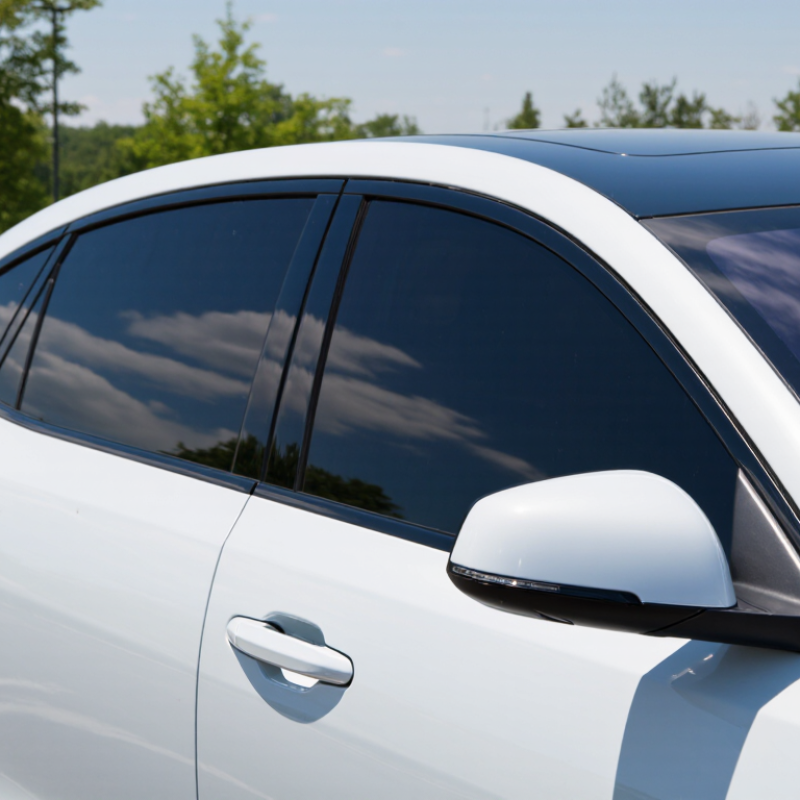
How to Choose the Best Car Window Blackout Film?

Types and Light-Blocking Levels of Car Window Films

Car window films differ in construction and performance. Dyed film uses a dark layer to reduce glare and add privacy. It can be an economical choice, though color may fade over time. Metalized film reflects some heat, but its reflective layer can affect electronic signals. Ceramic film avoids metal and can reduce infrared heat while staying relatively clear. Results depend on the film’s quality and installation.

Light blocking is often described by visible light transmission, or VLT. A 50% VLT film lets about half the visible light through; 20% lets in much less. Lower numbers look darker, but they do not automatically mean better heat or UV protection. This is easy to misjudge. Near-opaque blackout film blocks most views and light, so it can seriously limit a driver’s visibility. Darker is not always more useful.

Before choosing, compare a sample against the actual window and look through it from the driver’s seat, especially in shade or at dusk. Ask for the film’s VLT and UV or infrared specifications separately. A handheld meter can check the installed glass and film together, since factory-tinted glass affects the final reading. Check local vehicle requirements, too. The film that looks perfect in a bright showroom may feel too dim on a rainy evening.

How Vehicle Use and Local Laws Shape Film Selection

How to Choose the Best Car Window Blackout Film?

How Vehicle Use and Local Laws Shape Film Selection

Think about when and where you drive before choosing a film. A car parked under a hot afternoon sun may benefit from heat-reducing film. A vehicle used for evening commutes needs clear visibility in dim light. If you often reverse into narrow spaces, a very dark rear window can make that task harder. Less darkness can be safer. Consider passengers, cargo, and whether you need to see through the windows at night. A sleek appearance is tempting, but it should not outweigh practical visibility.

Local rules can set limits on window tint darkness, reflectivity, or which windows may be treated. These requirements vary by location and can change. Check current guidance from your local transport authority before buying or installing film. Ask a qualified installer how the film’s visible light transmission is measured, and request documentation for the product. Do not assume a shade is permitted because another car uses it. There is no perfect choice for every vehicle, and I might still underestimate how much visibility changes on a rainy night.

Tips: Test sample film in daylight and after dark, if possible. Check mirrors and blind spots from the driver’s seat. Keep official rule details handy when comparing options.

Key Factors for Comparing Film Performance and Safety

Choosing car window blackout film means balancing heat control, glare, privacy, and a clear view. Darkness alone proves little. Compare visible light transmission (VLT), total solar energy rejected (TSER), and UV transmission using measured test data. A 2007 JAMA Ophthalmology study examined 29 vehicles. Windshields blocked an average of 96% of UVA; side windows averaged 71%.

The Skin Cancer Foundation reports that automotive films can block up to 99% of UV radiation. “Up to” matters: results vary by film construction and installation. Compare TSER rather than infrared rejection alone, since an infrared figure may cover only a narrow range. Numbers need context. Ask for a test sheet showing the tested film and measurement method, not just a sales claim.

Safety becomes clear from the driver’s seat. Check for haze, waviness, or doubled edges against a straight road marking. Try the view at dusk, when dark film can make pedestrians harder to spot. A spec sheet cannot reproduce your rainy-night commute; treat it as a starting point, not a verdict. Have a qualified installer check compatibility with rear defroster lines, and inspect the finished glass from inside and out.

How to Choose the Best Car Window Blackout Film? - Key Factors for Comparing Film Performance and Safety

Compare film types by their typical characteristics, then confirm the specifications and local requirements for the exact product and vehicle. Performance varies by film construction, shade, glass, and testing method.

Comparison factor Dyed film Metallized film Carbon film Ceramic film What to check before buying
Visible Light Transmission (VLT) Available in a range of shades; darker options reduce the light entering the cabin. Available in a range of shades; reflectivity can vary by product. Available in a range of shades, often with a non-metallic appearance. Available in clear and tinted options, depending on the product. Request the film’s measured VLT. The finished window’s VLT depends on both the film and the original glass.
UV protection Can provide substantial UV reduction; performance depends on construction and specification. Can provide substantial UV reduction; verify the product’s test data. Can provide substantial UV reduction; verify the product’s test data. Many products offer high UV rejection, including clear options; verify the stated result. Look for documented UVA and UVB performance, the test method, and whether the figure applies to the film or the complete glass-and-film system.
Solar heat reduction May reduce solar heat, but results vary considerably by shade and product. Metal layers can reflect solar energy; actual performance is product-specific. Often selected for heat reduction without a metallic layer; compare measured results. Many products are designed to reduce solar heat while maintaining a lighter appearance; results vary. Compare Total Solar Energy Rejected (TSER) or another clearly defined metric at the same VLT. Do not compare differently measured figures.
Glare and privacy Darker shades can reduce glare and increase daytime privacy. Shade and reflectivity affect glare and appearance; reflective films may look more mirror-like. Darker shades can reduce glare; appearance is generally less reflective than some metallized films. Glare reduction depends on shade; clear films provide little privacy. View a sample from inside and outside in daylight and at night. Dark film does not guarantee privacy when cabin lights are on.
Signal compatibility Non-metallic construction generally avoids metal-related signal interference. Metal layers may interfere with some radio, GPS, cellular, or toll-tag signals, depending on the vehicle and installation. Non-metallic construction generally avoids metal-related signal interference. Non-metallic construction generally avoids metal-related signal interference. Check compatibility with antennas, toll tags, and onboard electronics, especially if considering a metallized film.
Optical clarity and color stability Quality and color stability differ; ask about fading and warranty coverage. Can have a reflective appearance; inspect for distortion and color shift. Often chosen for a neutral appearance; clarity and stability still depend on product quality. Often chosen for clarity and a neutral look; inspect the exact shade and sample. Check for haze, distortion, bubbles, and color shift. Review warranty terms for fading, peeling, and delamination.
Glass breakage and safety Ordinary tint film is not automatically a certified safety or security film. A metallic layer does not by itself make the film safety-rated. A carbon construction does not by itself make the film safety-rated. A ceramic construction does not by itself make the film safety-rated. If fragment retention is a priority, choose a product specifically tested for that purpose and follow its installation instructions. Film does not replace laminated safety glass.
Legal compliance and visibility Legality depends on local rules, window position, vehicle type, and sometimes reflectivity or medical exemptions. Requirements can differ for windshields and front side windows. Check current local regulations before installation. Keep adequate visibility for night driving and ensure mirrors and required safety equipment remain unobstructed.
Best suited to Drivers prioritizing a basic, shaded appearance and glare reduction. Drivers seeking a reflective look and solar control who have checked signal compatibility. Drivers seeking a non-metallic film with a subdued appearance. Drivers prioritizing a non-metallic option and comparing heat-rejection data at a preferred shade. Choose by measured performance, visibility needs, legal limits, compatibility, installation quality, and written warranty—not by film category alone.

Note: VLT means Visible Light Transmission; a lower value indicates less visible light passes through. Product ratings are not directly comparable unless the measurement method and test conditions are the same.

Choosing Film Materials, Shades, and Installation Methods

Choosing car window blackout film begins with its material. Dyed film gives a darker appearance and added privacy, but may fade sooner under strong sun. Carbon film tends to hold its color and can reduce heat without a metallic look. Ceramic film often offers strong heat reduction, though it usually costs more. Metallic layers may affect some vehicle signals. Check the product details before buying.

Shade is more than style. A darker film can make parked-car interiors harder to see, but it also reduces visibility from inside, especially at night. A nearly opaque shade may be unsuitable for windows used while driving. Measure twice. Check local window-tint requirements, then choose a shade that balances privacy with a clear view of mirrors and traffic. Darker is not always better.

For installation, clean glass carefully and work in a dust-free, shaded space. Even a tiny fiber can leave a visible bump. Apply adhesive film with the recommended solution, then use a squeegee to push out water and air. Curved rear glass can be difficult to fit evenly, so professional installation may be worthwhile. I have found that rushing the trimming stage is an easy mistake; allow the film to cure as directed before lowering the windows.

Checking Compatibility, Care Requirements, and Long-Term Durability

Check the film’s stated fit against your car’s year, model, and window shape. Front doors, rear glass, and small quarter windows can need different cuts. Curved rear glass is especially demanding; a flat sample may wrinkle when heated and applied. Check whether the film is designed for automotive glass and works with defroster lines or embedded antennas. These details are easy to overlook. A vehicle-specific fit guide or a careful installer can help confirm compatibility before purchase.

Care instructions affect how well the film lasts. After installation, follow the recommended waiting period before cleaning, and use a soft cloth with a non-abrasive cleaner. Avoid scraping the surface with hard tools, especially near the edges. Small scratches can collect dust and become more visible over time. Durability also depends on adhesive quality, sun exposure, and installation conditions. Look for clear information about fading, peeling, discoloration, and coverage terms. A film that looks dark in the shop may not stay clear after years of heat. That part is hard to judge from appearance alone. Inspect the windows occasionally for lifting corners, bubbles, or hazy patches, and address changes early rather than rubbing them aggressively.

MSIRobot