
Why Choose a Block Calibrator for Precision Measurement?
Choosing a Block Calibrator can make temperature checks more consistent when measurement reliability matters. In a workshop, a technician places a probe into a metal well, selects a target temperature, and compares the readings. The process is easier to control than improvised heating methods. Small details matter.
A stable display alone does not guarantee an accurate result. Probe fit, insertion depth, sensor type, ambient drafts, and stabilization time can all affect the comparison. Even experienced users may overlook a loose-fitting well or remove a probe too soon. That deserves attention. A suitable calibrator should match the sensors being tested, the required temperature range, and the dimensions of their probes. Heating and cooling performance, temperature uniformity, portability, and ease of operation also deserve consideration.
For dependable results, users should follow documented procedures and compare readings with an appropriate reference instrument. Traceability and stated uncertainty help explain what a result supports—and what it does not. A Block Calibrator can simplify routine verification, but it cannot correct poor technique or unsuitable equipment. Careful selection is useful. Regular review is wiser. The right choice depends on the measurement task, operating conditions, and accuracy requirements, not on a specification sheet alone.
What Is a Block Calibrator?
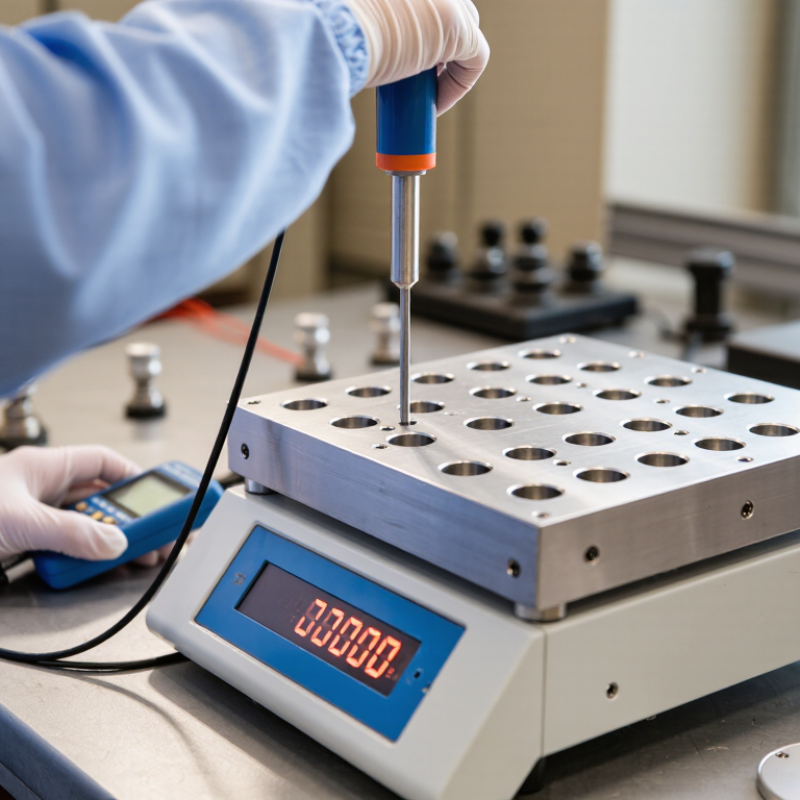
A block calibrator is a portable instrument that provides a controlled temperature for checking temperature probes. It heats or cools a metal block with precisely sized wells. Place a probe in a suitable well, then compare its reading with a calibrated reference thermometer. The difference helps show whether the probe reads accurately at that temperature. Some models cover a wide range, but performance depends on the unit and setup.
Tips: Use a well that fits the probe closely. Insert the probe to the recommended depth, and allow time for the block and sensor to stabilize. Record the reference and test readings together. Small setup details matter.
It is tempting to treat the displayed block temperature as the probe’s exact temperature. That can be misleading: the well, probe fit, immersion depth, and temperature gradients all affect the result. Check the manufacturer’s stated stability and uniformity, and use a reference thermometer with suitable calibration records. A block calibrator is practical for routine checks, though it may not reproduce every condition found in actual use. Even careful measurements deserve a second look when results seem inconsistent.