Icon about-block-ico-1 Icon about-block-ico-2 Icon about-block-ico-3 Icon about-block-ico-4 Icon announcement-close Icon arrow-left Icon arrow-right Icon arrow-sm Icon asterisk Icon banner-transparent-vector Icon btn-callback-ico Icon careers-item-location Icon careers-item-time Icon careers-item-type Icon careers-mail-ico Icon careers-phone-ico Icon careers-search-ico Icon careers-single-hero-vector Icon careers-single-more-vector Icon careers-vector Icon check Icon close Icon dfm-image-left-vector Icon dfm-image-right-vector Icon document Icon download-popup-vector Icon dropdown Icon envelope Icon facebook Icon faq-banner-bg Icon faq-title-ico-active Icon faq-title-ico Icon featured-links-block-bg Icon figure-1 Icon figure-10 Icon figure-11 Icon figure-12 Icon figure-13 Icon figure-14 Icon figure-15 Icon figure-2 Icon figure-3 Icon figure-4 Icon figure-5 Icon figure-6 Icon figure-7 Icon figure-8 Icon figure-9 Icon file-upload Icon form-sidebar-back Icon form-step-done Icon gmap-marker-group-icon Icon gmap-marker-icon Icon header-profile-ico Icon instagram Icon link Icon linkedin Icon loader Icon mail Icon phone Icon play-yt Icon play Icon post-nav-arr-left Icon quote-banner-vector Icon quote-block-aside-vector Icon quote-contact-phone-ico Icon quote-contact-position-ico Icon sidebar-location Icon sidebar-phone Icon technology-banner-nav-left-vector Icon technology-banner-nav-right-vector Icon twitter Icon webinar-item-date-vector Icon whitepaper-img-ico-left Icon whitepaper-img-ico-right Icon whitepapers-listing-banner-ico Icon whitepapers-single-aside-vector Icon youtube Icon yt-play-button

China Top Vaping Sensors Supplier for Global Buyers?

For global buyers, choosing a China-based Vaping Sensors supplier is a technical and sourcing decision, not a simple price comparison. These components may monitor airflow, pressure, or temperature, so stable readings and repeatable production matter. A low quotation means little if samples vary or documentation is incomplete.

The wider electronics supply chain offers useful context. In its November 2024 forecast, the World Semiconductor Trade Statistics organization projected global semiconductor sales of about US$627 billion in 2024 and US$697 billion in 2025. These figures do not measure the Vaping Sensors market directly. They do, however, reflect the scale and continuing importance of the component ecosystem behind modern sensing products. That matters.

For buyers assessing China’s suppliers, the practical questions are specific: What sensing range and tolerance can the supplier document? Are calibration records, material specifications, and production checks available? Can the supplier explain how samples are tested and how batch changes are controlled? Ask for evidence, not just a polished catalogue. No single ranking settles the question, and supplier claims should be checked against sample results and traceable records. A careful review may take longer than expected. Still, clear specifications, consistent communication, and verifiable quality processes offer a more reliable basis for comparing suppliers than broad claims of being “top” or “best.”
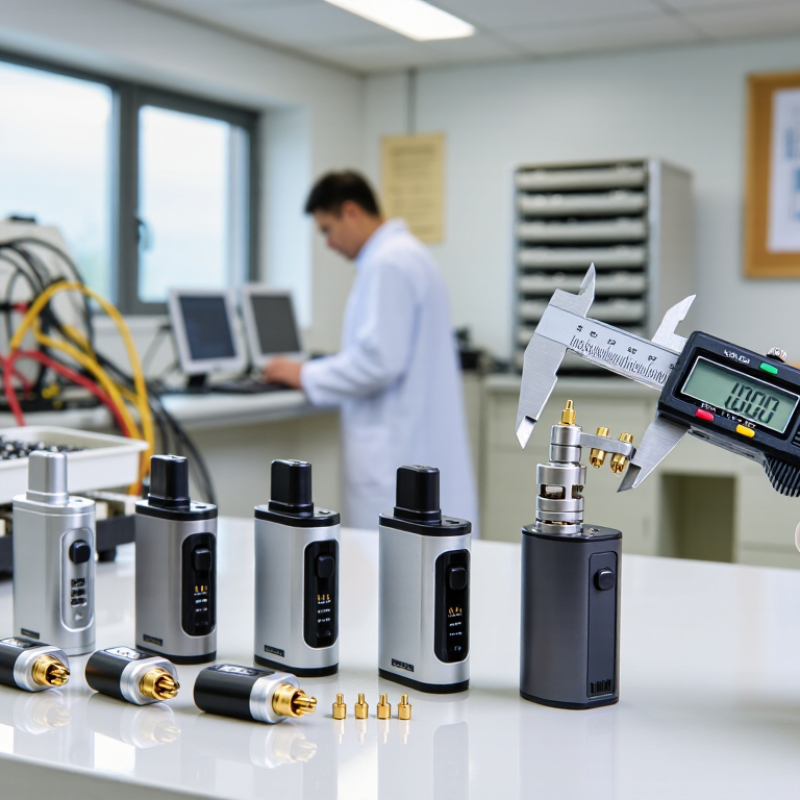
China Top Vaping Sensors Supplier for Global Buyers?

What Vaping Sensors Are and How They Detect Aerosols

What Vaping Sensors Are and How They Detect Aerosols

Vaping sensors are indoor monitoring devices that detect changes in airborne particles. Most use an optical chamber: a small light beam meets particles in the air, and a detector measures scattered light. The device estimates particle concentration, often displayed as PM2.5 in micrograms per cubic meter. It does not identify a specific source by itself.

The US Environmental Protection Agency’s Air Sensor Guidebook explains that low-cost optical sensors need careful interpretation because humidity, dust, and sensor design can affect readings. The National Academies’ 2018 review also reports that e-cigarette use can increase indoor particulate matter. The size and duration of the increase vary with ventilation and activity. A reading is a clue, not proof. Real rooms are messy.

Tips: Place sensors away from vents and open windows. Compare readings before and after activity, and check humidity alongside particle data. Don’t treat one spike as a definitive detection; repeated patterns are more useful.

Key Sensor Types Used in Vaping Devices

Key Sensor Types Used in Vaping Devices

A vaping device relies on small sensors to respond consistently to a user’s draw and protect its electrical system. Airflow or pressure sensors detect changes when air moves through the device, then signal the control circuit to activate. A brief delay can feel noticeable. These sensors need careful calibration because dust, condensation, or a loose seal may affect readings.

Temperature sensors monitor the heating element or nearby components, while voltage and current sensing help track battery output. Some designs also use liquid-level sensors, though residue and liquid movement can make readings less reliable. The National Academies of Sciences, Engineering, and Medicine reported in its 2018 review that device characteristics and operating conditions can change aerosol emissions; higher power settings were associated with increased emissions of some harmful substances under certain conditions. That finding makes temperature and power monitoring relevant to design, but it does not mean a sensor alone guarantees safer operation. Sensor placement, response time, and testing matter. The details are easy to overlook. A pressure sensor may work well on a bench yet respond differently after repeated exposure to moisture. Testing across real operating conditions remains essential.

Key Sensor Types Used in Vaping Devices

Illustrative temperature-sensing example: how a nickel (Ni200) coil’s resistance changes as its temperature rises.

In temperature-control devices, the coil can act as a temperature sensor because its electrical resistance changes with temperature. The curve uses a nominal Ni200 temperature coefficient of 0.006 per °C and is a linear approximation; actual materials and devices may differ. Other sensing functions include puff detection using pressure or airflow sensors and battery voltage/current monitoring. Liquid-level sensing is device-dependent.

China’s Vaping Sensor Supply Chain and Manufacturing Capabilities

China’s vaping-sensor supply chain draws on a broad electronics base, from sensing elements and air-quality modules to circuit boards, housings, and calibration equipment. A compact sensor needs more than a sensitive chip. It also needs steady airflow, low-noise signal processing, and repeatable calibration. The details matter.

China’s Ministry of Industry and Information Technology reported that the value added of its electronic information manufacturing sector grew 3.4% in 2023. The National Bureau of Statistics recorded 351.4 billion integrated circuits produced that year, up 6.9%. These figures show the scale of the supporting electronics ecosystem, not the performance of any individual sensor factory. Buyers should check calibration records, batch-to-batch variation, response time, and performance under changing humidity. Ask for test data from finished devices, not only component specifications. A sample may work well on a clean bench, yet drift in a crowded room. That gap deserves scrutiny. Sourcing decisions also benefit from reviewing component traceability and production quality controls, since low cost alone says little about long-term measurement reliability.

China Top Vaping Sensors Supplier for Global Buyers? - China’s Vaping Sensor Supply Chain and Manufacturing Capabilities

A practical overview of sensor-related components, manufacturing stages, and evaluation criteria for sourcing vaping-device assemblies. Capabilities and specifications vary by supplier and product design; buyers should verify them through technical documentation and audits.

Supply-chain area Typical component or process Role in a vaping device Manufacturing and verification considerations Buyer checks
Draw-activation sensing MEMS pressure sensor or pressure-switch assembly Detects pressure changes associated with inhalation and provides an activation signal to the control circuit. Selection depends on pressure range, response time, port design, sealing, and resistance to condensation or contamination. Calibration and functional testing are commonly performed at component or device level. Request the pressure-response specification, operating limits, test method, and evidence that the assembled device avoids unintended activation.
Temperature monitoring Thermistor or other temperature-sensing element Measures temperature at a specified location, where the design uses temperature feedback or over-temperature protection. Accuracy depends on sensor tolerance, placement, thermal coupling, and the control circuit. Validation should cover the intended operating range and fault conditions. Confirm the sensing location, tolerance, response characteristics, calibration approach, and protection behavior if the sensor is open-circuit or short-circuit.
Electronic control assembly Printed circuit board assembly (PCBA), microcontroller, and sensor interfaces Reads sensor signals and coordinates device functions such as activation and electrical protection. Assembly may include surface-mount technology, solder-paste inspection, automated optical inspection, and electrical testing. IPC-A-610 is a widely used standard for electronic assembly acceptability; the applicable class and contract requirements should be agreed by the buyer and supplier. Review process controls, inspection records, traceability, firmware controls, and production test coverage.
Air path and enclosure integration Airway, sensor port, seals, and molded or machined housing features Provides the pressure path needed by the activation sensor while helping protect electronics from liquid ingress and debris. Port geometry, seal compression, material compatibility, and assembly tolerances can affect sensor response. Leak, airflow, and fit checks should reflect the final product design. Ask for drawings, tolerance controls, material declarations, assembly inspection criteria, and validation on production-equivalent samples.
Power-system interface Battery connections, protection circuitry, and sensor power supply Supplies stable power to sensing and control electronics and supports protective shutdown functions where designed. Electrical behavior must be assessed as part of the complete device. IEC 62133-2 addresses safety requirements and tests for portable sealed secondary lithium cells and batteries; applicability depends on the battery configuration and target market. Verify battery documentation, protection design, transport and market requirements, and system-level test evidence. Do not treat a sensor certificate as proof of complete-device safety.
Component and materials sourcing Sensor packages, circuit materials, connectors, polymers, and seals Forms the upstream input base for sensor modules and device assemblies. Multi-tier sourcing can affect lead time, change control, and traceability. RoHS and REACH obligations may apply to products placed on relevant markets; requirements depend on product category, jurisdiction, and current rules. Request a bill of materials, supplier change-notification process, material declarations, lot traceability, and a plan for managing obsolescence.
Production testing Incoming inspection, in-process checks, end-of-line functional tests Checks that sensor signals, activation behavior, electrical connections, and assembled-device functions meet defined requirements. Test limits should be linked to product specifications and measurement-system capability. Sampling plans and acceptance criteria should be documented rather than assumed. Review test procedures, calibration records, defect handling, rework controls, and batch-level quality reports.
Quality and compliance management Documented quality system and product-specific compliance evidence Supports consistent manufacturing, corrective action, and market-access planning. ISO 9001 is a quality-management-system standard, not a product-safety approval. Applicable product, chemical, electrical, and labeling requirements depend on the destination market and device design. Check certificate scope and validity, audit the actual production site, and obtain test reports tied to the relevant product configuration and market.
Supplier qualification Technical review, sample evaluation, process audit, and pilot production Determines whether a supplier can meet the buyer’s sensor, integration, quality, and delivery requirements. Qualification should compare samples with production processes and include agreed specifications, engineering-change controls, and corrective-action procedures. Request a capability matrix, sample-to-mass-production plan, capacity and lead-time assumptions, quality metrics, and references that can be independently verified.

Note: This table is a sourcing overview, not a certification claim or legal assessment. Confirm current standards and market-specific requirements with qualified testing and compliance professionals.

How Global Buyers Can Evaluate Chinese Sensor Suppliers

Global buyers evaluating Chinese vaping sensor suppliers should look beyond price and advertised sensitivity. Ask for the measurement range, response time, operating temperature, and expected service life. These figures should match your device’s real conditions, not just a laboratory setup. Small details matter.

Request samples from more than one production batch. Compare readings using the same test method, then check whether results stay consistent after repeated use. Ask how calibration is performed and whether each shipment includes inspection records and traceable test data. A polished datasheet can still leave questions. If a specification is unclear, request a written explanation before placing a large order.

Supplier capability also depends on communication and process control. Confirm who handles technical questions, how design changes are recorded, and what happens when a sample fails inspection. Review lead times, packaging, and the supplier’s process for managing defective units. Where possible, arrange a video walkthrough or an independent quality audit. It may feel excessive for a small trial order, but unclear procedures become costly at scale. No supplier is perfect; a candid response to a technical problem can be more useful than a flawless sales presentation. Keep evaluation notes, test criteria, and agreed specifications in one shared record.

Quality, Compliance, and Export Considerations for Buyers

China Top Vaping Sensors Supplier for Global Buyers?

For global buyers, supplier ranking matters less than repeatable performance and clear export records. A pressure sensor should meet its stated range, response time, and drift limits across temperature changes. Ask for lot-level test results, calibration records, and traceability linking each carton to a production batch. ISO’s 2022 Survey recorded 1,265,216 valid ISO 9001 certificates worldwide. That figure reflects broad quality-system adoption, not proof that any individual sensor is reliable. Numbers need context.

Compliance needs checking at both component and finished-product level. Request material declarations and confirm whether RoHS, REACH, or other requirements apply in the destination market. Requirements vary. Have a customs broker verify the HS classification, country-of-origin details, invoice, and packing list before shipment. Small paperwork errors can delay a container. I would also request sample units and compare their readings with the supplier’s report; a polished datasheet alone is not enough.

Tips: Agree on acceptance limits before ordering, including allowable measurement error, response time, and sample size for inspection. Keep a retained sample from each batch. Check how the supplier handles nonconforming units and replacement costs in writing. These steps take time, and they may still miss an issue, but they make quality disputes easier to investigate.

MSIRobot