Icon about-block-ico-1 Icon about-block-ico-2 Icon about-block-ico-3 Icon about-block-ico-4 Icon announcement-close Icon arrow-left Icon arrow-right Icon arrow-sm Icon asterisk Icon banner-transparent-vector Icon btn-callback-ico Icon careers-item-location Icon careers-item-time Icon careers-item-type Icon careers-mail-ico Icon careers-phone-ico Icon careers-search-ico Icon careers-single-hero-vector Icon careers-single-more-vector Icon careers-vector Icon check Icon close Icon dfm-image-left-vector Icon dfm-image-right-vector Icon document Icon download-popup-vector Icon dropdown Icon envelope Icon facebook Icon faq-banner-bg Icon faq-title-ico-active Icon faq-title-ico Icon featured-links-block-bg Icon figure-1 Icon figure-10 Icon figure-11 Icon figure-12 Icon figure-13 Icon figure-14 Icon figure-15 Icon figure-2 Icon figure-3 Icon figure-4 Icon figure-5 Icon figure-6 Icon figure-7 Icon figure-8 Icon figure-9 Icon file-upload Icon form-sidebar-back Icon form-step-done Icon gmap-marker-group-icon Icon gmap-marker-icon Icon header-profile-ico Icon instagram Icon link Icon linkedin Icon loader Icon mail Icon phone Icon play-yt Icon play Icon post-nav-arr-left Icon quote-banner-vector Icon quote-block-aside-vector Icon quote-contact-phone-ico Icon quote-contact-position-ico Icon sidebar-location Icon sidebar-phone Icon technology-banner-nav-left-vector Icon technology-banner-nav-right-vector Icon twitter Icon webinar-item-date-vector Icon whitepaper-img-ico-left Icon whitepaper-img-ico-right Icon whitepapers-listing-banner-ico Icon whitepapers-single-aside-vector Icon youtube Icon yt-play-button

China Top 10 Robotic Gear Manufacturers for Global Buyers

Robotic Gear systems sit inside robot joints, collaborative arms, and automated production cells. Their job is practical: transfer motion and torque with controlled backlash, repeatable positioning, and manageable heat. A compact reducer may look simple on a drawing. Under repeated acceleration, small differences in tooth geometry, lubrication, and assembly can affect noise, temperature, and service life. Details matter.

Rodney Brooks, a robotics researcher and co-founder of iRobot, wrote, “The world is its own best model.” His observation is not a gear specification, but it offers a useful reminder: evaluate components in the machine where they will operate. For global buyers comparing Chinese manufacturers, this guide considers product range, manufacturing capability, quality documentation, customization, delivery communication, and technical support. Ask for test conditions, not just headline torque figures. Request drawings and clarify how backlash, rated life, and operating temperature are measured. A neat catalog helps. It does not settle every question.

The companies in a top-ten list can differ in scale, specialization, and export experience. The best fit depends on the robot’s payload, duty cycle, installation space, and maintenance plan. A supplier suited to a light-duty joint may not suit a high-cycle industrial axis. This guide is a starting point, not a verdict. One limitation is unavoidable: published specifications rarely reveal every production detail. Buyers should verify current data directly and, where possible, review samples under realistic loads. A polished brochure can still leave questions unanswered.
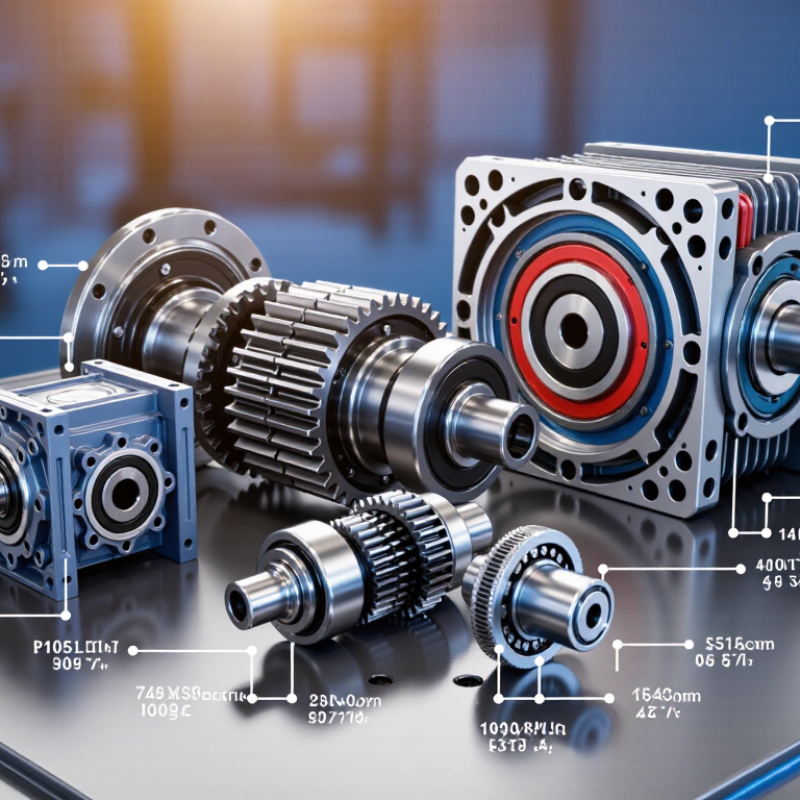
China Top 10 Robotic Gear Manufacturers for Global Buyers

What Robotic Gears Are and Their Role in Automation

A robotic gear is the transmission between a motor and a moving joint. It reduces speed and increases usable torque, helping an arm lift a part or rotate a wrist with control. In a compact robot, the reducer must fit inside the joint while handling repeated starts, stops, and reversals. Backlash matters: even slight play can shift a gripper away from a small target. Heat, vibration, and lubrication also affect service life. It is precise, but not perfect.

The scale of automation makes these details important. The International Federation of Robotics reported 4,281,585 industrial robots operating worldwide in 2023, with 541,302 installed that year in its World Robotics 2024 report. Those figures describe robots, not gear demand, but they show how many machines depend on reliable motion systems. Planetary, strain-wave, and cycloidal reducers suit different combinations of torque, size, and precision. No type wins every job. Buyers should compare rated torque, backlash, stiffness, efficiency, and expected duty cycle against the actual movement profile. A datasheet helps, yet real performance still depends on alignment, load, and maintenance. That part deserves a closer look.

How to Evaluate Chinese Robotic Gear Manufacturers

When evaluating Chinese robotic gear manufacturers, start with the motion requirements, not the catalog. Define torque, speed, backlash, duty cycle, and expected service life. Ask for measured results under conditions close to your application. A low backlash figure means little without the test method and load stated. Request sample inspection data, material specifications, and details on heat treatment and finishing. Check whether critical dimensions are measured consistently across production batches.

The factory visit or remote audit should reveal more than polished equipment. Look for calibration records, inspection steps, and clear handling of nonconforming parts. Ask how the supplier controls noise, temperature rise, and gear wear during endurance tests. See the test setup yourself, if possible. That matters. Also review lead times, engineering response, and change-control procedures; a technically capable team can still communicate unevenly. Compare quotations only after confirming that scope, tolerances, and included tests match. A sample may perform well while later batches vary, so agree on acceptance criteria before production. No checklist removes all risk. It does make gaps easier to spot.

Profiles of China’s Top 10 Robotic Gear Manufacturers

China’s robotic gear manufacturers serve applications ranging from compact collaborative arms to heavy industrial robots. These ten profiles describe different supplier capabilities, not an independently verified ranking. Buyers should compare actual drawings, test records, and production samples before choosing a partner.

One profile focuses on precision planetary gearboxes for compact joints. Another specializes in harmonic drives with low backlash. A third supplies cycloidal reducers for high-load axes. The fourth makes custom gears and shafts to drawing. The fifth combines machining with heat treatment. The sixth offers small-batch prototypes. The seventh emphasizes automated inspection. The eighth supports large-volume production. The ninth provides engineering help with gear selection. The tenth serves customers seeking multiple transmission components from one factory. Details matter.

A useful evaluation starts with torque, speed, duty cycle, and allowable backlash. Ask how runout and noise are measured, and request test data for the intended operating range. Inspect tooth surfaces and bearing seats on sample parts; a clean finish alone proves little. Some suppliers may describe capabilities broadly, while documentation remains thin. That deserves a closer look. Also confirm lead times, material traceability, and how design changes are handled. A promising brochure is only a starting point.

China Top 10 Robotic Gear Manufacturers for Global Buyers — Profiles of China’s Top 10 Robotic Gear Manufacturers

This anonymized overview describes ten common robotic-gear product specializations. It does not identify or rank individual manufacturers, and the entries should not be read as verified company profiles.

Profile Product specialization Gear technology Typical robotic use Buyer evaluation points
Profile 1 Compact precision gear reducers Planetary gear trains Servo-driven joints, positioning axes, and compact automation equipment Backlash specification, rated torque, efficiency, input-speed limits, and documented test conditions
Profile 2 High-ratio, compact rotary drives Strain-wave (harmonic) gearing Robot joints and applications where compact size and high reduction ratios are priorities Rated and peak torque, torsional stiffness, lost motion, fatigue-life data, and installation requirements
Profile 3 Heavy-duty precision reducers Cycloidal and RV-type gearing Industrial robot axes and other applications requiring high torque capacity Permissible moment loads, rigidity, accuracy, lubrication instructions, and service-life test methods
Profile 4 Right-angle motion transmission Bevel gear sets and right-angle gearboxes Robot wrist mechanisms, compact drives, and machinery with perpendicular input and output shafts Transmission ratio, shaft arrangement, backlash, mounting dimensions, and operating noise
Profile 5 General-purpose speed reduction Spur and helical gears Auxiliary robot axes, conveyors, and automated production equipment Gear material, tooth finishing, load rating, lubrication, efficiency, and noise data
Profile 6 Low-speed, high-reduction drives Worm gearing Selected positioning and auxiliary applications where a right-angle drive is needed Efficiency, heat generation, allowable duty cycle, lubrication, and whether back-driving is possible
Profile 7 Servo-compatible gearheads Planetary or helical gearhead assemblies Servo motors used in robot axes, handling systems, and automated machinery Motor-interface options, input speed, backlash, torque ratings, and dimensional drawings
Profile 8 Custom gear components Application-specific spur, helical, bevel, or planetary components Robotic mechanisms with non-standard shaft, ratio, or packaging requirements Drawing control, material traceability, inspection records, sample approval, and change management
Profile 9 Integrated joint-drive assemblies Gear reducer combined with motor, encoder, or brake options Robot joints and modular motion-control systems Electrical and mechanical interface documentation, thermal limits, encoder compatibility, and system-level testing
Profile 10 Precision transmission components and subassemblies Ground gears, shafts, bearings, and matched gear trains OEM robotic drives and custom actuator development Inspection capability, tolerance reporting, material certificates, production consistency, and sample-to-production controls

Comparing Product Range, Precision, and Production Capacity

Comparing ten robotic gear manufacturers takes more than scanning catalogs. Product range matters when a project needs planetary, harmonic, or cycloidal gear units across different joint sizes. Check rated torque, reduction ratios, mounting dimensions, and lubrication requirements against the robot’s actual duty cycle. A broad range can simplify sourcing, but it does not prove every model suits continuous operation.

Precision claims need context. Ask how backlash and repeatability are measured, at what load, and under which test conditions. A few arcminutes on a datasheet may not tell the whole story. Request inspection records and sample test results, then compare them with your application’s speed and positioning needs. Details matter. Production capacity deserves the same scrutiny: published output is less useful than realistic lead times, available machining processes, and quality checks at each stage. Ask whether capacity remains stable during peak demand. A neat catalog can still hide gaps between prototype support and volume production; I would verify that transition before committing. Some comparisons remain imperfect, since suppliers may define precision and capacity differently. That uncertainty should be recorded, not ignored.

Robotic Gearbox Technologies: Typical Reduction-Ratio Ranges

A technical reference for global buyers comparing common gearbox types used in robotics. Ranges are indicative, vary by configuration, and are not manufacturer-specific rankings.

Planetary reducers can be configured in multiple stages. Harmonic, cycloidal, and RV reducers also span different ratios depending on their design and model.

Key Considerations for Global Buyers Sourcing Robotic Gears

Robotic gear sourcing should begin with the motion profile, not a catalogue headline. Record peak and continuous torque, speed, duty cycle, shock loads, and required positioning accuracy. A cobot joint moving slowly may need different gearing from a high-speed pick-and-place axis. Fit matters. Check backlash, torsional stiffness, noise, and thermal rise under realistic operating conditions, not just at room temperature.

Ask suppliers for dimensional drawings, material and heat-treatment details, tolerance data, and test results tied to comparable loads. A stated service life is useful only when its test conditions are clear. Request a sample and inspect tooth contact, runout, and assembly fit before committing to production quantities. Small errors show up quickly in a compact robotic joint. Ask for evidence.

For international orders, confirm communication routines, production capacity, inspection records, packaging, and replacement-part availability. Agree on acceptance criteria in writing, including how defects are reported and resolved. A factory visit or independent inspection can add confidence, though neither guarantees every batch will match. I have seen buyers focus heavily on price and overlook lead-time variation; it is an easy mistake to make. Start with a pilot order, monitor performance on the actual machine, and revise the specification when field results disagree with the original assumptions.

Article Source:

MSIRobot