China’s antenna industry serves telecommunications, broadcast, transportation, industrial networking, and other demanding applications. This 2026 guide introduces ten Chinese manufacturers associated with Directional Antenna design and production. It is intended as a practical starting point, not a definitive ranking: company capabilities, product ranges, and export support can change over time.
For each supplier, buyers should check the details that affect real installations. Frequency range, gain, beamwidth, polarization, impedance, connector type, and mounting options all matter. So do enclosure materials and environmental ratings when an antenna must withstand rain, wind, or temperature changes. A datasheet is useful, but it may not answer every question. Ask for current specifications, test information, customization limits, lead times, and after-sales support before comparing quotations. Small details matter.
The manufacturers featured here may differ in engineering focus, scale, and target markets. Some may suit standard deployments; others may offer more flexibility for specialized projects. Readers should confirm that a product fits their own equipment, site conditions, and performance requirements. A listed company is not automatically the right supplier. This comparison has limits, too: public information is uneven, and product claims should be independently checked. Use the profiles to build a shortlist, then validate the facts directly with each manufacturer.
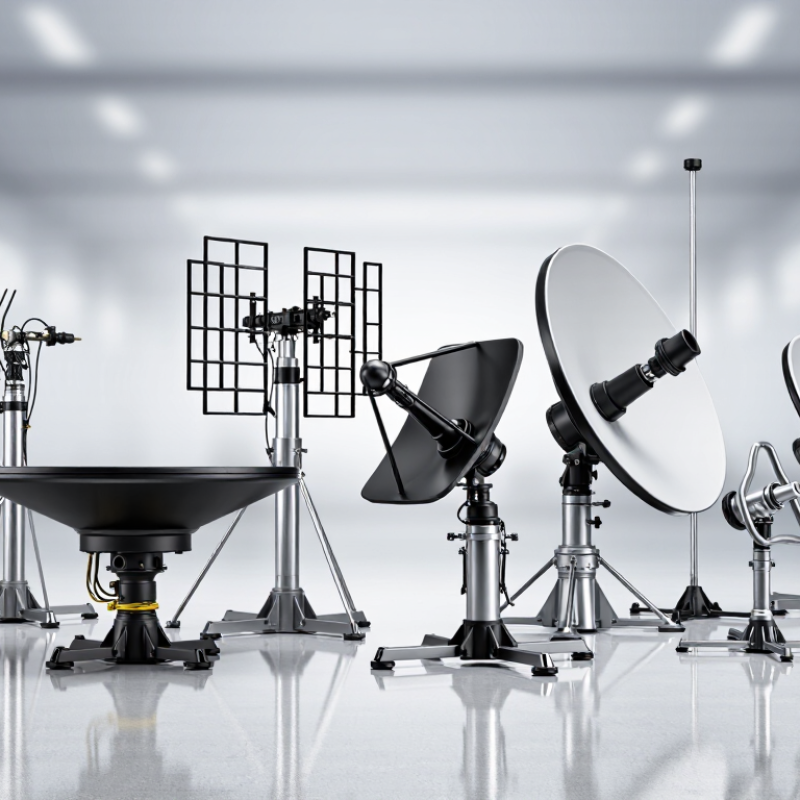
China’s directional antenna industry in 2026 is being shaped by 5G densification, rural coverage upgrades, and demand for reliable links across industrial sites. Directional designs focus radio energy toward a chosen area, helping manage coverage and interference. Buyers compare gain, beamwidth, polarization, wind loading, connector type, and operating frequency—not just peak performance figures.
The Ministry of Industry and Information Technology’s 2024 Communications Industry Statistical Bulletin reported 4.25 million 5G base stations nationwide by year-end. It also recorded more than 1 billion 5G mobile subscribers. These figures show the scale of China’s network buildout, though they do not measure antenna sales directly. CAICT’s China 5G Development Report 2024 also tracks ongoing network evolution, supporting expectations for continued demand across macro sites, indoor systems, and private networks. Deployment conditions still vary sharply. A rooftop installation and a dusty factory floor need different specifications.
Tips: Check radiation patterns and test reports against the actual site plan. Small details matter. Recheck cable loss, mounting direction, and weather protection; specification sheets do not always tell the whole story.
China Top 10 Directional Antenna Manufacturers 2026
Directional Antennas: Operating Principles, Types, and Applications
A directional antenna concentrates radio energy toward a chosen direction rather than radiating equally in every direction. Its gain describes this concentration, while beamwidth shows how wide the main coverage area is. Gain does not create extra power. It redistributes it. Small detail, big effect: a narrow beam can improve a point-to-point link, but alignment becomes less forgiving.
Common designs include Yagi-Uda antennas for focused links, horn antennas for test and microwave systems, and parabolic dishes for satellite or long-distance communication. Panel antennas can serve defined sectors in wireless networks. Performance depends on more than antenna type. Frequency, polarization, mounting height, nearby obstacles, and cable losses all matter. In field installations, even a slightly misaligned dish can weaken a link.
The ITU’s Facts and Figures 2023 estimated 5.4 billion internet users. Its 2024 edition reported 5.5 billion. These reports describe connectivity, not antenna sales, but they show the scale of networks that rely on dependable radio links. A directional antenna can reduce unwanted reception and focus coverage where needed. Yet a narrower beam is not always better; terrain, movement, and installation limits can make broader coverage the wiser choice.
How to Evaluate Chinese Directional Antenna Manufacturers
A reliable evaluation starts with the intended installation, not a catalog ranking. Define the operating frequency, required coverage, mounting height, and nearby obstructions. Then compare gain, beamwidth, polarization, and VSWR under matching conditions. A high gain figure alone may not suit a site that needs broad coverage. Ask for test reports that identify the measurement method and frequency range. Small details matter.
Request a sample and inspect its connectors, radome, mounting hardware, and finish. Check whether the antenna maintains its specified performance across the operating band, not just at one convenient frequency. For important projects, ask how production units are checked and whether the supplier can explain variations between samples. Reports from a calibrated test setup are useful, but confirm that the setup reflects the product being quoted. A polished spreadsheet can still leave gaps.
Also assess engineering communication. Send a practical scenario, such as a narrow rooftop installation with a fixed mast, and see whether the technical team asks relevant questions. Clarify customization limits, production lead time, packaging, and how design changes are documented. Request references for comparable applications when available. I would not treat fast replies as proof of quality; careful, specific answers are better evidence. There is no perfect checklist, and real installations can expose assumptions that looked sound on paper.
Use the following weighted framework to compare suppliers. It is an evaluation checklist, not a ranked list of companies; weights are suggested and should be adjusted to the application.
| No. | Evaluation Dimension | Suggested Weight | What to Verify | Useful Evidence or Comparison Data |
|---|---|---|---|---|
| 1 | Frequency-band coverage | 15% | Confirm the antenna is designed and specified for the required operating band, not merely described as “wideband.” | Datasheet frequency range, measured response across the band, and the test conditions used. |
| 2 | Gain and radiation pattern | 14% | Compare gain and beam shape at the frequencies and in the installation conditions relevant to the project. | Gain in dBi, horizontal and vertical beamwidth, and radiation-pattern plots with frequency and polarization identified. |
| 3 | Impedance match | 12% | Check matching performance across the required band and against the system’s feed-line impedance. | VSWR or return-loss plots, nominal impedance, connector details, and measurement setup. Acceptance limits should be set for the application. |
| 4 | Polarization and cross-polarization | 12% | Verify polarization type, orientation, and cross-polarization performance for the intended link. | Polarization specification and co-/cross-polarized pattern data measured over the operating band. |
| 5 | Power handling and electrical design | 10% | Ensure the stated power rating and feed arrangement match the transmitter, duty cycle, and system configuration. | Rated input power, connector and cable specifications, grounding details, and any stated derating conditions. |
| 6 | Mechanical and environmental suitability | 10% | Check dimensions, mounting, materials, and environmental ratings against the deployment location. | Mechanical drawings, operating-temperature range, stated IP rating where applicable, and supporting environmental test reports. |
| 7 | Measurement and quality controls | 8% | Assess whether test methods, instrument calibration, traceability, and production inspection are documented. | Sample inspection records, calibration records, test procedures, and relevant quality-management documentation such as ISO 9001 certification if claimed. |
| 8 | Customization and engineering support | 7% | Determine whether the supplier can support the required connector, mounting, radome, cable, or pattern changes. | Written design-change scope, prototype process, technical response time, and revision-control practices. |
| 9 | Production capacity and lead-time reliability | 6% | Check that quoted capacity and delivery schedules are supported by the supplier’s actual production and sourcing plan. | Current lead-time quotation, production-capacity statement, order-change policy, and delivery performance data where available. |
| 10 | Documentation, compliance, and after-sales support | 6% | Review documentation completeness, applicable market requirements, warranty terms, and support arrangements. | Datasheets, drawings, declarations or test reports relevant to the destination market, warranty conditions, and replacement or repair process. |
| Total Suggested Weight | 100% | Score each supplier using the same requirements and evidence standard. | ||
Note: Antenna performance limits depend on frequency, installation, and application. Request comparable test data and independently verify critical specifications before purchase.
The ten profiles explore how Chinese manufacturers approach directional antenna design, production, and customer support. Each company can be assessed through practical details: operating frequency, gain, beamwidth, polarization, and connector options. These specifications shape performance in real installations, not just on a datasheet. A narrow beam may help focus coverage, but it also demands careful alignment.
Manufacturing capability matters, too. Look for information on testing methods, material choices, and consistency between samples and production units. A clear profile should explain whether an antenna suits a fixed outdoor link, a site survey, or another defined application. Details such as mounting hardware, cable length, and weather protection can affect installation time. Small things matter.
Comparisons need restraint. Published figures do not always use identical test conditions, and some product pages leave important questions unanswered. Ask for current technical documents and confirm requirements before selecting equipment. These profiles offer a starting point, not a substitute for application-specific testing. A little uncertainty remains. Companies may differ in lead times, customization, and support, so those points deserve direct confirmation.
China’s directional antenna manufacturers serve different needs, even when their product lists look similar. Some focus on panel antennas for fixed wireless links; others offer yagi, parabolic, or sector designs for monitoring and network infrastructure. Compare operating frequency, gain, polarization, beamwidth, and connector options. A datasheet should state these clearly. Details matter.
Industry fit changes the comparison. Outdoor communication sites may need sealed housings, corrosion-resistant mounts, and stable performance through temperature shifts. Industrial telemetry projects often prioritize a narrow beam and predictable alignment around metal structures. Transport or public-safety networks may require compact designs that tolerate vibration. One antenna rarely suits every setting.
Manufacturing capability is more than production volume. Ask how samples are measured, whether test conditions are documented, and how custom requests affect lead time. Chamber measurements and consistent inspection records offer useful evidence, but buyers should verify what each report actually covers. A strong-looking specification can still leave questions. This is where comparisons get less tidy: published figures may use different test setups, making direct rankings unreliable. Request drawings, installation guidance, and sample test data before judging the manufacturers against the same project requirements.
Common wireless frequency ranges supported by directional antenna products
The chart shows selected WLAN frequency bands, not a manufacturer ranking. Available channels and band limits vary by country, and individual antenna specifications differ by product.
MSIRobot