
China Best Dispersants to Improve Dispersion Rheology
Choosing a dispersant is not just a purchasing decision. It can change how quickly pigments wet, how evenly particles separate, and how a finished coating moves through a pump. For manufacturers comparing options in China, the “best” product depends on the pigment, resin, solvent or water base, and target application. Rheology pioneer George W. Scott Blair described rheology as “the science of the deformation and flow of matter.” That idea matters on the factory floor. A batch that looks smooth in a beaker may still settle in a storage tank or show uneven flow during application. Small changes matter.
This guide examines how dispersants can Improve Dispersion Rheology by supporting particle stability and controlling viscosity. It considers common chemistries, including polyacrylate and polymeric dispersants, alongside practical selection factors such as compatibility, dosage, and processing conditions. A few details deserve close attention: pigment surface chemistry, mixing energy, and the order in which ingredients enter the vessel. Then measure again. Viscosity readings, grind checks, and storage observations provide more useful evidence than a supplier claim alone. One limitation is easy to overlook: laboratory results do not always predict production behavior. That is why this overview treats product selection as a starting point, not a guaranteed fix. Trial batches still matter.
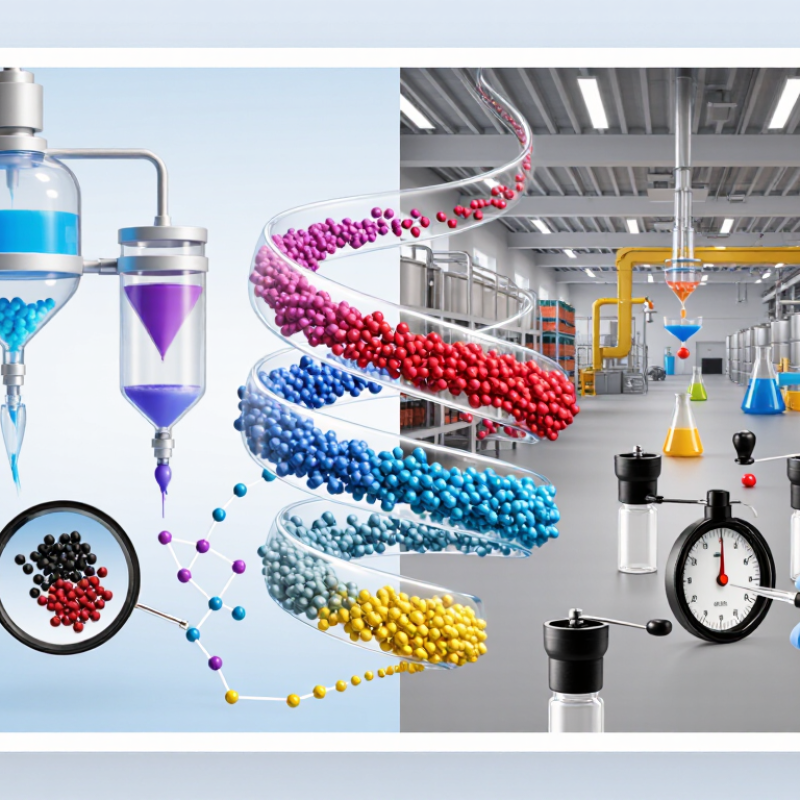
What Dispersants Are and How They Influence Dispersion Rheology
A dispersant is an additive that helps solid particles spread evenly through a liquid. It can wet particle surfaces and reduce the attraction that causes clumps. Some dispersants work mainly through electrostatic repulsion; others use polymer chains to create steric separation. The right mechanism depends on the particles, liquid, and other ingredients. Small details matter.
Better particle separation can change viscosity, yield stress, and flow under shear. A well-matched dispersant may make a concentrated mixture easier to pump or apply, while helping reduce settling. Too little may leave visible specks or a grainy texture. Too much can sometimes increase viscosity or disrupt other ingredients. Not always predictable. A useful evaluation compares samples at measured dosages, using the same mixing conditions and checking flow at relevant shear rates. Also inspect the material after storage; a smooth fresh sample can still settle or thicken later. Results vary with temperature, particle size, and milling energy, so no single dosage fits every formulation. This part is easy to underestimate. A small test series, with notes on both processing and storage, often reveals more than a single viscosity reading.