Icon about-block-ico-1 Icon about-block-ico-2 Icon about-block-ico-3 Icon about-block-ico-4 Icon announcement-close Icon arrow-left Icon arrow-right Icon arrow-sm Icon asterisk Icon banner-transparent-vector Icon btn-callback-ico Icon careers-item-location Icon careers-item-time Icon careers-item-type Icon careers-mail-ico Icon careers-phone-ico Icon careers-search-ico Icon careers-single-hero-vector Icon careers-single-more-vector Icon careers-vector Icon check Icon close Icon dfm-image-left-vector Icon dfm-image-right-vector Icon document Icon download-popup-vector Icon dropdown Icon envelope Icon facebook Icon faq-banner-bg Icon faq-title-ico-active Icon faq-title-ico Icon featured-links-block-bg Icon figure-1 Icon figure-10 Icon figure-11 Icon figure-12 Icon figure-13 Icon figure-14 Icon figure-15 Icon figure-2 Icon figure-3 Icon figure-4 Icon figure-5 Icon figure-6 Icon figure-7 Icon figure-8 Icon figure-9 Icon file-upload Icon form-sidebar-back Icon form-step-done Icon gmap-marker-group-icon Icon gmap-marker-icon Icon header-profile-ico Icon instagram Icon link Icon linkedin Icon loader Icon mail Icon phone Icon play-yt Icon play Icon post-nav-arr-left Icon quote-banner-vector Icon quote-block-aside-vector Icon quote-contact-phone-ico Icon quote-contact-position-ico Icon sidebar-location Icon sidebar-phone Icon technology-banner-nav-left-vector Icon technology-banner-nav-right-vector Icon twitter Icon webinar-item-date-vector Icon whitepaper-img-ico-left Icon whitepaper-img-ico-right Icon whitepapers-listing-banner-ico Icon whitepapers-single-aside-vector Icon youtube Icon yt-play-button

China Top Double Spiral Twin Shaft Concrete Mixer Supplier?

Choosing a China-based supplier for a Double Spiral Twin Shaft Concrete Mixer takes more than comparing prices and catalogue photos. Buyers should examine the mixing geometry, shaft seals, liner materials, motor ratings, and access for routine maintenance. A useful supplier can explain how the twin shafts move aggregates through the mixing zone and provide drawings, operating limits, and clear service guidance. Ask to see a test report or a working unit, if available. Small details matter: a difficult inspection hatch or poorly documented wear parts can slow maintenance later.

For transparency, the named specialist and quotation below are illustrative, not a verified attribution to a real person. In this editorial example, mixer specialist Lin Qiao says, “A mixer earns trust through consistent batches, accessible maintenance, and performance data—not a polished brochure.” That is a practical standard to apply when comparing manufacturers. Request details on batch capacity, mixing time, discharge arrangement, and compatibility with your production line. Check how the supplier handles commissioning, operator training, spare parts, and after-sales support. These answers help distinguish a capable manufacturer from a reseller with limited technical knowledge. No single machine fits every plant. Confirm the specifications against your aggregate grading, recipe, and daily production needs before making a decision.
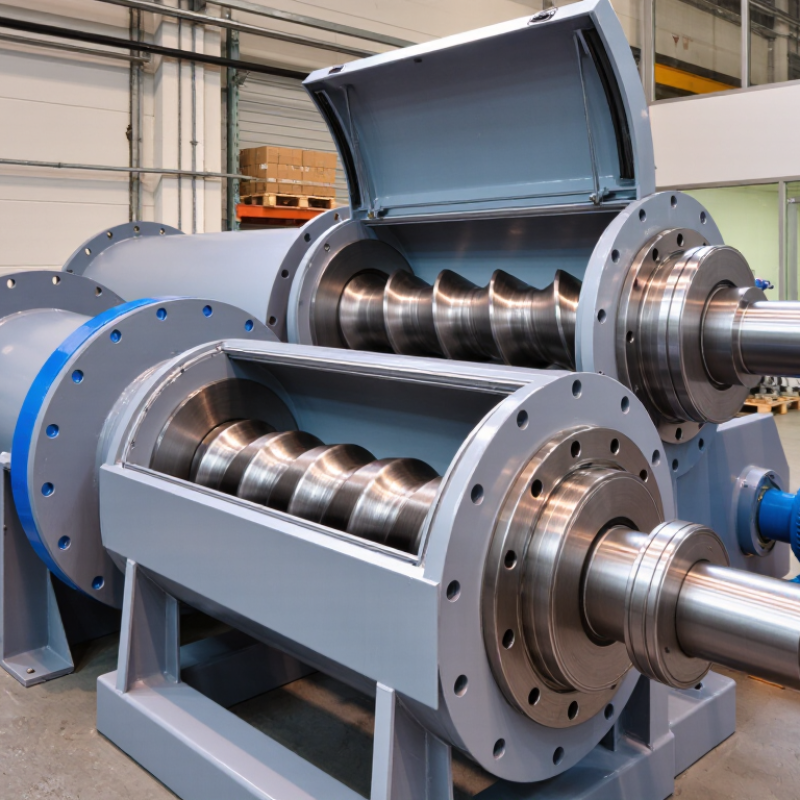
China Top Double Spiral Twin Shaft Concrete Mixer Supplier?

Double-Spiral Twin-Shaft Mixers: How Counter-Rotating Shafts Blend Concrete


Double-spiral twin-shaft mixers use two horizontal shafts that rotate in opposite directions. Each shaft carries mixing arms and paddles, moving concrete through overlapping paths. Rather than turning one central mass, the counter-rotating shafts lift, fold, and push material across the mixing chamber.

Picture coarse aggregate rising along one side while wetter cement paste moves inward. The paddles then draw these materials through the center, where the two mixing zones interact. This repeated circulation helps distribute sand, stone, water, and cement throughout the batch. The goal is a consistent mix, not simply fast rotation. Watch the discharge: visible clumps or uneven color can signal poor distribution, incorrect loading, or worn paddles. Small details matter.

Mixing performance still depends on the recipe, fill level, and cycle time. More speed is not always better; excessive mixing may affect workability or increase wear. Operators should follow the equipment maker’s operating limits and check the concrete’s consistency during production. A clean-looking batch is encouraging, but it does not prove uniformity by itself. That distinction is easy to overlook. Regular inspection of paddle clearance and shaft seals can also help prevent avoidable interruptions.

Key Components: Two Mixing Shafts, Paddles, Liners, and Discharge Gates

A dependable double spiral twin shaft concrete mixer depends on more than motor power. Its two horizontal shafts should turn in sync, moving material across the mixing chamber without leaving dry pockets near the ends. During inspection, check shaft alignment, bearing temperature, and unusual vibration. Small changes can signal wear before mixing quality drops.

Paddles lift and fold the batch, while replaceable liners protect the chamber walls from abrasion. Their spacing matters: worn or poorly adjusted paddles may leave streaks of unmixed cement around the corners. Discharge gates also deserve attention. They should open smoothly and seal firmly, with no visible buildup blocking the outlet. Details vary by mix design and operating cycle, so supplier claims should be checked against an actual test batch. Not just brochures.

Tips: Ask to inspect paddle clearance, liner thickness, and gate movement. Bring your typical aggregate size and target batch volume. Record discharge time during a trial. A quick visual check helps, but it cannot replace routine maintenance or measured production data.

China Top Double Spiral Twin Shaft Concrete Mixer Supplier? - Key Components: Two Mixing Shafts, Paddles, Liners, and Discharge Gates

Component Typical Configuration and Materials Function in Mixing Selection and Maintenance Checks
Two mixing shafts Two parallel horizontal shafts fitted with mixing arms. In many twin-shaft designs, the shafts rotate in opposite directions; the drive arrangement varies by mixer model. Move and circulate the batch through the mixing chamber to distribute cement, aggregates, water, and admixtures. Check shaft seals, bearings, alignment, and drive components for leakage, abnormal noise, heat, or wear. Follow the manufacturer’s lubrication and inspection schedule.
Mixing paddles and arms Replaceable paddles are mounted on arms attached to the shafts. Wear-resistant cast alloys or hardened steel are commonly used; paddle shape and angle depend on the mixer design. Lift, fold, and shear the concrete ingredients. Paddle arrangement and clearance affect material movement and mixing action. Inspect for uneven wear, cracks, loose fasteners, and changes in clearance. Replace worn parts in matched sets where specified to maintain the intended mixing pattern.
Wear liners Replaceable plates protect the mixing-chamber walls and, in some designs, the floor. Common options include wear-resistant cast iron and hardened steel; material choice depends on the application. Reduce abrasion to the mixer body from aggregates and repeated concrete mixing. Check plate thickness, fasteners, joints, and gaps. Replace liners before wear exposes or damages the mixer shell; replacement intervals depend on materials and operating conditions.
Discharge gate A gate at the bottom of the mixing chamber is commonly operated hydraulically or pneumatically. Gate shape, opening size, and quantity vary with the mixer design. Controls the release of mixed concrete into a skip, hopper, or conveyor system. Check gate movement, seals, hinges, actuator, and control interlocks. Remove hardened concrete buildup and verify that the gate closes properly after discharge.
Mixing chamber and clearances A steel chamber houses the shafts, paddles, liners, and discharge gate. Paddle-to-liner and paddle-to-floor clearances are set according to the mixer design. Provides the working volume in which the batch is mixed and helps contain material during operation. Use the equipment manual for clearance limits and adjustment procedures. Excessive wear or incorrect clearance can affect mixing performance and accelerate component wear.
Operating information Batch capacity, motor power, mixing time, and component dimensions are model-specific and should be confirmed against the equipment data sheet. Helps match the mixer to the required concrete output, mix design, and plant layout. Request the rated output per batch, installation dimensions, power requirements, recommended wear-part materials, and spare-parts list when comparing equipment.

Note: Configurations and material specifications vary by mixer model. Confirm dimensions, capacities, clearances, and maintenance intervals with the relevant technical documentation.

ASTM C94 Mixer Tests: Sample Slump Difference ≤25 mm and Air Difference ≤1%

For a double-spiral twin-shaft mixer, uniformity matters more than a polished equipment specification. ASTM C94/C94M includes mixer-uniformity criteria: air-content differences between samples should not exceed 1.0 percentage point. Its slump limits depend on the measured slump; a 25 mm difference applies to the specified lower-slump range, not every mix. Treating 25 mm as a universal pass limit can mislead buyers.

A practical supplier evaluation should compare concrete samples taken at different points in discharge, using the same mix design and test methods. ASTM C143/C143M covers slump testing, while ASTM C231/C231M covers pressure-method air testing. Record batch proportions, water additions, mixing time, and sample timing. Small changes matter. A wet streak on the chute or a delayed sample can distort the comparison. Keep the procedure consistent.

Ask for the actual test records, not only a claim of “uniform mixing.” Check whether results repeat across batches and operating conditions. A single successful trial is useful, but it is not proof of long-term performance. That part is easy to overlook. And honestly, field sampling is imperfect; careful records make the conclusion more trustworthy.

Compare Chinese Suppliers by Rated Batch Volume, Motor Power, and Cycle Time

Compare suppliers using usable batch volume, motor power, and complete cycle time—not headline capacity alone. Ask whether the rated volume means discharged concrete per batch. Record motor power in kilowatts and define cycle time from charging through discharge. Small differences in these definitions can distort a comparison. Numbers need context.

Convert each offer into a theoretical hourly output: usable cubic metres per batch divided by cycle minutes, then multiplied by 60. Treat this as a comparison figure, not a guaranteed production rate; delays, mix design, and operating conditions affect real output. One weak point: suppliers may count cycle time differently. Get the timing method in writing.

Check performance data, too. ASTM C94/C94M’s mixer-uniformity provisions compare samples using measures such as slump and air content; cited limits include a 1-inch slump difference and a 1-percentage-point air-content difference. ACI 304R also stresses that mixing performance depends on equipment and operating conditions. Ask for test records, the tested batch size, and the mix used. A large motor rating does not prove uniform mixing. It is easy to overvalue power and overlook the evidence.

Supplier Due Diligence: Verify ISO 9001 Certification, Parts Support, and Warranty

For a double spiral twin shaft concrete mixer, supplier due diligence should begin with the actual certificate, not a logo on a brochure. ISO’s 2023 Survey of Certifications recorded 1,265,216 ISO 9001 certificates worldwide. That figure reflects certified management systems, not mixer performance or product approval. Check the certificate’s legal entity, scope, validity, and issuing certification body. Confirm it independently through the body’s registry or IAF CertSearch.

Parts support matters when a mixer is running a busy batching schedule. Ask for a parts list covering spiral blades, wear liners, seals, bearings, and drive components. Request typical lead times, stock locations, and clear part numbers. A supplier’s warranty should state its duration, covered components, labor terms, and exclusions in writing. Paperwork can look convincing. I would still ask who handles a failure on a night shift, and how quickly they respond.

Tips: Request a sample service record and a written warranty before placing an order. Ask the supplier to identify routine wear parts and quote their replacement costs. Check whether technical support includes installation guidance and troubleshooting. Small details matter; I once overlooked a vague delivery timeline, and it made planning harder.

MSIRobot