
What Is the Best Wire Crimping Tool in 2026?
Choosing the best Wire Crimping Tool in 2026 depends on the connectors, wire sizes, and work conditions you encounter. A compact ratcheting model may suit insulated terminals, while open-barrel contacts often require a different die profile. There is no universal winner. The wrong jaw shape can leave a loose connection or damage the terminal, even when the handle feels sturdy.
This guide compares tool types, die compatibility, adjustment options, comfort, and price to help narrow the choices. Check the tool’s stated wire range and compatible terminal types before buying; similar-looking connectors do not always crimp the same way. A complete crimp should hold securely, show no split barrel, and match the connector maker’s guidance. For critical work, use the specified crimp height or a suitable pull test rather than relying on appearance alone. Small details matter.
An expensive tool is not automatically the best fit. A basic model can be adequate for occasional repairs, but frequent jobs may reward consistent ratcheting action and replaceable dies. Product specifications are useful, though they cannot reveal every annoyance after hours of use. That uncertainty deserves attention. The recommendations ahead weigh practical features against stated manufacturer limits, not marketing claims alone. Consider them a shortlist, then verify the fit for your exact wire and terminals.
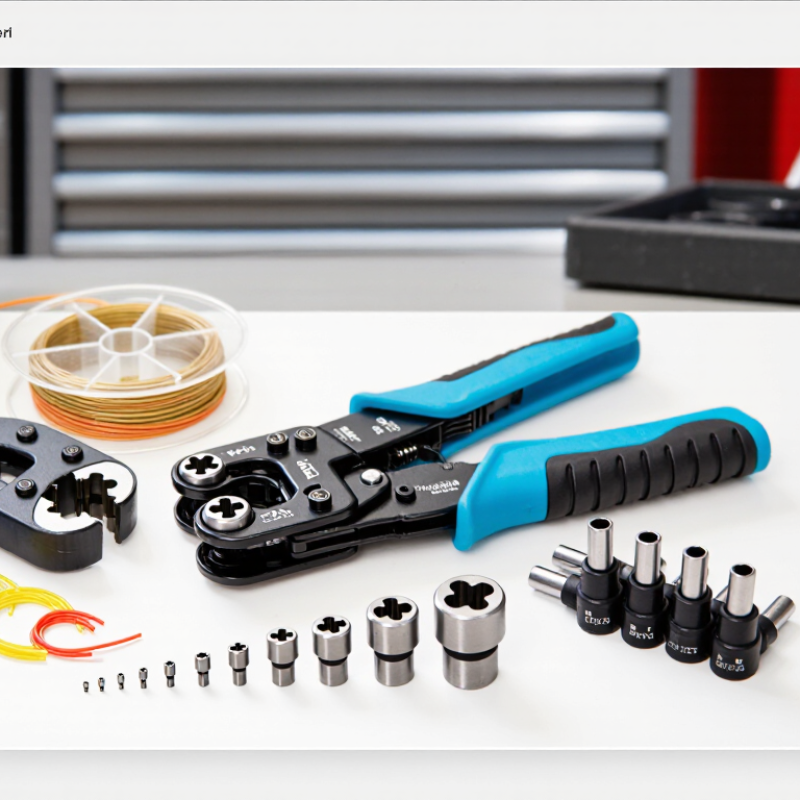
What a Wire Crimping Tool Does and How IEC 60352-2 Defines Crimped Connections
A wire crimping tool presses a metal terminal barrel around a stripped wire, creating a mechanical and electrical connection. The correct die shapes the barrel without cutting strands or leaving it loose. A ratcheting tool can help complete each squeeze consistently, but it cannot fix a mismatched terminal or wire size. Small details matter. Check the insulation support, conductor position, and finished crimp before installation.
IEC 60352-2 sets requirements and test methods for solderless crimped connections. It addresses factors such as crimp dimensions, mechanical strength, and electrical performance. The standard does not rank tools or name one as “best.” Instead, the tool, terminal, and conductor must work together to produce a connection that meets the applicable requirements. A neat-looking crimp is not proof of a sound one; visual inspection can miss weak contact or damaged strands.
Tips: Strip only the specified length, and keep all strands inside the barrel. Use the die intended for that terminal and wire size. If the crimp looks uneven, stop and check the setup. It is easy to blame the tool too soon.
What Is the Best Wire Crimping Tool in 2026? — What a Wire Crimping Tool Does and How IEC 60352-2 Defines Crimped Connections
The best tool depends on the terminal design, conductor type and size, production volume, and required process control. This brand-neutral comparison summarizes common tool types; always follow the terminal manufacturer’s specifications.
| Tool type | How it crimps | Typical use | Key advantages | Limitations and checks | IEC 60352-2 relevance |
|---|---|---|---|---|---|
| Manual ratcheting crimper | Hand-operated dies compress a compatible terminal around a conductor. A ratchet mechanism generally prevents release before the tool completes its cycle. | Low- to medium-volume assembly and field wiring with terminals specified for that tool and die. | Portable, requires no power source, and can provide a consistent completed cycle when maintained and used correctly. | Requires suitable, undamaged dies and correct wire-strip length. A ratchet does not by itself prove a crimp meets the terminal specification. | The standard concerns the resulting crimped connection and its evaluation, not a universal ratcheting-tool design. |
| Non-ratcheting hand crimper | Hand pressure closes the jaws directly; the operator controls the force and release. | Some simple, low-volume applications where the terminal maker specifies this type of tool. | Simple construction and easy portability. | Results depend more heavily on operator technique. Use only where the terminal specification permits it; avoid substituting it for a specified controlled-cycle tool. | Connection performance is assessed against applicable requirements and tests; tool style alone is not evidence of conformity. |
| Bench or press crimping tool | A lever, toggle, or powered press drives matched dies through a controlled crimping stroke. | Repeated production work, workstations, and assemblies requiring consistent positioning and cycle control. | Can improve repeatability and reduce operator effort; fixtures can help locate terminals and conductors. | Requires correct setup, die alignment, maintenance, and verification. Press force and stroke must suit the specified terminal system. | Useful in a controlled manufacturing process, but compliance depends on the connection and relevant verification—not simply on using a press. |
| Hydraulic crimper | Hydraulic pressure drives dies to compress larger terminals or conductors. | Power-cable and other larger-terminal applications when the connector system specifies compatible hydraulic tooling. | Provides high crimping force with less manual effort than a comparable hand-operated tool. | Bulkier than many hand tools. Confirm die profile, connector compatibility, conductor range, and any specified crimp sequence. | IEC 60352-2 does not make hydraulic tools universally suitable; check whether the connection falls within the standard’s scope and the connector’s instructions. |
| Battery-powered crimper | A motor-driven mechanism operates the crimping head and matched dies. | Repeated field or production work where portability and reduced manual effort are useful. | Portable powered operation can support repeated cycles without a fixed press. | Check the specified die system, tool condition, battery status, and cycle or inspection requirements. Powered operation alone does not ensure a correct crimp. | The standard addresses crimped-connection requirements and testing, rather than approving a particular power source or tool category. |
| Pneumatic crimper | Compressed air actuates a crimping mechanism, commonly in a fixed or workstation setup. | Higher-volume assembly lines with a suitable compressed-air supply and compatible tooling. | Can support fast, repeatable cycles when correctly configured and maintained. | Needs an air supply and process controls. Verify die setup, operating conditions, and the terminal maker’s tooling requirements. | Process capability and connection verification matter; pneumatic actuation does not itself establish conformity to IEC 60352-2. |
| Interchangeable-die precision crimper | A hand or powered frame accepts dies designed for specific terminal geometries. | Shops handling several compatible terminal families or conductor sizes. | One frame may serve multiple applications when the correct, matched die is installed. | Interchangeability is not universal. Confirm the exact die, terminal, conductor material, and size combination before use. | Evaluate each resulting connection against its applicable product and process requirements; a shared frame does not make different crimps equivalent. |