Choosing a Water Cooler Machine supplier in China is not just a price comparison. The right partner must deliver consistent cooling performance, dependable components, clear quality records, and responsive support. Small details matter: a clean weld, a stable temperature reading, and packaging that protects the unit during a long shipment.
Market signals show why supplier selection deserves care. Grand View Research’s Water Dispenser Market Size, Share & Trends Analysis Report estimated the global market at USD 2.46 billion in 2023 and projected a 7.1% compound annual growth rate from 2024 to 2030. These figures describe a broad market, not a guarantee of demand for any particular product. Still, they point to continuing investment and competition across residential and commercial equipment. The numbers are useful, but not a buying shortcut.
This guide explains how to assess Chinese suppliers through practical checks: factory capability, product specifications, certifications relevant to the destination market, quality-control procedures, lead times, and after-sales service. Ask for recent test records and confirm that samples match the production model. Compare like with like. A low quotation may exclude filters, installation accessories, or spare parts. That can change the real cost. No supplier is perfect, and paperwork alone cannot prove consistent production. A careful review, direct questions, and a clearly documented order help reduce avoidable surprises.
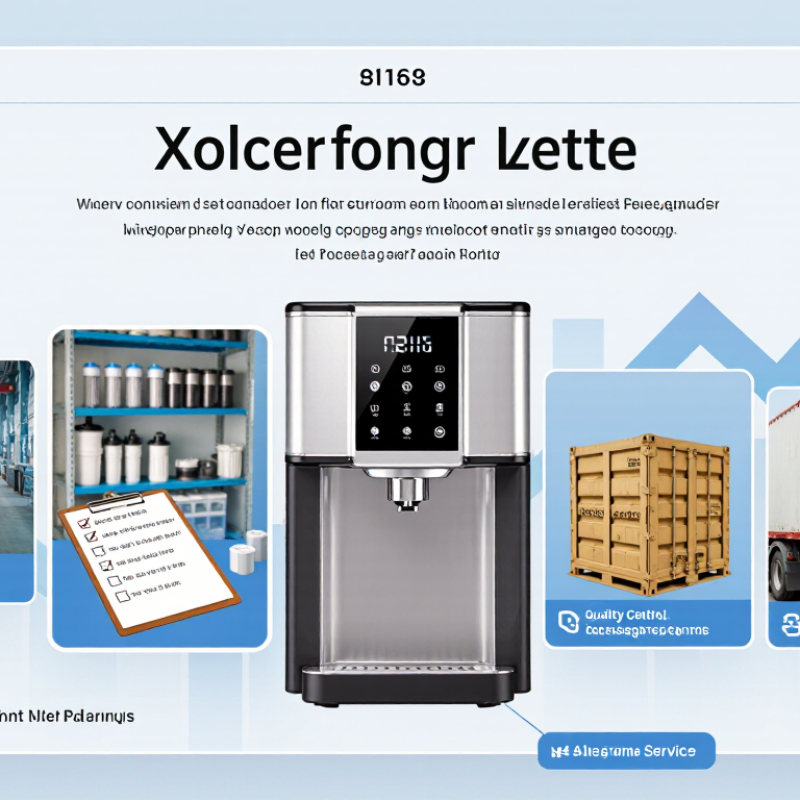
Before contacting a water cooler machine supplier in China, write down where the machine will be used and how many people depend on it. Start with the setting. A small office may need a compact unit, while a factory floor often needs faster recovery between draws.
Estimate peak demand, not just average daily use. For example, note how many workers may fill cups during a 15-minute break. Be specific.
Decide whether you need hot water, chilled water, or both, and record your preferred output temperature and dispensing rate. If the site has no nearby water line, a bottle-fed model may be more practical; otherwise, a plumbed unit could reduce refill work.
Measure the available width, depth, and height, including space for ventilation and maintenance access. Ask what water pressure and electrical supply the machine requires. Don’t guess.
List any filtration needs based on the incoming water, and clarify how often filters and sanitation parts should be replaced. Request details on food-contact materials, temperature controls, leak protection, noise levels, and spare-part availability. These details are more useful than a broad claim about “high capacity.”
Keep your expected daily use realistic. It is easy to overestimate demand, and a sample test may reveal that your chosen output rate is not quite right. Note that uncertainty when sharing specifications with potential suppliers.
When choosing a water cooler machine supplier, distinguish factories, OEM/ODM producers, component specialists, and trading companies. A factory may control assembly but outsource compressors, filters, or stainless-steel tanks. OEM/ODM suppliers can support custom housings and private-label production, while trading companies may combine products from several plants. Ask who performs final testing and who handles replacement parts.
Manufacturing clusters can help narrow your search. Guangdong, including Foshan and Zhongshan, has broad appliance and metalworking supply chains; Cixi in Zhejiang is known for small-appliance production. China’s National Bureau of Statistics reported manufacturing value added of about RMB 26.2 trillion in 2023. This shows the scale of China’s manufacturing base, not the quality of any individual cooler supplier. A region can be useful, but it is not proof. Request recent factory-audit records, water-system test results, and a video showing the actual production line.
Tips: Ask for a bill of materials and clarify which parts are made in-house. Compare sample units for tank welds, tap leakage, noise, and cooling recovery after repeated pours. Check whether the supplier can trace key components by batch. One detail is easy to miss: a polished sample may come from a different line than the bulk order. Ask to inspect the production site, if possible.
How to use this guide: OEM/ODM factories are a good starting point for custom products and direct manufacturing; trading companies can help source across factories; component specialists focus on parts. The chart shows typical core roles, not guaranteed capabilities—confirm each supplier’s actual scope. For regional shortlisting, investigate appliance suppliers in Guangdong (including Foshan and Zhongshan) and Zhejiang (including Ningbo and Cixi), then verify the factory address and production capabilities.
A reliable water cooler supplier should be able to show more than a polished product catalog. Request its business registration details, factory address, and current quality certificates, then confirm that the documents match the products being quoted. Certificate scope matters: a document may cover one product type but not another. Ask who issued it and whether it remains valid. Look beyond the showroom.
Production capability is easier to judge with specific questions. How many units can the factory assemble each month? Which steps are handled in-house, and which depend on outside workshops? During a factory visit, watch a production run and check whether workers record leak tests, cooling performance, and electrical inspections. Ask to see recent inspection logs, not just a prepared sample. That matters.
Request a sample and compare its finish, water flow, and operating noise with the written specifications. For a larger order, ask how the supplier checks consistency across batches and handles replacement parts. A confident answer should include records, named processes, and realistic lead times. Still, one visit cannot reveal every weakness; even careful checks leave some uncertainty. It is worth noting how promptly the supplier answers detailed questions, because delays before an order may signal communication problems later.
| Verification Area | What to Verify | Evidence or Practical Check | Positive Sign | Warning Sign |
|---|---|---|---|---|
| Business registration | Confirm the legal entity exists and that its registered business scope is consistent with the products or activities being offered. | Request a current business license and Unified Social Credit Code. Check the registration details through China’s National Enterprise Credit Information Publicity System. | The legal name and registration details match across the license, quotation, contract, and payment account. | The seller refuses to provide registration details or asks for payment to an unrelated entity without a documented explanation. |
| Factory versus trading role | Establish whether the supplier manufactures the water coolers, outsources production, or acts as a trading intermediary. | Ask for the production-site address, a live video walkthrough or factory visit, and a description of any subcontracted processes. | The supplier clearly identifies which processes are performed in-house and which are subcontracted. | The site, production equipment, or subcontracting arrangements cannot be explained or independently checked. |
| Management-system certificates | Check the certificate’s validity, certified legal entity, covered site, scope, and issuing certification body. | Request the certificate and verify it with the issuing body or the relevant official certification database. Confirm the scope applies to the actual manufacturing site and activities. | Certificate details can be verified, are current, and cover the relevant operation. | The certificate is expired, unverifiable, issued to a different entity, or does not cover the claimed activity. |
| Production equipment and process | Check that the factory has equipment and controlled processes suited to the quoted cooler design and its key components. | During an audit, inspect assembly stations, component storage, work instructions, equipment condition, and process-control records relevant to the product. | Observed processes and equipment are consistent with the product configuration and production plan. | The production area is unavailable for inspection or the supplier cannot explain how critical components are assembled and checked. |
| Capacity and lead time | Assess whether the promised order quantity and delivery schedule are achievable with current resources and workload. | Ask for a production plan, the number of relevant assembly lines or workstations, recent output records, and confirmation of current order commitments. | The delivery plan is supported by production records and includes time for inspection and packing. | Capacity is presented only as an unsupported maximum figure, with no production schedule or evidence. |
| Quality control and traceability | Review how incoming parts, in-process assembly, and finished water coolers are inspected, and how defects are handled. | Request sample inspection records, inspection criteria, nonconformity and corrective-action records, and a demonstration of batch or serial-number traceability. | Inspection results are recorded, defects have documented follow-up, and product batches can be traced to relevant production records. | Checks are described only verbally, records are unavailable, or defective products cannot be traced or contained. |
| Product testing and compliance | Confirm that testing and regulatory documentation match the exact model, configuration, and destination market. | Review applicable test reports and declarations for the destination market. Confirm model identifiers, tested components, report dates, and the issuing laboratory or body with the issuer where possible. | Documents clearly identify the supplied model and address the requirements applicable to its destination market. | Reports refer to a different model, omit relevant components, or are presented as universally valid without regard to destination-market requirements. |
| Pre-shipment inspection | Agree how finished goods will be checked before shipment and how inspection findings will be resolved. | Set written inspection criteria in the purchase agreement, covering model and quantity, appearance, operation, packaging, and any agreed tests. Arrange inspection before final shipment where appropriate. | The supplier accepts clear acceptance criteria and provides inspection access or objective inspection records. | Inspection is refused or acceptance standards are left undefined until after production. |
| Sample and communication consistency | Confirm that the approved sample, technical specifications, quotation, and mass-production order describe the same product. | Approve a reference sample and written specification. Record key materials, options, packaging, and change-approval requirements in the order documents. | Questions receive consistent answers, and product changes require documented approval. | Specifications change between the sample, quotation, and contract without written agreement. |
When comparing water cooler machine suppliers in China, request the same evidence from each: material specifications, production inspection records, and test reports for the exact model offered. A polished sample can hide weak seals or inconsistent cooling. Inspect the tap, drain tray, and inner tank; ask how defects are recorded and corrected. Small details matter.
Check water-contact materials against requirements in your destination market. The WHO Guidelines for Drinking-water Quality state that E. coli should not be detectable in any 100 mL sample of drinking water. That benchmark concerns water safety, not a cooler’s certification, so ask suppliers for relevant product test reports rather than treating it as proof of compliance. Confirm electrical, labeling, and materials documentation for the model and market. Paperwork should match the unit. I still find this easy to overlook.
Compare landed cost, not just the quoted unit price. Include packaging, freight, spare filters, warranty terms, and replacement-part lead times. Ask for a written price breakdown and a sample invoice; vague “compliance included” claims deserve follow-up. A supplier’s lower quote may leave costly gaps. A short factory video helps, but it cannot replace independent inspection or testing. WHO’s 2022 guidelines are a useful reference; verify current local requirements before ordering.
A water cooler sample should match the model and configuration you plan to order. Test it with the same water source and room conditions expected at your site. Check cooling time, water flow, temperature stability, noise, and visible leaks. Run several dispensing cycles; one quick test can miss slow recovery or a loose fitting. Ask for the test record and confirm which parts may differ in mass production. A polished sample is useful, but repeatable results matter more.
Tips: Photograph the connections and control panel. Record temperatures and wait times. Ask whether sample testing costs can be credited toward an order. Small details count.
Evaluate service with specific questions, not general promises. Who handles troubleshooting, how quickly are replies usually sent, and which spare parts are available? Request manuals, maintenance schedules, and clear warranty coverage. A helpful supplier should explain routine cleaning and replacement steps in plain language. It is easy to focus on the unit price and overlook service delays; that can become an expensive blind spot.
Read the contract against the sample specification. State model, materials, voltage, packaging, inspection criteria, delivery schedule, payment milestones, and remedies for defects. Define how acceptance is confirmed and who pays for replacement parts or freight when agreed specifications are missed. Have unclear wording revised before signing. Even careful buyers sometimes miss one line. Make time to check it.
MSIRobot