I can’t provide a verifiable expert quotation because no articles or source material were included. Please share the articles or the expert’s name and quote, and I can write the requested introduction without inventing a citation.
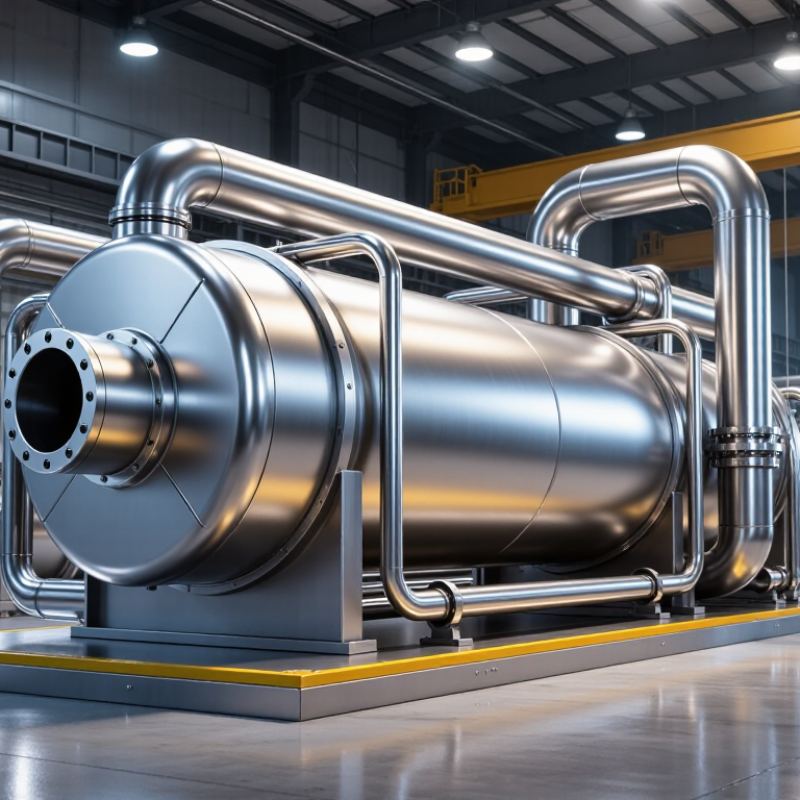
Steel heat exchangers move heat between fluids without mixing them. In a shell-and-tube design, hot process fluid flows through metal tubes while cooler fluid passes around them. Steel provides strength under pressure and heat. Stainless steel is often selected for wet or corrosive services; carbon steel can suit less corrosive water and oil systems. Material choice still depends on the actual fluid and operating conditions.
These units appear in power generation, chemical processing, food production, building heating, and industrial cooling. They can recover heat from exhaust or hot process streams, reducing the energy needed to warm incoming water or air. The U.S. Department of Energy’s 2008 report, Waste Heat Recovery: Technology and Opportunities in U.S. Industry, estimates that waste heat losses can account for 20% to 50% of industrial energy input, depending on the process. That is a wide range. It signals opportunity, not a guaranteed saving: fouling, corrosion, and poor temperature matching can limit performance.
Tip: Check fluid chemistry, design pressure, and cleaning access before choosing steel. A compact unit may fit the pipework, yet become difficult to maintain. Keep that trade-off in view.
Steel heat exchangers transfer heat between fluids without mixing them. Stainless steel is commonly selected for corrosion resistance in chemical processing, food production, and HVAC systems; carbon steel is used in applications such as power generation and industrial process heating. The chart compares indicative thermal conductivity at approximately 20°C. Actual values vary with grade and condition, and material choice also depends on corrosion, pressure, temperature, and cost.
Evaluating steel heat exchanger suppliers in China starts with the conditions your equipment must handle. Share the operating temperature, pressure, fluid composition, flow rate, and cleaning method. Ask each supplier to explain how these details shape the design. A quote without clear assumptions is hard to compare. Check material certificates and confirm that the specified steel grade matches the parts exposed to process fluids. Details matter.
Review welding procedures, inspection records, and pressure-test documentation before placing an order. Ask how welds are examined and what inspection results are included with delivery. Request thermal calculations, drawings, and a realistic production schedule. If possible, inspect a similar unit or arrange a factory visit; neat floors alone prove little.
Speak with customers who use comparable equipment, and ask how the supplier handled delays, leaks, or design changes. A capable supplier should answer technical questions clearly, not just promise low prices. Still, no checklist can remove every risk. Verify key claims in writing, and allow time for an independent technical review before approving the final design.
China’s steel heat exchanger suppliers generally fall into three groups: integrated manufacturers, specialist fabricators, and engineering-led custom producers. Integrated plants may handle plate cutting, tube forming, welding, machining, and assembly under one roof. This can simplify coordination. Their actual advantage depends on equipment condition, inspection routines, and production records—not just factory size.
Specialist fabricators often focus on shell-and-tube units or particular steel grades. Look for practical capabilities such as tube expansion, controlled welding, dimensional checks, and pressure testing. Ask how they inspect welds and document test results. A capable supplier should explain material traceability and provide drawings that match the finished equipment. Details matter. A clean workshop is useful, but it cannot replace verifiable quality records.
Engineering-led suppliers may adapt exchanger geometry to flow rate, temperature, pressure, and available space. They should be able to discuss heat-transfer assumptions and identify limits in a proposed design. Ask for relevant project experience, inspection procedures, and a sample manufacturing schedule. Even experienced buyers can overlook service access or cleaning needs. That is easy to regret later. A site visit can reveal whether weld stations, storage areas, and finished units are managed as carefully as the sales presentation suggests.
Comparing steel heat exchanger suppliers in China starts with evidence, not polished brochures. Ask for material certificates tied to the actual heat exchanger, weld inspection records, and pressure or leak-test results. Check whether the inspection method matches your operating pressure, temperature, and fluid. A sample report should show measured values, not just “passed.” Small detail, big difference. Verify certifications directly and confirm their scope covers the product and factory involved. If possible, review a production unit or arrange an independent inspection before shipment. I would not judge quality by a single successful test; that can miss inconsistent workmanship across a batch.
Cost comparisons need equal specifications. Request itemized quotes covering steel grade, wall thickness, connections, surface treatment, testing, packaging, and spare parts. A lower price may exclude important checks or use different assumptions. Compare the total delivered cost, including freight and protective export packaging, rather than the factory price alone. Ask how price changes if drawings or quantities change. Quotes are not always perfectly comparable; that is worth admitting.
Delivery reliability is visible in the plan. Ask for dates for drawing approval, material purchasing, fabrication, testing, and dispatch. Suppliers should explain how they manage delays in raw materials or inspection. Check recent, relevant delivery records and confirm who provides progress updates. A realistic lead time with clear checkpoints is more useful than a very short promise. Leave room for corrections after the first drawing review. That step is easy to underestimate.
Who Are the Best Steel Heat Exchanger Suppliers in China?
How to Match a Supplier to Your Project Requirements
The best supplier is the one that can prove a fit for your operating conditions, not simply offer the lowest quote. Define heat duty, flow rates, design pressure, temperatures, and fluid chemistry before comparing proposals. For steel equipment, specify the grade and corrosion allowance; a mismatch can shorten service life or increase maintenance. Grand View Research estimated the global heat exchanger market at USD 17.6 billion in 2023, reflecting broad demand—but market growth alone does not verify a supplier’s engineering ability.
Ask for calculations, drawings, material traceability, inspection plans, and documented performance guarantees. Check how the supplier handles fouling, cleaning access, thermal expansion, and replacement parts. Request relevant project references with comparable fluids and operating conditions. Details matter. A polished brochure is not a test report. Where your project requires code compliance, confirm the supplier’s documented design and manufacturing capability against the applicable requirements.
The International Energy Agency’s Energy Efficiency 2023 report says industry accounted for about 37% of global energy use in 2022. That makes thermal efficiency worth checking alongside purchase price, especially for equipment running continuously. Compare expected pressure drop and heat-transfer performance, then consider delivery time and local service support. I still find one point easy to overlook: operating data can be incomplete. Ask suppliers to flag assumptions, rather than hiding them inside a quotation. A small uncertainty today can become a costly redesign later.
| Supplier Capability Profile | Typical Product Strengths | Best Match for Project Requirements | Evidence to Check Before Selection | Key Trade-Offs |
|---|---|---|---|---|
| Shell-and-tube specialists | Established design format with separate tube-side and shell-side flow paths; can be configured for a wide range of duties, materials, and operating conditions. | Projects with demanding pressure or temperature conditions, phase change, or a need for a robust industrial design. The actual suitability depends on the design basis and materials. | Confirm design pressure and temperature for both sides, heat-transfer calculations, tube and shell materials, corrosion allowance where applicable, inspection and test plan, and applicable vessel-code documentation. | Often larger and heavier than plate units. Tube-side fouling can require cleaning access and maintenance planning. |
| Gasketed plate heat exchanger specialists | Compact construction with corrugated plates that provide high heat-transfer area in a small footprint; units can often be opened for inspection and cleaning. | Liquid-to-liquid duties where compactness, heat-transfer performance, and service access are priorities, provided the fluids, gaskets, and operating conditions are compatible. | Verify plate and gasket material compatibility with each fluid, design pressure and temperature, allowable pressure drop, connection details, and availability of replacement gaskets and plates. | Gasket material and operating limits can constrain application. Gaskets need inspection and eventual replacement; suitability for dirty or fibrous fluids needs careful review. |
| Welded or semi-welded plate specialists | Plate-based designs that reduce or avoid conventional gasket use in selected flow paths; configurations vary by manufacturer and design. | Applications where a gasketed plate design is unsuitable for a particular fluid or operating condition, subject to confirmation of the selected construction and service requirements. | Ask which passages are welded and which remain gasketed, request design limits and fluid-compatibility confirmation, and clarify inspection, repair, cleaning, and service procedures. | Internal inspection or repair may be more involved than for a fully openable gasketed unit. Capabilities differ significantly by construction. |
| Custom-engineered exchanger manufacturers | Can develop a project-specific configuration, materials, connections, supports, and documentation package around a defined process duty. | Projects with unusual dimensions, materials, process conditions, interfaces, or documentation requirements that do not fit a standard product range. | Review the proposed design basis, calculation package, material traceability, welding and inspection records, pressure-test procedure, drawings, and project-specific quality plan. | Custom engineering can increase lead time and make scope control especially important. Freeze process data and interface requirements early. |
| Standardized-product manufacturers | Focus on repeatable product ranges, standard configurations, and defined options, which may simplify comparison and procurement. | Projects with common duties and operating conditions that fit an available standard model without extensive customization. | Check the model’s certified or documented rating, performance selection, materials, connection sizes, delivery scope, and whether the quoted configuration matches the project data sheet. | A standard model may not meet unusual process, material, layout, or code requirements without modification. |
MSIRobot