
Which Sodium Hypochlorite Generator Is Best in 2026?
Choosing the best Sodium Hypochlorite Generator in 2026 is less about buying the largest unit and more about matching output to water demand. A system serving a small municipal plant has different needs from one treating a hotel’s cooling water. The practical details matter: steady chlorine production, dependable dosing, manageable brine handling, and clear maintenance instructions. Small details. A scaling cell or inaccurate flow reading can disrupt routine operation.
Water-quality targets provide a useful starting point. The World Health Organization’s Guidelines for Drinking-water Quality (2022) describe a free chlorine residual of at least 0.2 mg/L at delivery; effective disinfection commonly requires 0.5 mg/L after 30 minutes at pH below 8. These figures are treatment benchmarks, not a universal equipment specification. The U.S. Environmental Protection Agency’s 2023 Drinking Water Infrastructure Needs Survey and Assessment estimates $625 billion in drinking-water infrastructure needs over 20 years. That context makes operating costs and serviceability hard to ignore. It does not, by itself, identify a winning generator.
This comparison will examine capacity range, power and salt consumption, cell life, automation, safety features, and support requirements. Buyers should verify vendor claims against site water chemistry, operating records, and a realistic maintenance plan. Published specifications help, but they rarely capture every installation constraint. A confident ranking can still be wrong for a particular plant. That is worth remembering.
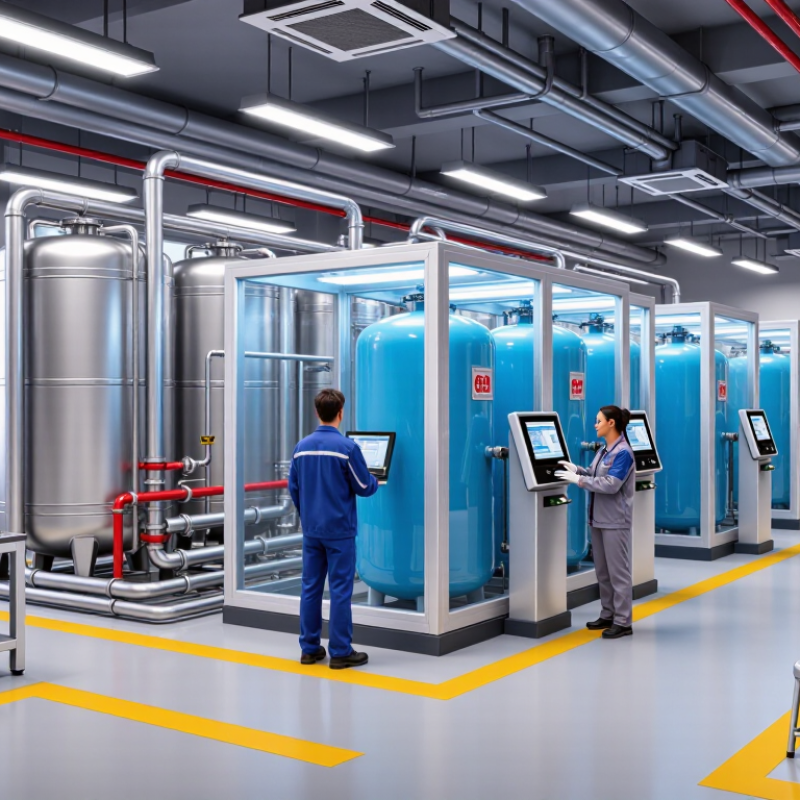
How Sodium Hypochlorite Generators Produce Disinfectant
Which Sodium Hypochlorite Generator Is Best in 2026?
How Sodium Hypochlorite Generators Produce Disinfectant
A sodium hypochlorite generator makes disinfectant on site from salt, water, and electricity. In the electrolytic cell, direct current drives a controlled chemical reaction. At the anode, chloride forms chlorine; at the cathode, water forms hydrogen and hydroxide. These products react in the salty solution to create sodium hypochlorite. The process is compact, but not magic.
The resulting solution is usually diluted and stored in a suitable tank before dosing. Its strength can vary with salt quality, water temperature, and cell condition. Hard water may encourage scale, while poor cleaning can reduce output. Operators should verify available chlorine and follow the equipment maker’s procedures. Hydrogen also needs safe ventilation, so installation and maintenance belong with qualified personnel.
Tips: Compare output capacity with actual demand, not just a headline rating. Check water-quality requirements, cleaning needs, and how easily staff can test the solution. Keep records; a small drift in strength can be easy to miss.
The best choice in 2026 depends on the site’s water, workload, and maintenance capacity. A larger generator is not automatically better. Look for clear operating data and practical service access. One detail is easy to overlook: the strongest system on paper may be awkward to run every day.