
Best Paper Bag Supplies for Businesses in 2026
Choosing the right Paper Bag Supplies in 2026 means balancing appearance, strength, cost, and daily practicality. A bag may look polished on a product page, yet fail when it carries a glass jar or a takeaway meal. Businesses should compare paper weight, bag dimensions, handle construction, and available printing options before placing a large order. Small details matter.
This guide explores the supplies that suit different business needs, from simple kraft bags for retail counters to printed bags for branded customer orders. It also considers how to assess suppliers, request samples, and check whether packaging fits your products and storage space. A quick sample test can reveal weak seams, awkward handles, or colors that look different under shop lighting. Test before scaling.
There is no single best choice for every business. A bakery may value easy packing and clean presentation, while a boutique may need a sturdier finish and more room for tissue paper. Even a lower unit price can disappoint if bags arrive inconsistently or do not suit the products. That trade-off is easy to overlook. By comparing practical features with real operating needs, businesses can make more informed purchasing decisions and choose paper bag supplies that work beyond the first impression.
Types of Paper Bags Used by Businesses in 2026
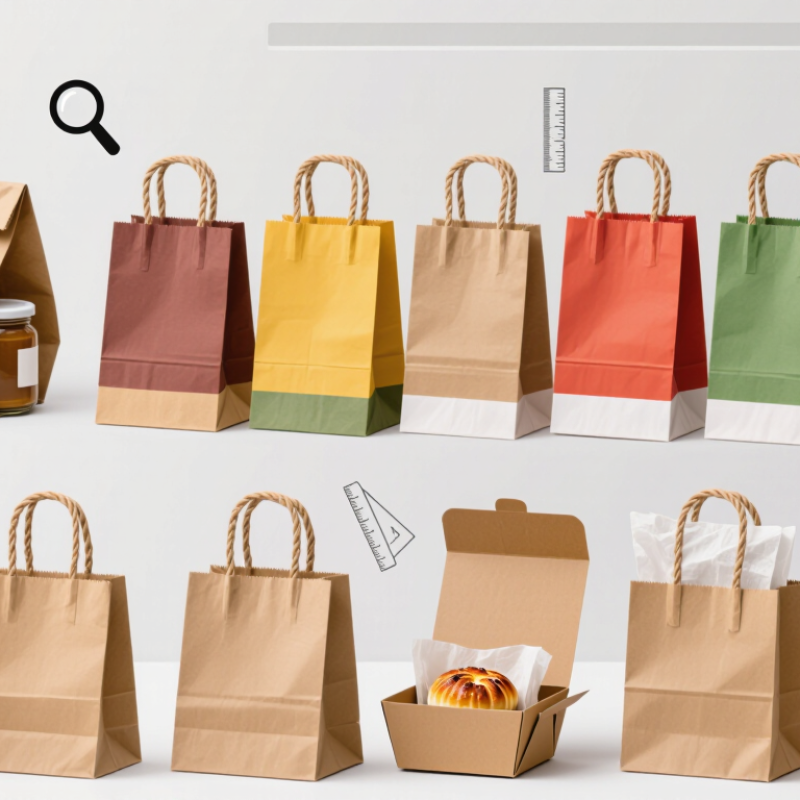
In 2026, businesses use several paper bag styles, each suited to different products and customer routines. SOS kraft bags have a flat base and square sides, so they stand upright for groceries, takeaway boxes, and small retail goods. Twisted-handle bags suit clothing, books, and heavier purchases when the handle is properly reinforced. Check the bag’s dimensions and stated capacity; a roomy shape does not always mean a stronger bag.
Flat-handle paper bags are common for quick-service food orders and lightweight items. Their handles lie close to the bag, making them easy to store in a busy counter area. Bakeries may choose grease-resistant paper for pastries, while produce shops often prefer breathable kraft bags. These options can help with handling, but they do not keep food fresh indefinitely. Small details matter.
For premium retail, laminated or heavier-weight paper carriers create a firmer feel and support neat presentation. They may also take up more storage space and require closer attention to material choices. Recycled-content bags can fit a business’s purchasing goals, but quality varies by paper weight, construction, and supplier. Test before ordering. Fill sample bags with actual products, lift them by the handles, and check how seams behave after a short walk. Even a sensible choice can prove awkward at checkout.