
10 Best Metal Railings for Commercial Projects
Commercial projects demand more from Metal Railings than a polished appearance. A busy entrance, exposed rooftop, or long interior stair needs a system that feels secure, suits daily traffic, and can be maintained without constant disruption. The right choice depends on the site. Salt air, cleaning routines, handrail grip, infill spacing, and connection details all shape performance. Small details matter.
Design authority Charles Eames said, “The details are not the details. They make the design.” He was not speaking specifically about railings, but his principle fits commercial specification: posts, welds, finishes, and transitions affect both appearance and long-term use. This guide compares ten metal railing options, from stainless steel and aluminum to steel designs with different infill styles. It considers where each system may work well, what to check before specifying it, and which trade-offs deserve a closer look. A sleek finish can still show fingerprints. A durable system can still feel visually heavy. There is no universal winner. Project teams should verify dimensions, load requirements, finish compatibility, and installation conditions with qualified professionals before making a final selection.
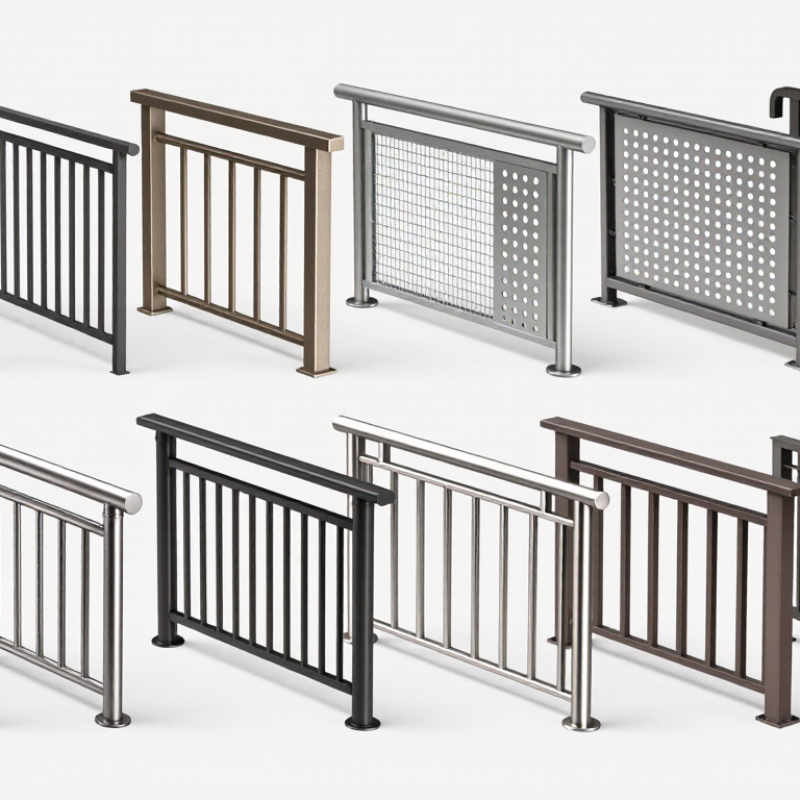
Commercial Railing Requirements and Selection Criteria
Commercial railing selection starts with the site, not the finish sample. Measure deck edges, stair pitch, clear openings, and the thickness of the concrete or steel receiving each post. Then confirm applicable local building, fire, and accessibility codes with the project design team. Requirements vary by occupancy and jurisdiction.
For U.S. general-industry walking-working surfaces, OSHA’s 29 CFR 1910.29 specifies a 42-inch guardrail top edge, plus or minus 3 inches, and a 200-pound force capacity. This is a useful reference, not a universal design specification.
Fit matters. A rail can meet a dimension on paper yet obstruct a doorway or leave an awkward grip at a landing.
Material choice depends on exposure and maintenance access. Coastal air and de-icing salts can accelerate corrosion; specify suitable alloys or protective coatings, and isolate dissimilar metals where needed. Check welds, fasteners, drainage points, and coating repairs in the maintenance plan.
The Bureau of Labor Statistics reported 885 fatal work injuries from falls, slips, and trips in 2023, underscoring why dependable edge protection deserves careful review. The figure covers many work settings, not railing failures alone.
Ask the fabricator for load documentation, connection details, and finish-care guidance. One detail is easy to underestimate: crews need room to install anchors and inspect them later. A neat elevation drawing may miss that. Recheck the actual site conditions before release.